Unlocking the Potential of Tectomers: A Deep Dive into Crystal Engineering and Nanomaterials for Indian Researchers
Discover how cutting-edge Tectomer technology is revolutionizing supramolecular assembly and molecular design, paving the way for advanced nanomaterials and functional chemicals crucial for India's scientific and industrial progress.
Explore Tectomer InnovationsTectomers: The Future of Precision Molecular Design in India
In the dynamic landscape of material science, the ability to precisely control molecular architecture at the nanoscale is paramount. This is where Tectomers emerge as a groundbreaking innovation, offering unprecedented control over Crystal Engineering and Supramolecular Assembly. For Indian researchers and professionals, understanding and harnessing the power of Tectomers is not just an academic pursuit but a strategic imperative to drive innovation across various industries. These modular molecular building blocks are designed to self-assemble in predictable ways, leading to the creation of novel Nanomaterials with tailored properties.
The relevance of Tectomers in the Indian context cannot be overstated. With a burgeoning research and development sector and a strong push for indigenous innovation, Tectomers provide a sophisticated toolkit for developing advanced functional materials. From pharmaceuticals and electronics to sustainable energy solutions, the precision offered by Tectomer-based Molecular Design enables the synthesis of materials that are not only efficient but also highly specific in their applications. This article delves into how these remarkable compounds are transforming the way we approach material synthesis, offering a comprehensive guide for the Indian scientific community.
We will explore the fundamental principles behind Tectomer functionality, their diverse applications, and the immense opportunities they present for India's scientific and industrial growth. Prepare to uncover how Tectomers are not just molecules, but keys to unlocking new frontiers in material science, fostering self-reliance and global competitiveness in the realm of high-tech materials.
Key Benefits of Tectomers for Indian Researchers and Innovators
Unparalleled Precision in Molecular Assembly
Tectomers offer atomic-level control over how molecules interact and arrange themselves, enabling the creation of highly ordered structures. This precision is crucial for developing advanced materials where exact spatial arrangement dictates performance, such as in high-efficiency catalysts or sophisticated electronic components.
Modular and Versatile Design Principles
The modular nature of Tectomers simplifies the design and synthesis of complex architectures. Researchers can mix and match different Tectomer units to achieve a vast array of supramolecular structures and Polymer Architecture, accelerating the discovery of new materials with tailored properties for specific applications, reducing development cycles significantly.
Enhanced Material Functionality and Performance
By precisely controlling the self-assembly process, Tectomers lead to materials with superior and often novel functionalities. This includes improved mechanical strength, enhanced optical or electrical properties, and highly specific binding capabilities, critical for next-generation Functional Chemicals and advanced composites.
Cost-Effectiveness and Scalability for Indian Industry
While Tectomer synthesis can be intricate, the ability to predictably design and scale up production of functional materials reduces the need for extensive trial-and-error. This systematic approach can lead to more cost-effective manufacturing processes in the long run, making advanced materials more accessible and competitive for Indian industries, aligning with 'Make in India' initiatives.
Transformative Applications of Tectomers Across Industries
Advanced Drug Delivery Systems
Tectomers enable the creation of highly sophisticated nanocarriers for targeted drug delivery, improving therapeutic efficacy and reducing side effects. Their precise architecture allows for controlled release and enhanced bioavailability, crucial for treating complex diseases.
High-Performance Catalysis
By engineering specific active sites and porous structures, Tectomers can be used to design highly efficient and selective catalysts for various chemical reactions, including those vital for sustainable industrial processes and environmental remediation.
Next-Generation Sensors and Diagnostics
The ability to create highly specific recognition sites makes Tectomers ideal for developing ultra-sensitive biosensors and diagnostic tools. These can detect biomarkers at very low concentrations, revolutionizing early disease detection and environmental monitoring.
Flexible and Organic Electronics
Tectomers contribute to the development of novel materials for organic light-emitting diodes (OLEDs), flexible displays, and organic photovoltaics. Their ability to form ordered conductive pathways at the molecular level is key to enhancing device performance.
Advanced Biomaterials and Tissue Engineering
In Bio-Nanotechnology, Tectomers can be designed as Peptide Mimetic structures to create scaffolds that mimic extracellular matrix components, promoting cell growth and differentiation for regenerative medicine and tissue repair.
Sustainable Materials and Environmental Solutions
Tectomers can be engineered to create materials for water purification, CO2 capture, and sustainable energy storage. Their precise porous structures and tailored functionalities offer efficient solutions to pressing environmental challenges.
India's Growing Role in Tectomer Research and Future Trends
India is rapidly emerging as a global hub for scientific research and technological innovation, with significant investments in advanced materials and nanotechnology. The unique properties and design flexibility of Tectomer systems align perfectly with national initiatives like 'Make in India' and 'Atmanirbhar Bharat', aiming to foster self-reliance in high-tech manufacturing and research. Indian institutions are increasingly focusing on Crystal Engineering and Supramolecular Assembly to develop indigenous solutions for critical sectors.
The demand for advanced Nanomaterials in India, particularly in healthcare, electronics, and renewable energy, is creating fertile ground for Tectomer-based research. Researchers are exploring how do tectomers work in crystal engineering to create new forms of Peptide Mimetic drugs and diagnostic agents, leveraging India's strong pharmaceutical sector. Furthermore, the principles of Soft Matter Physics are being applied to understand and manipulate Tectomer self-assembly, leading to innovations in gels, liquid crystals, and other soft materials with tunable properties.
Future trends point towards greater interdisciplinary collaboration, combining Tectomer Molecular Design with artificial intelligence and machine learning to predict assembly pathways and material properties more efficiently. The development of sustainable and bio-compatible Tectomers for Bio-Nanotechnology applications will also be a key area of focus, addressing global challenges in health and environment. India's vibrant academic and industrial ecosystem is well-positioned to lead in these emerging areas, driving both fundamental discoveries and practical applications of Tectomer technology. The integration of Tectomers into complex Polymer Architecture is also gaining traction, promising a new generation of high-performance polymers and composites tailored for specific industrial needs within the country. This focus on advanced Functional Chemicals, driven by precise molecular engineering, will significantly enhance India's competitive edge in the global specialty chemicals market.
Frequently Asked Questions About Tectomers
Explore Our Tectomer Product Range


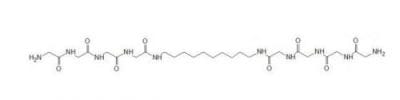

Ready to Advance Your Research with Tectomers?
Reinste offers a comprehensive range of Tectomers and related services to support your innovative projects in Crystal Engineering, Nanomaterials, and Supramolecular Chemistry. Partner with us to unlock new possibilities.
Contact Our Experts Today