Tectomers: Unlocking New Frontiers in Nanomaterials and Chemical Synthesis for Indian Innovation
Explore how these advanced dendrimer-like polymers are revolutionizing drug delivery, bioconjugation, and material science, offering unprecedented opportunities for research and development in India.
Explore Tectomer InnovationsIntroduction to Tectomers: A Paradigm Shift in Nanomaterials
In the dynamic landscape of materials science and chemical synthesis, the quest for novel structures with unparalleled precision and functionality is ceaseless. Among the most promising innovations to emerge are Tectomers – a class of dendrimer-like polymers that are rapidly redefining the boundaries of what's possible in nanotechnology. Unlike traditional linear polymers, Tectomers boast a highly branched, well-defined architecture, offering precise control over their size, shape, and surface chemistry. This architectural mastery translates into superior performance characteristics, making them invaluable tools for advanced research and industrial applications.
For Indian researchers and professionals, the advent of Tectomers represents a significant opportunity. India's vibrant scientific community, with its robust pharmaceutical industry, burgeoning nanotechnology sector, and increasing focus on advanced materials, is uniquely positioned to leverage the potential of these sophisticated macromolecules. Tectomers can accelerate drug discovery, enhance diagnostic capabilities, and pave the way for next-generation materials, aligning perfectly with national initiatives promoting self-reliance and innovation in science and technology. Their modular nature allows for tailored solutions, making them particularly relevant for addressing India's diverse research and industrial needs, from targeted drug delivery in healthcare to high-performance coatings in manufacturing.
The ability to finely tune the properties of Tectomers at the molecular level opens doors to creating bespoke materials for specific challenges, fostering an environment of rapid development and competitive advantage. As we delve deeper into their unique characteristics and applications, it becomes clear that Tectomers are not just another class of polymers; they are a strategic asset for India's scientific and industrial future.
Key Benefits of Tectomers for Indian Researchers
Precision in Molecular Engineering
Tectomers offer an unprecedented level of control over molecular architecture, enabling researchers to design and synthesize compounds with exact specifications, crucial for advanced chemical synthesis and nanomaterials development.
Enhanced Drug Delivery Efficiency
Their unique branched structure allows for higher drug loading capacity and controlled release, significantly improving the efficacy and reducing the side effects of therapeutic agents in nanomedicine applications.
Versatile Bioconjugation Platforms
The abundance of functional groups on Tectomer surfaces makes them ideal scaffolds for bioconjugation, facilitating the attachment of biomolecules for diagnostics, biosensors, and targeted therapies.
Improved Material Properties
Tectomers can impart superior properties like enhanced solubility, increased stability, and unique rheological characteristics to various materials, pushing the boundaries of material science.
Scalable and Reproducible Synthesis
With advancements in chemical synthesis techniques, Tectomer production is becoming more scalable and reproducible, making them viable for both academic research and industrial-scale applications.
Potential for Novel Diagnostic & Therapeutic Agents
Their tunable properties open avenues for developing innovative diagnostic tools and highly effective therapeutic agents, contributing significantly to advancements in nanomedicine and healthcare.
Transformative Applications Across Industries
Nanomedicine & Drug Delivery
Tectomers are at the forefront of revolutionizing drug delivery systems. Their precise structure enables the encapsulation of therapeutic agents, offering targeted delivery to specific cells or tissues, minimizing systemic toxicity, and improving drug efficacy. This is particularly vital for cancer therapy, gene delivery, and vaccine development, where controlled release and targeting are paramount. Indian pharmaceutical companies can leverage Tectomers to develop advanced formulations, reducing dosage requirements and enhancing patient outcomes.
Biotechnology & Diagnostics
In biotechnology, Tectomers serve as excellent scaffolds for bioconjugation, allowing for the immobilization of enzymes, antibodies, and other biomolecules. This capability is crucial for developing highly sensitive biosensors for early disease detection, advanced diagnostic kits, and efficient biocatalysts for industrial processes. The ability to create stable and functional bioconjugates positions Tectomers as key components in the next generation of biotechnological tools, offering rapid and accurate analytical solutions.
Material Science & Engineering
The unique structural properties of Tectomers, including their high surface area and multiple functional sites, make them ideal for enhancing various material properties. They can be incorporated into coatings to improve scratch resistance and anti-fouling characteristics, used in composite materials for increased strength and flexibility, or employed in the development of smart materials responsive to external stimuli. This opens up new avenues for innovation in sectors ranging from automotive and aerospace to textiles and electronics, driving advancements in "Nanomaterials" and "Polymers".
Advanced Chemical Synthesis & Catalysis
Tectomers, with their well-defined branching and numerous reactive sites, are proving to be exceptional platforms for advanced "Chemical Synthesis" and catalysis. They can act as highly efficient catalysts or catalyst supports, offering improved selectivity and reaction rates. Their ability to encapsulate active sites within their structure protects them from deactivation, leading to more robust and reusable catalytic systems. This is particularly beneficial for green chemistry initiatives and the development of new synthetic pathways in the chemical industry, including the fine chemical and specialty chemical sectors in India.
Indian Opportunities and Emerging Trends in Tectomer Research
India's scientific ecosystem is ripe for the widespread adoption and innovation surrounding Tectomers. With significant government backing for "Nanotechnology" research through initiatives like the Nano Mission, and a rapidly expanding pharmaceutical and biotech sector, the demand for advanced materials and precise chemical entities is at an all-time high. Academic institutions and industrial R&D centers across India are increasingly investing in sophisticated "Chemical Synthesis" techniques and "Nanomaterials" development, creating a fertile ground for Tectomer-based research.
One critical aspect for Indian industries considering Tectomers is the "cost analysis of tectomer production." While the initial synthesis might seem complex, the long-term benefits in terms of enhanced product performance, reduced material waste, and improved efficiency often outweigh the upfront investment. Researchers are actively exploring more economical and sustainable synthesis routes, making Tectomers increasingly accessible. Furthermore, the modular nature of Tectomers allows for the production of diverse structures from common building blocks, potentially streamlining manufacturing processes and reducing overall costs for specialized applications.
Emerging trends indicate a strong focus on "Bioconjugation" and "Drug Delivery" applications, particularly in addressing prevalent health challenges in India. The ability of Tectomers to precisely deliver therapeutic payloads can revolutionize treatments for infectious diseases, chronic conditions, and various cancers. Moreover, their role in "Material Science" is expanding beyond traditional applications, with interest in developing smart textiles, advanced filtration membranes, and sustainable packaging solutions. The synergy between "Dendrimers," "Polymers," and Tectomers is fostering a new era of innovation in "Nanomedicine," promising breakthroughs that will benefit both the Indian population and global scientific community.
As India continues its journey towards becoming a global hub for scientific research and manufacturing, embracing cutting-edge technologies like Tectomers will be crucial. Collaborative efforts between academia, industry, and government will further accelerate the development and commercialization of Tectomer-based products, cementing India's position at the forefront of "Nanomaterials" and "Chemical Synthesis" innovation.
Frequently Asked Questions about Tectomers
Tectomers are a novel class of highly branched, dendrimer-like polymers characterized by their precisely defined molecular architecture. Unlike traditional linear polymers, Tectomers have a central core from which multiple arms radiate, each with specific functional groups. This allows for exceptional control over their size, shape, and surface chemistry, making them ideal for advanced applications in nanomaterials and chemical synthesis.
While both Tectomers and dendrimers are highly branched macromolecules, Tectomers often feature a more modular and convergent synthesis approach, allowing for easier scale-up and greater diversity in the design of their branching units. They can be considered a specialized subset or evolution of dendrimer technology, offering enhanced synthetic flexibility and often improved reproducibility for specific applications, particularly in bioconjugation and drug delivery.
Tectomers are extensively used in various research fields, including nanomedicine for targeted drug delivery and imaging, biotechnology for biosensors and enzyme immobilization, and material science for developing advanced coatings and composites. Their precise structure makes them excellent candidates for enhancing the solubility and stability of active compounds and as versatile scaffolds for complex chemical synthesis.
Absolutely. Tectomers are highly suitable for drug delivery systems due to their ability to encapsulate drugs within their internal cavities or attach them to their surface functional groups. This allows for controlled release, improved bioavailability, and targeted delivery, which can significantly reduce systemic toxicity and enhance therapeutic efficacy. Their biocompatibility and modifiable surface chemistry make them excellent candidates for advanced nanomedicine applications.
Explore Reinste's Tectomer Product Range


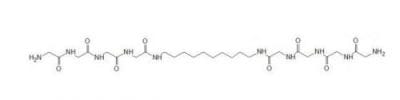

Advance Your Research with Reinste's Tectomers
Ready to explore the full potential of Tectomers in your projects? Discover our comprehensive range of high-quality Tectomer products and specialized chemical synthesis services.
Discover Reinste's Tectomer Portfolio