Tectomers: Revolutionizing Nanomaterials, Polymer Synthesis, and Self-Assembly for Indian Innovations
Explore the cutting-edge world of Tectomers, a class of supramolecular nanomaterials poised to transform research and industrial applications across India, from advanced drug delivery to next-generation electronics.
Learn More
Unveiling Tectomers: A New Horizon in Nanomaterials for India's R&D
In the rapidly evolving landscape of materials science, Tectomers represent a groundbreaking class of supramolecular nanomaterials that are capturing the attention of researchers and industries worldwide, and particularly in India. These meticulously designed molecules, characterized by their precise architecture and ability to self-assemble, offer unprecedented control over material properties at the nanoscale. For Indian researchers and professionals, Tectomers open up new avenues for innovation, promising advancements in diverse fields ranging from medicine to sustainable energy.
At their core, Tectomers are intricate molecular constructs, often dendrimeric or star-shaped, featuring multiple "tails" or arms that can be functionalized with various chemical groups. This modular design is key to their versatility, allowing scientists to fine-tune their interactions and self-assembly behaviors. Unlike traditional polymers, which often exhibit polydispersity, Tectomers offer a high degree of monodispersity and structural precision, leading to materials with predictable and superior performance.
The relevance of Tectomers to India's burgeoning R&D sector cannot be overstated. With a strong emphasis on indigenous innovation and a growing ecosystem for nanotechnology and advanced materials, India is uniquely positioned to leverage the potential of Tectomers. From developing novel drug delivery systems that are more efficient and targeted, to creating advanced sensors for environmental monitoring, and engineering next-generation materials for electronics and catalysis, the applications are vast. This blog delves into the fascinating world of Tectomers, exploring their fundamental principles, diverse applications, and the immense opportunities they present for Indian scientific and industrial progress.
The ability of Tectomers to undergo controlled self-assembly is a defining characteristic. This process allows them to spontaneously organize into complex, ordered structures, such as micelles, vesicles, or even crystalline lattices, simply by manipulating environmental conditions like solvent polarity, pH, or temperature. This "bottom-up" approach to material fabrication is highly efficient and scalable, offering an elegant alternative to traditional synthetic methods. The precision afforded by Tectomers in self-assembly means that researchers can design materials with specific pore sizes, surface functionalities, and mechanical properties, which are critical for high-performance applications.
Furthermore, the chemical diversity that can be incorporated into Tectomer structures is virtually limitless. By varying the core, the number of arms, and the end-groups, scientists can create a vast library of Tectomer-based materials. This tunability is particularly appealing for applications requiring highly specific interactions, such as selective binding in biosensors or targeted drug delivery. The integration of peptide chemistry, bioconjugates, and other functional moieties allows for the creation of hybrid materials that bridge the gap between synthetic polymers and biological systems, opening doors to advanced biomedical engineering.
As India continues its journey towards becoming a global leader in scientific research and technological innovation, embracing cutting-edge fields like Tectomer-based nanomaterials will be crucial. These materials not only promise to solve complex challenges in existing industries but also to catalyze the emergence of entirely new sectors. The collaborative efforts between academia, research institutions, and industry in India will be vital in translating the fundamental understanding of Tectomers into tangible products and solutions that benefit society. This exploration serves as a call to action for Indian scientists and innovators to delve deeper into the transformative power of Tectomers.
Why Tectomers are a Game-Changer for Indian Researchers
-
Unparalleled Structural Precision
Tectomers offer monodisperse structures, enabling the creation of materials with highly predictable and reproducible properties, crucial for reliable experimental outcomes.
-
Versatile Functionalization
Their modular design allows for easy incorporation of diverse functional groups, opening doors for tailored applications in drug delivery, catalysis, and sensing.
-
Controlled Self-Assembly
Researchers can precisely control the self-assembly of Tectomers into complex architectures, leading to advanced materials with specific functionalities.
-
Enhanced Performance
Materials derived from Tectomers often exhibit superior performance in terms of stability, efficiency, and selectivity compared to conventional alternatives.
-
Interdisciplinary Research Potential
Tectomers bridge chemistry, biology, and materials science, fostering interdisciplinary collaborations and innovative solutions for complex challenges.
-
Sustainable Material Development
Their precise synthesis and potential for controlled degradation contribute to the development of more sustainable and environmentally friendly materials.
Tectomers in Action: Transforming Indian Industries
Advanced Drug Delivery Systems
Tectomers are being engineered for targeted drug delivery, enhancing therapeutic efficacy and reducing side effects by precisely encapsulating and releasing active pharmaceutical ingredients at specific sites within the body. Their biocompatibility and controlled release profiles make them ideal candidates for next-generation nanomedicines, particularly relevant for treating complex diseases prevalent in India.
Efficient Gas Separation & Purification
The precise pore structures and tunable surface chemistry of tectomer-based materials make them highly effective for gas separation, including CO2 capture, hydrogen purification, and industrial gas processing. This holds immense potential for India's energy sector and environmental sustainability efforts, offering more energy-efficient and cost-effective solutions for air quality and resource management.
High-Performance Catalysis
By acting as scaffolds for catalytic nanoparticles or directly possessing catalytic sites, Tectomers enhance reaction efficiency and selectivity. Their high surface area and controlled environments are beneficial for various chemical processes, contributing to greener chemistry and more sustainable industrial production in India.
Advanced Biosensors & Diagnostics
The ability of Tectomers to interact specifically with biological molecules makes them excellent candidates for developing highly sensitive and selective biosensors. These could revolutionize diagnostics in India, enabling early disease detection, rapid pathogen identification, and personalized medicine approaches.
Next-Generation Electronics & Photonics
Tectomers can be integrated into novel electronic and photonic devices, offering enhanced performance in areas like organic light-emitting diodes (OLEDs), solar cells, and flexible electronics. Their precise self-assembly facilitates the creation of ordered nanostructures vital for advanced device functionalities, supporting India's push in high-tech manufacturing.
Sustainable Water Purification
The unique properties of Tectomers, including their ability to form membranes with controlled porosity and functional surfaces, are being explored for advanced water filtration and purification technologies. This addresses a critical need in India for accessible and efficient solutions to water scarcity and pollution.
India's Nanotech Frontier: Tectomers, Opportunities, and Emerging Trends
India is rapidly emerging as a global hub for nanotechnology and advanced materials research. The unique properties of Tectomers are perfectly aligned with the country's strategic priorities, fostering significant opportunities for both academic research and industrial innovation. The government's "Make in India" initiative, coupled with substantial investments in scientific infrastructure, provides a fertile ground for the development and commercialization of tectomer-based materials.
Key Trends Shaping Tectomer Research in India:
- Focus on Sustainable Solutions: There's a growing emphasis on utilizing nanomaterials like Tectomers for addressing environmental challenges, particularly in water purification and green catalysis. Indian researchers are exploring Tectomer-based membranes for efficient wastewater treatment and the development of eco-friendly chemical processes.
- Advancements in Biomedical Applications: The Indian healthcare sector is a major driver for nanotechnology. Tectomers, with their precise control over drug delivery and bioconjugates, are being investigated for targeted therapies, advanced diagnostics, and regenerative medicine. Collaborations between material scientists and medical professionals are key to translating these innovations.
- Growth in Smart Materials and Sensors: The demand for smart materials and highly sensitive sensors is escalating across various sectors, including defense, agriculture, and infrastructure. Tectomers' ability to self-assemble into ordered structures and their tunable properties make them ideal for creating next-generation biosensors and responsive materials.
- Synergy with Polymer Science: India has a robust polymer synthesis industry. The integration of Tectomers into existing polymer matrices can lead to novel hybrid materials with enhanced mechanical, thermal, and functional properties, opening new avenues for high-performance plastics and composites.
- Interdisciplinary Research Clusters: Indian academic institutions are increasingly fostering interdisciplinary research, bringing together experts in supramolecular chemistry, peptide chemistry, and nano chemistry to unlock the full potential of Tectomers. This collaborative environment accelerates discovery and innovation.
The future of nanomaterials research in India looks promising with Tectomers at the forefront. As research progresses, we can anticipate a surge in patents, publications, and commercial products derived from these versatile building blocks. The emphasis on localized solutions for global challenges will further propel India's leadership in this cutting-edge scientific domain.
Frequently Asked Questions about Tectomers
Explore Related Tectomer Products
Tectomer 4-tailed
View Product
Tectomer 3-tailed
View Product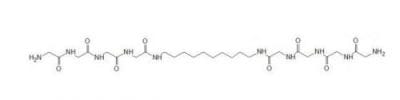
Tectomer 2-tailed
View Product
Tectomer 4-tailed, C(-CH2-NH-Gly7)4 * TFA
View ProductReady to Advance Your Research with Tectomers?
Discover Reinste's comprehensive range of high-quality Tectomers and related nanomaterials designed to accelerate your scientific breakthroughs. Partner with us for innovative solutions.
Contact Our Experts Today