
Tectomers: Revolutionizing Liquid Crystals and Self-Assembly in Nanomaterials for Indian R&D
Explore the cutting-edge world of Tectomers and their pivotal role in liquid crystal formation, self-assembly, and advanced nanomaterials.
Learn MoreIntroduction to Tectomers: A New Era in Supramolecular Chemistry
In the dynamic landscape of materials science, the quest for novel structures with unprecedented functionalities drives innovation. Among the most exciting advancements are Tectomers – a class of precisely engineered supramolecular building blocks that are revolutionizing our understanding and control over self-assembly processes. For Indian researchers and professionals, Tectomers represent a fertile ground for breakthroughs in nanomaterials, liquid crystals, and advanced chemical synthesis.
Tectomers, short for "tectonic monomers," are molecular units designed to spontaneously assemble into highly ordered, complex architectures. This intrinsic ability to self-organize, often mimicking biological systems, offers a powerful bottom-up approach to creating sophisticated materials. Unlike traditional polymers, Tectomers allow for exquisite control over the final structure, leading to materials with tailored properties for specific applications. This precision is particularly appealing in fields like nanotechnology, where atomic-level control is paramount.
The relevance of Tectomers to Indian R&D and industry is immense. With a burgeoning scientific community and a strong focus on indigenous innovation, India is well-positioned to leverage Tectomer technology. From developing next-generation electronic devices and sensors to creating advanced drug delivery systems and sustainable materials, the potential impact is far-reaching. This article delves into the fascinating world of Tectomers, their role in liquid crystal formation from tectomers, and the exciting opportunities they present for India's scientific and industrial future.
Key Benefits of Tectomers for Indian Researchers
-
✓
Precision in Self-Assembly
Tectomers offer unparalleled control over molecular arrangement, enabling the creation of highly ordered nanomaterials and liquid crystals with predictable properties, crucial for advanced research.
-
✓
Versatile Building Blocks
Their modular nature allows for the synthesis of diverse supramolecular structures, from dendrimers to complex polymers, opening avenues for multidisciplinary research.
-
✓
Enhanced Material Properties
Materials derived from Tectomers often exhibit superior mechanical, optical, and electronic properties due to their ordered internal structures.
-
✓
Facilitating Nanotechnology
As foundational elements in nanotechnology, Tectomers are instrumental in developing nanoscale devices, sensors, and advanced functional materials.
-
✓
Sustainable Chemical Synthesis
The self-assembly approach can reduce the need for complex, energy-intensive synthetic routes, aligning with green chemistry principles.
-
✓
Interdisciplinary Research Potential
Tectomers bridge chemistry, physics, and biology, fostering collaborative research in advanced materials and life sciences.
Industrial Applications of Tectomers and Liquid Crystals
Advanced Displays & Optics
Tectomer-derived liquid crystals can lead to next-generation displays with improved contrast, faster response times, and enhanced energy efficiency. Their ordered structures are also valuable in optical filters and sensors.
Drug Delivery Systems
The precise self-assembly of Tectomers allows for the creation of sophisticated nanocarriers for targeted drug delivery, improving therapeutic efficacy and reducing side effects in healthcare.
Sensors and Biosensors
Tectomer-based nanomaterials can be engineered to detect specific molecules or environmental changes with high sensitivity, crucial for diagnostics, environmental monitoring, and industrial safety.
Flexible Electronics
The ability of Tectomers to form ordered thin films makes them ideal candidates for flexible electronic components, wearable technology, and printable circuits, pushing the boundaries of miniaturization.
Self-Healing Materials
The dynamic nature of supramolecular interactions in Tectomers can be harnessed to develop materials with intrinsic self-healing capabilities, extending product lifespans and reducing waste.
Catalysis and Energy
Tectomer-derived structures can serve as highly efficient catalysts due to their ordered pores and functionalized surfaces, relevant for sustainable chemical processes and advanced energy storage solutions.
India's Growing Frontier: Tectomers, Nanomaterials, and Liquid Crystals
India's scientific ecosystem is experiencing a robust growth phase, with significant investments in R&D and a strong emphasis on emerging technologies. This environment is particularly conducive for the advancement of Tectomers and related nanomaterials research. Indian institutions and industries are increasingly exploring sophisticated materials for applications ranging from defense to healthcare, making the precise control offered by self-assembly a critical advantage.
A key trend in India is the push towards indigenous development and manufacturing. Tectomer technology, which allows for the creation of unique liquid crystal formation from tectomers and other advanced structures, can significantly contribute to this goal. By mastering the synthesis and application of these supramolecular systems, India can reduce its reliance on imported high-tech materials and establish itself as a global leader in nanotechnology and advanced materials. Research in areas like dendrimers and functional polymers, which share conceptual links with Tectomers, is already flourishing, providing a strong foundation.
Furthermore, the focus on sustainable development in India aligns perfectly with the principles of Tectomer chemistry. The potential for more efficient chemical synthesis and the creation of eco-friendly materials from Tectomers can drive innovation in areas like waste management, renewable energy, and green manufacturing. Collaborative efforts between academia, research institutions, and industry will be crucial in translating laboratory breakthroughs into tangible industrial applications, propelling India to the forefront of the Tectomers revolution.
Frequently Asked Questions about Tectomers and Nanomaterials
Tectomers are precisely engineered molecular building blocks designed for predictable self-assembly into complex supramolecular structures. Unlike traditional polymers, which typically involve covalent bonding for chain formation, Tectomers rely on non-covalent interactions (like hydrogen bonding or hydrophobic effects) for their assembly, offering greater control over the final architecture and dynamic reversibility.
Tectomers can be designed with specific anisotropic shapes and functional groups that promote ordered alignment, leading to the formation of liquid crystals. This precise self-assembly allows for the creation of liquid crystalline phases with tailored optical and electronic properties, crucial for advanced display technologies and sensors.
Tectomer-based nanomaterials find applications in diverse fields, including advanced displays, drug delivery systems, highly sensitive sensors (biosensors), flexible electronics, self-healing materials, and efficient catalysts. Their ability to form precise nanoscale architectures is key to their functionality in nanotechnology.
India's growing focus on indigenous R&D, nanotechnology, and advanced materials makes Tectomers highly relevant. They offer a pathway to develop cutting-edge materials for strategic sectors, foster self-reliance in high-tech manufacturing, and contribute to sustainable chemical synthesis and innovation aligned with national priorities.
Explore Our Tectomer Product Range

Tectomer 4-tailed
View Product →
Tectomer 3-tailed
View Product →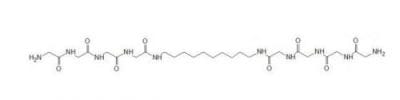
Tectomer 2-tailed
View Product →
Tectomer 4-tailed, C(-CH2-NH-Gly7)4 * TFA
View Product →Ready to Advance Your Research with Tectomers?
Connect with our experts to explore custom solutions and bulk orders for your specific scientific needs.
Get in Touch