
Tectomers: Pioneering Self-Assembly and Supramolecular Nanotechnology for Indian Innovation
Unlocking the future of advanced nanomaterials through precise molecular design and controlled self-assembly, offering transformative solutions for Indian researchers and industries.
Learn MoreUnderstanding Tectomers: A Gateway to Advanced Nanomaterials
In the rapidly evolving landscape of nanotechnology, Tectomers stand out as a revolutionary class of molecular building blocks. These precisely engineered molecules are designed to exhibit predictable self-assembly, spontaneously organizing into larger, ordered supramolecular structures. This intrinsic ability to form complex architectures from simpler components is not just fascinating; it's a cornerstone for creating next-generation nanomaterials with unparalleled control over their properties and functions. For Indian researchers and professionals, understanding Tectomers opens up a vast realm of possibilities in various scientific and industrial domains.
The concept of supramolecular chemistry, which underpins Tectomer design, focuses on non-covalent interactions like hydrogen bonding, π-π stacking, and electrostatic forces to direct molecular organization. Unlike traditional covalent synthesis, self-assembly allows for the creation of intricate systems with emergent properties that are difficult, if not impossible, to achieve through conventional methods. This bottom-up approach to nanotechnology offers efficiency, scalability, and the potential for error correction, making it highly attractive for advanced materials development.
India's vibrant R&D sector is increasingly focusing on cutting-edge materials science. Tectomers, with their programmable assembly, offer a versatile platform for innovation. From developing advanced drug delivery systems to creating novel sensors and catalysts, the potential impact of Tectomer-based nanomaterials on Indian industry and healthcare is immense. Our exploration will delve into the fundamental principles, diverse applications, and the unique opportunities Tectomers present for the Indian scientific community.
Key Advantages for Indian Researchers and Industries
Tectomers offer a multitude of benefits that can significantly accelerate research and development in India, particularly in fields requiring precise material control at the nanoscale:
- Programmable Self-Assembly: The inherent ability of Tectomers to self-assemble with high precision allows researchers to design and construct complex nanomaterials with tailored structures and functions, reducing the need for laborious multi-step synthesis.
- Versatile Material Design: Tectomers can be functionalized with various chemical groups, enabling the creation of diverse supramolecular structures, including those incorporating peptides, dendrimers, and other biomolecules, opening avenues for bioconjugation and advanced chemical biology applications.
- Enhanced Performance: The ordered structures formed by Tectomer self-assembly often lead to superior material properties, such as improved stability, higher surface area, and enhanced catalytic activity, crucial for high-performance applications.
- Cost-Effectiveness and Scalability: Self-assembly processes can be more energy-efficient and scalable compared to traditional top-down nanofabrication methods, offering a pathway to more affordable and accessible nanotechnology solutions for industries in India.
- Biocompatibility: Many Tectomer designs can be made biocompatible, making them ideal candidates for biomedical applications like targeted drug delivery, diagnostics, and regenerative medicine, areas of critical importance for Indian healthcare.
- Innovation in Molecular Design: Tectomers push the boundaries of molecular design, inspiring new approaches to creating functional materials from the ground up, fostering a culture of innovation among Indian scientists.
Diverse Applications of Tectomers in Modern Science and Technology
The unique ability of Tectomers to form precisely controlled supramolecular architectures through self-assembly has unlocked a wide array of applications across various industries, promising significant advancements for India.
Drug Delivery Systems
Tectomers are being explored for targeted drug delivery due to their capacity to encapsulate therapeutic agents and release them at specific sites. Their controlled self-assembly allows for precise control over size and surface chemistry, crucial for enhancing drug efficacy and reducing side effects in pharmaceutical applications. This is vital for improving healthcare outcomes in India.
Biosensors and Diagnostics
The ordered structures formed by Tectomers can be functionalized with biorecognition elements, making them excellent candidates for highly sensitive biosensors. They can detect specific biomolecules, pathogens, or environmental toxins, offering rapid and accurate diagnostic tools that are crucial for public health and environmental monitoring in India.
Tissue Engineering and Regenerative Medicine
By mimicking the extracellular matrix, Tectomer-based nanomaterials can provide scaffolds for cell growth and tissue regeneration. Their biocompatibility and ability to present specific biochemical cues make them invaluable for developing advanced therapies for organ repair and regeneration, a growing area of medical research in India.
Catalysis and Energy
Tectomers can act as templates or supports for catalysts, creating highly efficient reaction environments. Their precise structures can enhance selectivity and activity in chemical reactions. In energy, they are being explored for improving solar cell efficiency and developing advanced materials for energy storage, aligning with India's renewable energy goals.
Advanced Electronics and Optics
The ordered self-assembly of Tectomers allows for the creation of new electronic and optical nanomaterials with unique properties. This includes components for flexible electronics, advanced displays, and next-generation optical devices, contributing to India's burgeoning electronics manufacturing sector.
Environmental Remediation
Tectomer-based nanomaterials can be designed for efficient removal of pollutants from water and air. Their high surface area and tunable properties make them effective adsorbents or catalysts for degrading environmental contaminants, addressing critical environmental challenges faced by India.
Tectomers in India: Emerging Opportunities and Future Trends
India's scientific community is increasingly recognizing the transformative potential of Tectomers and supramolecular nanotechnology. With a strong emphasis on indigenous innovation and self-reliance (Atmanirbhar Bharat), research into advanced nanomaterials is gaining significant traction. The unique capabilities of Tectomer self-assembly on different substrates are particularly relevant for developing tailored solutions for India's diverse needs, from healthcare to sustainable technologies.
One of the key trends in India is the growing collaboration between academic institutions, research labs, and industry partners to translate fundamental research into practical applications. Tectomer research, encompassing molecular design, peptide-based structures, and dendrimers, is poised to benefit from this synergistic approach. Indian universities and national laboratories are investing in state-of-the-art facilities for nanoscale characterization and synthesis, fostering an environment conducive to cutting-edge Tectomer development.
Furthermore, there's a rising interest in bioconjugation techniques involving Tectomers, especially for developing next-generation diagnostics and therapeutics for prevalent diseases in India. The ability to precisely control the nanoscale architecture through Tectomer self-assembly allows for the creation of highly specific and efficient biomedical devices. This trend is complemented by a focus on sustainable nanomaterials, where Tectomers can play a crucial role in developing eco-friendly catalysts and separation technologies.
The future of Tectomers in India also lies in their integration with artificial intelligence and machine learning for accelerated material discovery and optimization. Predictive modeling of Tectomer self-assembly pathways and properties can significantly reduce experimental costs and time, making advanced nanotechnology more accessible. As India continues to emerge as a global leader in scientific research and technological innovation, Tectomers are set to be a cornerstone in its journey towards advanced materials excellence.
Frequently Asked Questions About Tectomers
Tectomers are a class of precisely engineered molecular building blocks that exhibit predictable self-assembly into larger, ordered supramolecular structures. They are crucial in nanotechnology for creating functional nanomaterials.
Tectomers are designed with specific recognition motifs that allow them to spontaneously self-assemble into complex architectures through non-covalent interactions, mimicking biological processes for advanced materials design. This forms the core of supramolecular molecular design.
Tectomers find applications in drug delivery, biosensing, tissue engineering, catalysis, and the development of novel electronic and optical nanomaterials due to their controlled structural formation and functionalization capabilities, including the use of peptides and dendrimers.
For Indian researchers, Tectomers offer a versatile platform for innovation in advanced materials science, pharmaceutical development, and biomedical research, enabling the creation of cost-effective and high-performance solutions for local and global challenges, especially in chemical biology and bioconjugation.
Explore Our Tectomer Product Range
Discover Reinste's cutting-edge Tectomer products, designed to empower your research in self-assembly, nanomaterials, and supramolecular nanotechnology.

Tectomer 4-tailed
View Product
Tectomer 3-tailed
View Product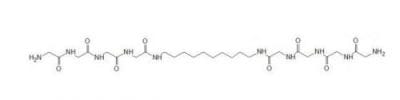
Tectomer 2-tailed
View Product
Tectomer 4-tailed, C(-CH2-NH-Gly7)4 * TFA
View ProductReady to Explore the Future of Nanotechnology?
Dive deeper into the world of Tectomers and their incredible potential. Connect with Reinste to discover how our advanced nanomaterials can revolutionize your research and industrial applications.
Contact Our Experts