Tectomers in Supramolecular Chemistry: Paving the Way for Next-Gen Nanomaterials in Indian R&D
Delve into the fascinating world of Tectomers, exploring their intricate self-assembly principles and their transformative potential across various scientific and industrial domains, with a special focus on the burgeoning research landscape in India.
Explore NowUnveiling Tectomers: A Paradigm Shift in Molecular Design for India
In the vibrant and rapidly evolving landscape of Indian scientific research and industrial innovation, the emergence of advanced materials holds paramount importance. Among these, Tectomers stand out as a revolutionary class of precisely engineered molecules. These sophisticated structures, at the heart of supramolecular chemistry, are designed to self-assemble into complex, highly ordered nanomaterials. Unlike traditional materials formed through strong covalent bonds, Tectomers harness weaker, reversible non-covalent interactions, offering unprecedented control over their final architecture and functionality. This intrinsic ability for self-assembly allows for the creation of intricate structures, often mimicking biological systems, with remarkable precision at the nanoscale.
For Indian researchers and professionals, understanding and harnessing Tectomers presents a golden opportunity. The nation's burgeoning focus on nanotechnology and advanced materials development aligns perfectly with the capabilities of Tectomers. From developing cutting-edge pharmaceuticals and advanced diagnostics to creating sustainable energy solutions and novel catalysts, the applications are vast. India's robust scientific talent pool, coupled with increasing investments in R&D infrastructure, makes it fertile ground for exploring the full potential of these dendrimers and other complex molecular architectures. This blog post delves into the core principles of Tectomers, their diverse applications, and the exciting prospects they offer for shaping India's future in advanced materials science and molecular design. The ability of Tectomers to undergo controlled self-assembly into predictable and functional structures promises efficiency, reduced waste, and the creation of materials with tailor-made properties, addressing critical needs in various sectors across India. This area of research is not just about scientific curiosity; it's about developing practical solutions that can drive economic growth and improve quality of life.
Empowering Indian Researchers: The Advantages of Tectomer Exploration
For researchers in India, delving into Tectomers and their role in supramolecular chemistry offers a multitude of benefits, fostering innovation and contributing to global scientific advancements in a uniquely Indian context:
- Precision in Nanomaterial Synthesis: Tectomers enable the creation of nanomaterials with unparalleled control over size, shape, and surface functionality. This precision is crucial for applications requiring high specificity, such as targeted drug delivery systems or highly selective chemical sensors, areas where India is making significant strides.
- Versatile Self-Assembly Platforms: Their intrinsic ability for self-assembly provides a flexible platform for designing complex architectures. This bottom-up approach to synthesis can streamline the development of advanced materials, from intricate drug delivery vehicles to sophisticated sensors, reducing the need for laborious multi-step syntheses and accelerating research timelines.
- Innovation in Drug Delivery: Tectomer-based dendrimers can be engineered to encapsulate and deliver therapeutic agents more efficiently and precisely. This capability holds immense promise for revolutionizing drug delivery systems in the Indian pharmaceutical sector, addressing challenges like drug solubility, bioavailability, and targeted therapy for various diseases.
- Advancements in Biosensors and Diagnostics: The unique surface properties and ability of Tectomers to interact specifically with biological molecules make them ideal candidates for highly sensitive and selective biosensors. These can be crucial for early disease detection, point-of-care diagnostics, and environmental monitoring, significantly impacting public health and safety in India.
- Exploration of Novel Catalysts: The precise arrangement of functional groups within Tectomer assemblies can lead to the development of highly efficient and selective catalysts for a wide range of chemical reactions. This innovation can optimize industrial chemical processes, reduce waste, and facilitate the production of novel chemical products, contributing to a more sustainable chemical industry in India.
- Sustainable Materials Development: Tectomers offer pathways to create new materials with enhanced properties, potentially leading to more sustainable and eco-friendly solutions across various industries. This aligns with India's commitment to green technologies and resource efficiency.
- Intellectual Property Opportunities: Pioneering research into novel Tectomer structures, their synthesis, and applications can lead to significant intellectual property, including valuable patents involving tectomer supramolecular structures. This positions Indian institutions and companies at the forefront of this cutting-edge field, fostering global recognition and economic advantage.
- Interdisciplinary Research: The study of Tectomers naturally bridges chemistry, materials science, biology, and engineering. This inherent interdisciplinary nature fosters collaborations vital for holistic scientific growth in India, encouraging a synergistic approach to complex problems in molecular design and bio-nanomaterials.
By embracing Tectomer research, Indian scientists can contribute significantly to global scientific knowledge and develop solutions that address local and global challenges, driving innovation in molecular design and bio-nanomaterials.
Industrial Impact: Tectomer Applications Driving Innovation in India
The versatility of Tectomers extends beyond academic research, offering transformative applications across various industries. Indian industries, with their drive for innovation and efficiency, are poised to benefit immensely from these advanced nanomaterials:
Pharmaceuticals & Targeted Drug Delivery
Tectomer-based nanocarriers offer precise drug encapsulation and targeted delivery to specific cells or tissues, minimizing side effects and enhancing therapeutic efficacy. This is critically important for addressing diseases prevalent in India, such as cancer, tuberculosis, and various infectious diseases. The ability to incorporate specific ligands through advanced peptide synthesis techniques allows for the creation of sophisticated drug conjugates, opening new avenues for personalized medicine and improved patient outcomes in the Indian pharmaceutical sector.
Advanced Materials & Functional Coatings
Through controlled self-assembly, Tectomers can form robust, functional coatings for a wide array of surfaces. These coatings can impart enhanced properties like superior corrosion resistance for industrial machinery, anti-fouling capabilities for marine applications, and even self-healing characteristics for protective layers. This has significant implications for India's growing infrastructure, automotive, and textile industries, leading to more durable and efficient products and systems. The precise molecular design of Tectomers allows for tailoring these properties to specific environmental and functional requirements.
Diagnostics, Biosensors & Medical Imaging
The high surface area, tunable functionality, and biocompatibility of Tectomers make them excellent candidates for rapid and accurate diagnostic tools. They can be engineered into highly sensitive biosensors for detecting biomarkers of diseases, pathogens, or environmental toxins. From developing portable point-of-care diagnostics for remote areas to enhancing medical imaging contrast agents, these bio-nanomaterials can significantly impact public health and safety initiatives across India. Their ability to bind specifically to target molecules ensures high accuracy and minimal false positives.
Catalysis, Chemical Manufacturing & Energy
Tectomers can act as highly efficient scaffolds for immobilizing catalysts, leading to more selective and sustainable chemical reactions. This innovation can optimize industrial chemical processes, reduce waste generation, and facilitate the production of novel chemical products with higher purity and yield. In the energy sector, Tectomer-based materials can be explored for advanced battery components, fuel cells, and efficient solar energy conversion, aligning with India's ambitious renewable energy targets. The precise control over active sites offered by Tectomer molecular design is a game-changer.
The integration of Tectomer technology into these sectors represents a significant step forward in India's journey towards becoming a global leader in advanced manufacturing and scientific research, underpinned by sophisticated molecular design principles.
India's Tectomer Horizon: Emerging Opportunities and Future Trends
India is witnessing a surge in research and development activities, particularly in cutting-edge fields like nanotechnology and supramolecular chemistry. This creates a fertile ground for the advancement of Tectomers, offering unique opportunities for Indian researchers and industries to lead in global innovation.
One significant trend driving Tectomer research in India is the increasing focus on sustainable and green chemistry. Tectomers, with their ability to self-assemble and often utilize reversible non-covalent interactions, align perfectly with these goals. They enable the development of materials with reduced environmental footprints, less hazardous synthesis routes, and potentially recyclable components. This is crucial for India, a nation committed to environmental stewardship and sustainable industrial growth. Furthermore, there's a burgeoning interest in bio-nanomaterials, where Tectomers can mimic complex biological systems for advanced biomedical applications, from targeted drug delivery to sophisticated diagnostic tools, addressing critical healthcare needs.
The landscape of intellectual property is also evolving rapidly, with a noticeable increase in patents involving tectomer supramolecular structures globally. This indicates a strong recognition of their commercial potential and the value of innovation in this space. Indian institutions and companies have a strategic opportunity to invest proactively in R&D in this area, securing patents that can drive economic growth, create new industries, and establish India's leadership in specialized chemical products and advanced materials. Government initiatives supporting innovation and intellectual property protection further bolster this trend.
Collaboration between academia and industry is another crucial trend gaining momentum in India. Universities and premier research institutes are increasingly partnering with industrial players to translate fundamental research into tangible products and solutions. Tectomers, with their clear industrial applications in areas like advanced coatings, highly efficient catalysts, and precision drug delivery systems, are prime candidates for such synergistic collaborations. These partnerships foster an ecosystem of innovation, accelerating the journey from laboratory discovery to market-ready products, driven by sophisticated molecular design principles and a deep understanding of nanomaterials.
The future of Tectomers in India is exceptionally bright, driven by a confluence of scientific curiosity, industrial demand for high-performance materials, and proactive government support for advanced materials research. By strategically focusing on these emerging trends and fostering a collaborative environment, India can solidify its position as a global hub for nanotechnology and supramolecular chemistry innovation, contributing significantly to both national development and global scientific progress.
Frequently Asked Questions about Tectomers
Tectomers are a class of precisely engineered, multivalent molecules designed to self-assemble into complex supramolecular structures. They are often based on dendrimeric or star-shaped architectures with specific functional groups at their termini, enabling controlled interactions and the formation of well-defined nanomaterials.
Tectomers are a prime example of applied supramolecular chemistry. Their design leverages non-covalent interactions (like hydrogen bonding, π-π stacking, metal coordination, and hydrophobic effects) to direct their self-assembly into larger, ordered architectures, mimicking biological systems.
Tectomers find applications in various nanomaterial fields, including drug delivery systems (nanocarriers), biosensors, catalysts, molecular electronics, and advanced coatings. Their precise structure allows for tailored functionalities at the nanoscale.
For Indian researchers and professionals, Tectomers offer a powerful platform for innovation in areas like advanced pharmaceuticals, sustainable materials, and diagnostic tools. Their potential in creating novel functional materials aligns with India's growing focus on nanotechnology and indigenous product development.
Specialized chemical suppliers often provide Tectomer building blocks and pre-synthesized Tectomers. Platforms like Hiyka offer a range of chemical products, including Tectomers, to support advanced research and development.
Explore Related Tectomer Products

Tectomer 4-tailed
View Product
Tectomer 3-tailed
View Product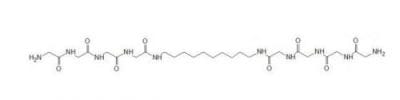
Tectomer 2-tailed
View Product
Tectomer 4-tailed, C(-CH2-NH-Gly7)4 * TFA
View ProductAdvance Your Research with Reinste & Hiyka
Ready to explore high-quality Tectomers and other advanced chemical products for your innovative projects? Partner with us to achieve your research and development goals.
Contact Our Experts Today