
Tectomers and Non-Covalent Interactions: A Biomimetic Approach to Nanomaterials for Indian R&D
Delve into the intricate dance of molecules that form self-assembling nanomaterials, offering unprecedented opportunities for innovation in various scientific and industrial sectors across India.
Explore Tectomer Solutions
Introduction to Tectomers and Non-Covalent Interactions
In the dynamic landscape of materials science and nanotechnology, the ability to precisely control molecular architecture at the nanoscale is paramount. This is where tectomers emerge as a revolutionary concept. Inspired by nature's intricate self-assembly processes, tectomers are meticulously designed molecular building blocks that spontaneously organize into complex, ordered nanomaterials through specific non-covalent interactions. For Indian researchers and professionals, this field represents a fertile ground for innovation, offering pathways to develop advanced materials with tailored properties for diverse applications.
The magic of tectomers lies in their reliance on non-covalent forces – subtle yet powerful interactions like hydrogen bonding, π-π stacking, hydrophobic effects, and electrostatic attractions. Unlike strong covalent bonds, these interactions are reversible and dynamic, allowing molecules to "find" their optimal arrangements, much like proteins fold into their functional three-dimensional structures or DNA strands pair with exquisite specificity. This biomimetic approach to materials synthesis opens up avenues for creating responsive, adaptive, and highly functional systems.
India, with its burgeoning scientific community and a strong focus on self-reliance in technology, is uniquely positioned to leverage the potential of tectomers. From advanced drug delivery systems to next-generation electronic components and sustainable energy solutions, understanding and manipulating non-covalent interactions in tectomer systems is crucial. This blog delves into the core principles, benefits, applications, and future trends of tectomers, providing valuable insights for those at the forefront of chemical and materials research in India.
Benefits for Indian Researchers and Professionals
- Precision Nanoscale Control: Tectomers enable the construction of nanomaterials with unparalleled precision, allowing for fine-tuning of properties at the molecular level. This is critical for developing high-performance devices and systems.
- Biomimetic Innovation: Drawing inspiration from biological self-assembly, tectomers offer a biomimetic approach to material design, leading to biocompatible and biodegradable solutions for medical and environmental applications.
- Versatile Material Properties: By varying the chemical structure of tectomers and the nature of non-covalent interactions, researchers can create a wide array of materials with diverse properties, from soft gels to robust composites.
- Cost-Effective Synthesis: Often, self-assembly processes can be more energy-efficient and scalable than traditional top-down nanofabrication methods, potentially reducing production costs for advanced polymers and chemicals.
- Enhanced Functionality: The ordered structures formed by tectomers can lead to enhanced functionality in areas like catalysis, sensing, and targeted delivery, making them highly valuable in pharmaceutical and environmental nanotechnology.
- Sustainable Chemistry: The ability to design materials with specific properties from the bottom-up, often using milder conditions, aligns with principles of green chemistry and sustainable materials science.
Real-World Applications of Tectomers in Industry
Targeted Drug Delivery Systems
Tectomers can be engineered to form stable nanocarriers that encapsulate therapeutic agents. Their precise self-assembly, driven by non-covalent interactions, allows for controlled release and targeted delivery to specific cells or tissues, minimizing side effects and enhancing treatment efficacy. This is particularly promising for cancer therapies and gene delivery, areas of intense research in India.
Advanced Biosensors and Diagnostics
The ability of tectomers to create highly ordered, functional nanomaterials makes them ideal for biosensor development. They can be designed to specifically recognize biomarkers, pathogens, or environmental toxins with high sensitivity and selectivity, revolutionizing early disease detection and environmental monitoring, crucial for public health in India.
Next-Generation Electronics and Optics
Self-assembly of tectomers can lead to the creation of novel conductive, semiconductive, or optically active polymers and nanomaterials. These can be integrated into flexible electronics, organic solar cells, and advanced optical devices, contributing to India's push for indigenous high-tech manufacturing.
Advanced Catalysis and Functional Materials
By creating highly ordered porous structures, tectomers can serve as scaffolds for catalysts, enhancing reaction efficiency and selectivity. Their adaptability also extends to developing functional coatings, membranes, and composite materials science with superior mechanical, thermal, or chemical properties for various industrial uses.
Emerging Trends and Opportunities in India's Nanomaterials Landscape
The field of nanomaterials, particularly those derived from tectomers and non-covalent interactions, is witnessing rapid advancements globally, and India is no exception. A significant trend is the increasing focus on sustainable and green chemistry approaches. Indian researchers are exploring how biomimetic design principles, often utilizing readily available building blocks like Glycine, can lead to eco-friendly synthesis of complex nanostructures, reducing reliance on harsh chemicals and energy-intensive processes. This aligns perfectly with national initiatives promoting sustainable development and indigenous innovation in materials science.
Another key opportunity lies in the integration of tectomer-based nanomaterials into advanced healthcare solutions. With a vast and diverse population, India has a critical need for affordable and effective diagnostics and therapeutics. Tectomers, with their ability to form precise drug delivery vehicles and highly sensitive biosensors, present a promising avenue. The use of specific counter-ions like TFA in the synthesis of certain tectomer derivatives highlights the fine chemical control required to achieve desired functionalities, pushing the boundaries of pharmaceutical nanotechnology.
Furthermore, the growing emphasis on "Make in India" and "Atmanirbhar Bharat" initiatives provides a strong impetus for local development and manufacturing of advanced polymers and chemicals. Research into non-covalent interactions in tectomer systems can lead to the creation of novel functional materials for electronics, energy storage, and environmental remediation, directly contributing to India's technological self-reliance. Collaborations between academic institutions, research labs, and industry players are crucial to translate fundamental research into tangible products and solutions, fostering a vibrant ecosystem for nanotechnology and self-assembly research in the country. The future of advanced materials science in India is undoubtedly shaped by these intelligent molecular designs.
Frequently Asked Questions about Tectomers
Explore Our Tectomer Product Range
Tectomer 4-tailed
A versatile tectomer building block for complex self-assembly.

Tectomer 3-tailed
Ideal for creating branched or network-like nanomaterial structures.
Tectomer 2-tailed
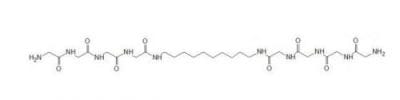
A foundational tectomer for linear or layered self-assembled structures.

Tectomer 4-tailed, C(-CH2-NH-Gly7)4 * TFA
Advanced tectomer with Glycine (Gly7) and TFA for specific applications.
Ready to Innovate with Tectomers?
Unlock the potential of self-assembling nanomaterials and biomimetic design with Reinste's cutting-edge tectomer solutions. Whether you're a researcher exploring non-covalent interactions or an industry professional seeking advanced polymers, we have the expertise and products to support your next breakthrough.
Explore Our Tectomer ProductsGet in Touch with Reinste
Have questions about tectomers, nanomaterials, or specific non-covalent interactions? Our team of experts is ready to assist you. Fill out the form below, and we will get back to you promptly.