Tectomer Knowledge Graphs: Revolutionizing Semantic Search in Nanomaterials for Indian R&D
Explore how Tectomer-based knowledge graphs are transforming research in nanomaterials and supramolecular chemistry, offering unprecedented insights for Indian scientists and industries.
Explore TectomersThe Dawn of Semantic Intelligence in Nanomaterial Research
In the rapidly evolving landscape of scientific research, particularly within the domains of nanomaterials and supramolecular chemistry, the sheer volume and complexity of data present significant challenges. Indian researchers and professionals, striving to be at the forefront of global innovation, increasingly require sophisticated tools to navigate this data deluge. This is where the convergence of Tectomers, Knowledge Graphs, and Semantic Search emerges as a game-changer, promising to unlock unprecedented insights and accelerate discovery.
At the heart of this revolution are Tectomers – fascinating dendrimeric structures that exhibit precise control over molecular architecture and properties. These highly branched macromolecules, central to advanced nanomaterials and supramolecular chemistry, offer immense potential in areas ranging from drug delivery to catalysis. However, fully harnessing their capabilities demands a deeper, more interconnected understanding of their synthesis, characteristics, and applications.
Enter Knowledge Graphs and Semantic Search. A Knowledge Graph structures information into a network of entities and their relationships, much like a human brain connects concepts. Semantic Search, powered by these graphs, goes beyond keyword matching to understand the intent and contextual meaning behind a query. When applied to the intricate world of Tectomers and nanomaterials, this powerful combination transcends traditional data analysis, enabling researchers to discover hidden correlations, predict properties, and design experiments with unparalleled precision. For India's vibrant R&D sector, this represents a monumental leap towards data-driven innovation and global scientific leadership.
Unlocking New Horizons: Benefits for Indian Researchers
- Enhanced Data Retrieval and Analysis: Navigate vast datasets of Tectomer synthesis, characterization, and application with unprecedented ease. Semantic search capabilities ensure that relevant information, even if phrased differently, is accurately identified and presented.
- Accelerated Discovery of Novel Applications: By revealing previously unseen relationships between Tectomer structures, properties, and biological interactions, knowledge graphs can significantly speed up the identification of new applications in medicine, materials science, and more.
- Improved Collaboration and Knowledge Sharing: Foster a more interconnected research environment where insights from diverse studies on peptide chemistry, biomaterial research, and polymer science can be seamlessly integrated and understood.
- Personalized Research Insights: Leverage semantic connections to gain tailored insights, helping researchers focus on the most promising avenues for their specific projects involving organic synthesis or materials engineering.
- More Efficient Literature Review: Drastically reduce the time spent on literature surveys in complex fields like supramolecular chemistry, by identifying key papers and concepts based on semantic relevance rather than simple keyword matching.
- Predictive Modeling and Design: Utilize the structured data within a Tectomer knowledge graph to train AI models for predicting material properties or designing novel Tectomer structures with desired functionalities.
Transformative Applications Across Industries
Advanced Drug Delivery Systems
Tectomers, with their precise architectures, are ideal candidates for targeted drug delivery. Knowledge graphs can optimize the design of Tectomer-based carriers, predicting drug encapsulation efficiency, release kinetics, and cellular uptake, leading to more effective therapies with reduced side effects. This is particularly relevant for addressing complex health challenges in India.
Next-Generation Catalysis
The unique cavities and surface functionalities of Tectomers make them excellent scaffolds for catalysts. Integrating catalytic reaction data into a knowledge graph allows researchers to semantically search for optimal Tectomer-catalyst combinations, predict reaction pathways, and design highly efficient and selective catalytic systems for industrial processes.
High-Performance Biosensors
Tectomers can significantly enhance the sensitivity and specificity of biosensors. Knowledge graphs can analyze vast amounts of sensor performance data, linking Tectomer modifications to detection limits and selectivity, thereby accelerating the development of rapid and accurate diagnostic tools crucial for healthcare and environmental monitoring.
Smart Materials and Coatings
From self-healing polymers to responsive coatings, Tectomers are paving the way for smart materials. Knowledge graphs can aid in the rational design of these materials by mapping the relationship between Tectomer structure, environmental stimuli, and material response, enabling the creation of advanced functionalities for various engineering applications.
Environmental Remediation
Tectomers can be engineered for efficient pollutant capture and degradation. Knowledge graphs can help identify optimal Tectomer designs for specific contaminants, considering factors like adsorption capacity, degradation kinetics, and reusability, offering innovative solutions for India's pressing environmental challenges.
Advanced Diagnostics
The precise molecular recognition capabilities of Tectomers make them excellent candidates for advanced diagnostic probes. Knowledge graphs can correlate Tectomer structure with binding affinity to biomarkers, facilitating the development of highly sensitive and specific diagnostic tools for early disease detection.
India's Growing Landscape: Opportunities and Future Trends
India's scientific ecosystem is ripe for the integration of Tectomer knowledge graphs for semantic search. With robust government initiatives like the "Nano Mission" promoting nanotechnology research and development, there's a fertile ground for adopting advanced data intelligence tools. The increasing investment in AI and Machine Learning capabilities across Indian academic institutions and industrial research labs further strengthens this outlook.
The demand for cutting-edge biomaterials in healthcare, advanced materials in electronics, and sustainable solutions in chemistry is surging. This creates a significant opportunity for Indian researchers to leverage knowledge graphs to accelerate the discovery and deployment of Tectomer-based innovations. Collaboration between academia and industry, facilitated by shared semantic data platforms, will be crucial in translating fundamental research into tangible products and solutions.
Future trends point towards the development of more sophisticated, domain-specific knowledge graphs for dendrimers and supramolecular chemistry, integrated with experimental data and simulation tools. This will enable real-time, intelligent decision-making in the lab, pushing the boundaries of what's possible in organic synthesis and polymer science. India has the potential to become a global leader in this interdisciplinary field by strategically investing in both Tectomer research and the semantic technologies that amplify its impact.
Frequently Asked Questions
Explore Our Related Tectomer Products

Tectomer 4-tailed
View Product
Tectomer 3-tailed
View Product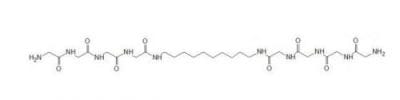
Tectomer 2-tailed
View Product
Tectomer 4-tailed, C(-CH2-NH-Gly7)4 * TFA
View ProductReady to Delve Deeper into Tectomers and Advanced Material Research?
Contact Reinste today for expert insights and solutions tailored to your R&D needs in nanomaterials, supramolecular chemistry, and beyond. Let's innovate together.
Get in Touch