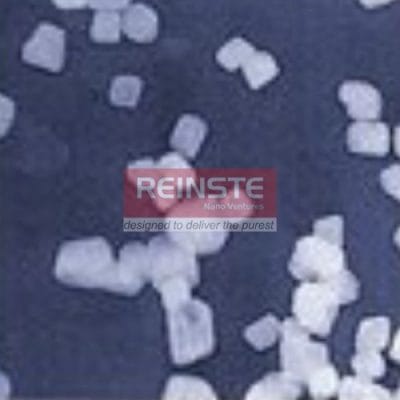
The Unseen Influence: Why Measuring Airborne Salt Matters in India
With a sprawling coastline of over 7,500 kilometers, India is constantly interacting with its surrounding seas. This interaction isn't just about serene beaches and bustling ports; it's also about a continuous, invisible exchange of particles between the ocean and the atmosphere. Among the most significant of these are salt particles. When wind sweeps across the ocean surface, it generates sea spray, releasing vast quantities of salt aerosols into the air. These tiny particles, often invisible to the naked eye, embark on a journey, influencing everything from weather patterns and air quality to the durability of our infrastructure. For Indian researchers and professionals in fields ranging from environmental science to material engineering, understanding and measuring airborne salt is not just an academic exercise—it's a critical necessity for national development and environmental stewardship.
The salt in the atmosphere plays a dual role. On one hand, these particles are fundamental to cloud formation and can influence the monsoon, India's lifeline. On the other, their corrosive nature poses a significant threat to buildings, bridges, and industrial equipment, particularly in coastal megacities like Mumbai, Chennai, and Kolkata. Furthermore, when combined with urban pollutants, salt particle pollution can create a toxic cocktail with serious implications for public health. This guide delves into the importance of monitoring salt particles, exploring the methods to measure salt aerosol concentration and highlighting its profound relevance to India's scientific and industrial landscape.
Key Benefits for Researchers in Monitoring Salt Particles
For the Indian R&D community, the precise measurement of airborne salt particles unlocks a wealth of data-driven insights. Here are the key benefits:
- Enhanced Climate Modeling: Salt aerosols are primary Cloud Condensation Nuclei (CCN). Accurate data on their concentration and size distribution is crucial for refining climate models to better predict monsoon intensity and rainfall patterns across the subcontinent.
- Accurate Environmental Impact Assessments (EIAs): For coastal infrastructure projects, understanding the local salt aerosol concentration is vital for predicting corrosion rates and assessing long-term environmental impacts, leading to more sustainable development.
- Public Health Research: Studying the interaction between salt particles and urban pollutants like PM2.5 can reveal critical links to respiratory illnesses. This research can inform public health policies and air quality standards in coastal cities.
- Corrosion Science and Material Durability: Researchers can develop and test more resilient materials by quantifying the corrosive effects of airborne salt. This is vital for the longevity of infrastructure, automotive, and aerospace components.
- Agricultural Insights: Airborne salt can deposit on soil and crops, affecting salinity and yield. Monitoring these depositions helps in developing strategies for coastal agriculture and soil management.
Industrial Applications: Where Salt Particle Measurement is Crucial
Infrastructure & Construction
High salt aerosol concentration accelerates the corrosion of steel reinforcements in concrete (rebar), leading to "concrete cancer." Monitoring helps in selecting appropriate building materials and protective coatings to extend the life of bridges, buildings, and coastal defenses.
Automotive & Aerospace
The automotive and aerospace industries rely on material integrity. Salt-induced corrosion can compromise safety and performance. Testing components in controlled salt spray chambers that replicate atmospheric conditions is a standard part of quality assurance.
Energy Sector
Wind turbines and solar panels, especially in coastal installations, are highly susceptible to salt corrosion. Monitoring airborne salt helps in designing better protective measures and scheduling preventive maintenance, ensuring energy efficiency and operational longevity.
Telecommunications
Sensitive electronic components in telecom towers and equipment can fail due to corrosion from salt-laden air. Understanding the atmospheric salinity is key to designing robust enclosures and protecting critical communication infrastructure.
Opportunities and Trends in India
The focus on airborne salt effects is gaining momentum in India, driven by both environmental concerns and economic imperatives. The Government of India's National Clean Air Programme (NCAP) and Smart Cities Mission implicitly require a deeper understanding of all atmospheric aerosols, including salt particles. There is a growing trend among Indian research institutions to establish coastal atmospheric observatories equipped with advanced instrumentation to conduct long-term monitoring of salt particles.
How to Measure Airborne Salt Particles?
For researchers asking how to measure airborne salt particles, a multi-faceted approach is often best. The methodology can range from simple passive samplers to sophisticated real-time instruments.
- Filter-Based Gravimetric Analysis: This is a fundamental technique where air is drawn through a pre-weighed filter for a set period. The filter is then re-weighed to determine the total mass of particulate matter. Subsequent chemical analysis, such as Ion Chromatography (IC), can isolate the mass of sodium and chloride ions to determine the salt concentration.
- Optical Particle Counters (OPCs): These instruments use light scattering to measure the size and number concentration of particles in real-time. While they don't directly identify salt, they are invaluable for understanding the overall aerosol dynamics in coastal areas where salt is a dominant component.
- Aerosol Mass Spectrometry (AMS): For detailed chemical composition, AMS provides real-time, size-resolved data on different aerosol components, including chlorides. This is a powerful tool for source apportionment studies, distinguishing sea salt from industrial chlorine emissions.
- Cascade Impactors: These devices separate particles into different size fractions, allowing researchers to study how the salt aerosol concentration varies with particle size. This is crucial as the size of salt particles determines their atmospheric lifetime and impact on health and climate.
The increasing availability of advanced materials like specific microparticles and nanoparticles for sensor development is also opening new avenues for creating low-cost, high-efficiency sensors for monitoring salt particles in air. This aligns with the 'Make in India' initiative, presenting an opportunity for domestic innovation in environmental monitoring technology.