Navigating Winter's Grip: The Critical Role of Deicing in India
As winter casts its icy spell across the northern frontiers of India, from the high-altitude passes of Ladakh and Jammu & Kashmir to the bustling tourist hubs in Himachal Pradesh and Uttarakhand, ensuring safe and accessible roadways becomes a paramount challenge. The primary weapon in this annual battle against ice and snow has traditionally been deicing salt, most commonly sodium chloride (NaCl). While incredibly effective and economical, its widespread use presents a complex problem that Indian researchers, environmental scientists, and infrastructure professionals are now tackling with renewed urgency.
The core issue lies in the significant environmental impact of salt. When snow and ice melt, the resulting chloride-rich runoff enters our ecosystems. This saline infusion can contaminate vital freshwater sources, harm aquatic life, degrade soil quality, and damage roadside vegetation. Furthermore, the corrosive nature of chloride salts accelerates the deterioration of vehicles, bridges, and concrete pavements, leading to substantial long-term economic costs. This dual threat to environmental health and infrastructure integrity necessitates a paradigm shift in our approach to winter road maintenance.
This article delves into the science behind deicing, exploring the mechanisms of traditional salts, the benefits of modern techniques like brine solution anti-icing, and the exciting frontier of sustainable road salt alternatives. For the Indian R&D community, this is a field ripe with opportunity—a chance to develop localized, cost-effective, and eco-friendly solutions that address the unique geographical and ecological sensitivities of the Himalayan region. From optimizing salt particle management practices to pioneering novel deicing agents, the future of India's winter road safety is being written in laboratories and field tests today.
A Fertile Ground for Innovation: Why Researchers Should Focus on Deicing Technology
The field of deicing and winter road maintenance offers a multidisciplinary platform for Indian researchers to make significant contributions with tangible impacts. Key areas of opportunity include:
-
Developing Eco-Friendly Deicing Agents
Investigating and formulating non-chloride, biodegradable alternatives using organic compounds (e.g., agricultural byproducts) or less harmful salts like calcium magnesium acetate (CMA) and carbonates. This addresses the core problem of the environmental impact of salt.
-
Advanced Materials Science
Researching corrosion inhibitors that can be mixed with traditional deicing salt to protect infrastructure and vehicles. This includes studying the efficacy of nanoparticle additives, such as calcium carbonate nanoparticles, to improve performance and reduce environmental harm.
-
Optimizing Application Technology
Improving the efficiency of brine solution technology and smart spreader systems. This involves fluid dynamics, sensor technology, and data analytics to ensure the precise amount of deicing agent is applied only where and when it's needed, minimizing waste and runoff.
-
Environmental Monitoring and Modeling
Creating sophisticated models to predict the dispersion and impact of salt particles in specific Indian watersheds. This research is crucial for developing effective salt particle management practices and informing public policy.
Industry Applications and Future Trends
Smart Infrastructure and Transportation
The integration of smart sensors in roadways can provide real-time data on pavement temperature and friction. This allows for automated and highly targeted application of brine solution or other deicing agents, a core component of intelligent transportation systems (ITS). This technology is key for agencies like the Border Roads Organisation (BRO) managing strategic high-altitude routes.
Aviation and Airport Management
Airport runways require specialized, high-performance deicing agents that are non-corrosive to aircraft materials. Research into potassium acetate and formate-based deicers is critical for ensuring operational safety at airports in Srinagar, Leh, and other cold-region hubs without compromising aircraft integrity.
Agriculture and Environmental Remediation
A fascinating area of research is the development of deicers from agricultural waste. Additives derived from beet juice, molasses, or cheese brine can lower the freezing point of salt solutions, making them more effective at colder temperatures and reducing the amount of chloride salt needed. This creates a circular economy and a more sustainable road treatment method.
Advanced Materials and Coatings
The future of winter road maintenance may involve less treatment and more prevention. Researchers are exploring hydrophobic and ice-phobic coatings for road surfaces that prevent ice from bonding in the first place. This represents a long-term, passive solution that could revolutionize how we manage icy conditions, reducing the need for any chemical ice melt products.
India-Specific Opportunities and Research Trends
The push for sustainable infrastructure in India, coupled with the strategic importance of all-weather connectivity in border regions, has created a unique ecosystem for innovation in winter road maintenance. The Indian government's focus on improving infrastructure in states like Arunachal Pradesh, Sikkim, and Uttarakhand means there is a growing market and policy support for effective and environmentally sound road treatment technologies. Researchers can align their work with national priorities by focusing on cost-effective road salt alternatives that can be produced locally.
One promising trend is the study of carbonate-based materials as deicing agents. While not as potent as chlorides, materials like Calcium Carbonate offer a less corrosive and more environmentally benign profile. Research into enhancing their efficacy, perhaps by reducing them to microparticles or nanoparticles to increase surface area, could yield a breakthrough. This approach directly tackles the negative environmental impact of salt and aligns with green chemistry principles. The development of a robust, locally-sourced deicing agent would be a significant achievement for Indian science and industry, reducing reliance on traditional materials and providing a solution tailored to our unique ecological contexts.
Frequently Asked Questions
Materials for Deicing Research

Calcium Carbonate Microparticles, ca. 3um
View Product →
Calcium Carbonate Microparticles, ca. 6um
View Product →
Calcium Carbonate Nanoparticles (25g)
View Product →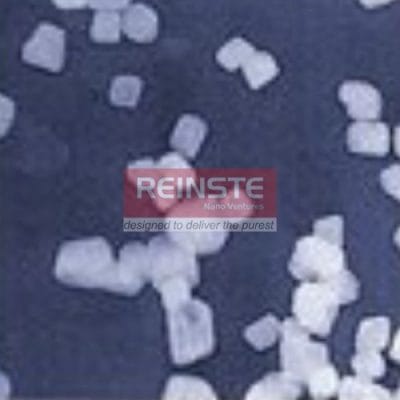
Calcium Carbonate microparticles (ca. 2-3 μm)
View Product →Advance Your Research in Material Science
Access high-quality nanoparticles and microparticles to pioneer the next generation of deicing agents and sustainable materials. Partner with us to drive innovation.
Browse Our Catalog