
An Introduction to a Nanoscale Revolution
Imagine a world where your smartphone can fold up into your pocket, your clothes can monitor your health, and windows can generate solar power. This isn't science fiction; it's the future being built today with **flexible electronics**, and at the heart of this revolution are **quantum dots (QDs)**. These microscopic powerhouses, a type of **nanomaterial**, are fundamentally changing how we approach electronic design and manufacturing, particularly in the realm of **printed electronics**.
For India, a nation rapidly ascending as a global hub for technology and manufacturing, the convergence of **quantum dots** and **flexible electronics** represents a monumental opportunity. As researchers and professionals in the Indian scientific community, understanding the potential of these materials is no longer just an academic exercise—it's a strategic imperative. From creating low-cost, high-efficiency solar cells to developing advanced biomedical sensors, the applications are vast and transformative. This article explores the science, the applications, and the unique opportunities that **quantum dots for flexible electronics manufacturing** present for Indian innovation.
Why Quantum Dots are a Game-Changer for Researchers
The unique properties of quantum dots make them exceptionally suited for next-generation electronic applications. For researchers working with **conductive inks** and **flexible circuits**, QDs offer a toolkit of unparalleled advantages:
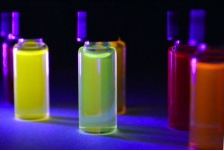
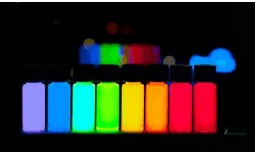
- Tunable Optoelectronic Properties: The most remarkable feature of quantum dots is that their optical and electronic properties can be precisely tuned simply by changing their size. Smaller dots emit blue light, while larger dots emit red light. This allows for the creation of displays with incredibly pure colors and a wider color gamut than traditional LEDs or OLEDs.
- High Quantum Yield & Efficiency: Quantum dots are highly efficient at converting energy into light, meaning less energy is wasted as heat. This makes them perfect for energy-saving lighting and displays in **wearable devices**, where battery life is critical.
- Solution Processability: Unlike silicon, which requires expensive and rigid fabrication processes, quantum dots can be dispersed in a solvent to create **conductive inks**. These inks can then be deposited onto flexible substrates (like plastic or even paper) using simple, scalable techniques like inkjet printing or screen printing, dramatically lowering manufacturing costs.
- Mechanical Flexibility & Durability: As nanomaterials, quantum dots are inherently flexible and can withstand the mechanical stress of bending and stretching. This makes them the ideal active material for **bendable devices** and electronics integrated into textiles.
- Broad Absorption Spectrum: Quantum dots can absorb light across a wide spectrum, making them highly effective for light-harvesting applications such as flexible solar cells and photodetectors.
Industry Applications: From Lab to Market
The theoretical benefits of quantum dots translate into tangible, high-impact applications across various industries. Here’s where these nanomaterials are making the biggest waves in **flexible electronics**:
1. Next-Generation Displays
Quantum dot displays (QLEDs) are already in the market, but their integration into flexible substrates is the next frontier. Imagine rollable TVs, foldable smartphones, and transparent displays on car windshields. The use of **printed electronics** techniques with QD inks will enable the mass production of these **bendable devices**, offering unparalleled color accuracy and energy efficiency.
2. Smart Textiles & Wearable Devices
By printing **flexible circuits** with quantum dots directly onto fabrics, we can create truly smart textiles. These could include clothes that change color, jackets with integrated displays for cyclists, or medical-grade **wearable devices** that continuously monitor vital signs like heart rate and blood oxygen levels through optical sensing, a key application of **optoelectronics**.
3. Flexible Lighting and Photovoltaics
Quantum dots can be used to create thin, lightweight, and flexible lighting panels that can conform to any shape, revolutionizing architectural and interior design. In parallel, their broad light absorption makes them excellent candidates for flexible solar cells that can be integrated into windows, backpacks, or even clothing to power personal devices on the go.
4. Biomedical Sensors and Imaging
In the medical field, flexible sensors made with quantum dots can be used for disposable diagnostic tools, lab-on-a-chip devices, or as fluorescent labels for biological imaging. Their sensitivity and specificity can lead to earlier disease detection and more personalized medicine, a critical area for Indian healthcare R&D.
The Indian Opportunity: Leading the Nanomaterials Charge
India is uniquely positioned to capitalize on the **flexible electronics** boom. With government initiatives like "Make in India" and a strong foundation in IT and chemical engineering, the country has the ecosystem to foster innovation in **nanomaterials** and **electronic manufacturing**.
The demand for affordable, high-tech devices is surging. **Printed electronics** using **conductive inks** offers a pathway to meet this demand by enabling low-cost, high-volume manufacturing of devices like flexible sensors for agriculture, wearable health monitors for the aging population, and smart packaging. Indian research institutions are already making strides in synthesizing novel **quantum dots**, including cadmium-free variants, which are crucial for sustainable and safe consumer products.
For professionals, this translates into a growing demand for skills in materials science, chemistry, and electronic engineering. Expertise in **quantum dots for flexible electronics manufacturing** will be a highly sought-after specialization. Collaborations between academia and industry will be key to translating laboratory breakthroughs into commercially viable products, establishing India not just as a consumer, but as a global leader in the field of **flexible circuits** and advanced **optoelectronics**.
Featured Quantum Dot Products for R&D

Frequently Asked Questions
Quantum dots (QDs) are semiconductor nanocrystals, typically between 2 to 10 nanometers in size. Their tiny size gives them unique quantum mechanical properties, most notably the ability to emit light of specific colors when excited by light or electricity. The color they emit depends directly on their size, making them highly tunable for various applications.
Quantum dots are ideal for flexible electronics due to their small size, flexibility, and solution-processability. They can be formulated into conductive inks and printed onto flexible substrates like plastic or fabric. Their superior optical purity, energy efficiency, and stability make them perfect for creating high-performance, bendable displays, sensors, and lighting.
Traditional electronics are built on rigid silicon wafers using complex, high-temperature vacuum deposition processes. Printed electronics, on the other hand, involve printing conductive inks (which can contain nanomaterials like quantum dots) onto flexible or rigid substrates using methods like inkjet or screen printing. This process is often faster, cheaper, and more suitable for creating large-area and flexible devices.
Yes, challenges remain in scaling up production, ensuring long-term stability and device lifetime, and managing costs. For certain types of QDs, toxicity concerns (e.g., those containing cadmium) are also a factor, which is driving research into safer, cadmium-free alternatives like Perovskite or Zn-Cu-In-S/ZnS quantum dots. Indian research is actively addressing these hurdles to facilitate commercial adoption.
Ready to Innovate with Quantum Dots?
Explore our comprehensive range of high-purity quantum dots and nanomaterials to power your research in flexible electronics.
Shop Quantum Dots