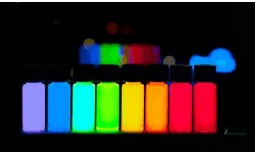
The Dawn of a New Computing Era: What are Silicon Quantum Dots?
For decades, classical computers have powered our world, operating on a simple binary system of 0s and 1s. But as we confront problems of immense complexity—from designing life-saving drugs to creating unbreakable cryptographic codes—we are hitting the limits of classical computation. Enter the world of quantum computing, a revolutionary paradigm that harnesses the strange and wonderful principles of quantum mechanics to process information in fundamentally new ways.
At the heart of this revolution is the qubit, or quantum bit. Unlike a classical bit, a qubit can be a 0, a 1, or both simultaneously (a state known as superposition). This ability, combined with another quantum phenomenon called entanglement, gives quantum computers their exponential power. The challenge, however, has always been building stable, scalable qubits. This is where silicon quantum dots come in.
Imagine a tiny crystal of silicon, so small that it measures only a few nanometers across. This nanoscale semiconductor, often called an "artificial atom," can trap and isolate individual electrons. By precisely controlling the quantum state (specifically, the 'spin') of these electrons, we can create a highly stable and controllable qubit. The "silicon" in their name is the crucial part. It means these advanced quantum computing devices can be manufactured using the same fabrication techniques that have powered the multi-trillion-dollar semiconductor industry for over 50 years. This synergy positions silicon quantum dots as a leading candidate for building large-scale, fault-tolerant quantum computers, a goal of immense strategic importance for a tech-forward nation like India, especially in the context of initiatives like "Make in India" and the National Mission on Quantum Technologies & Applications (NM-QTA).
Why Silicon Qubits? Key Advantages for Researchers
For Indian researchers and professionals in nanotechnology and semiconductor physics, the focus on silicon-based quantum computing isn't just a trend; it's a strategic advantage. Here are the key benefits that make silicon quantum dots so compelling:
- Scalability and Manufacturing Synergy: This is the most significant advantage. India's growing semiconductor fabrication capabilities can be directly leveraged. The ability to use existing CMOS (Complementary Metal-Oxide-Semiconductor) manufacturing plants means we can potentially produce millions of nearly identical qubits on a single wafer, solving one of the biggest challenges in quantum computing: scalability.
- Long Coherence Times: A qubit's greatest enemy is "decoherence"—the loss of its quantum state due to environmental noise. Natural silicon has various isotopes, some with nuclear spins that create magnetic noise. However, silicon can be enriched to be almost purely silicon-28, which has no nuclear spin. This creates an exceptionally "quiet" environment, allowing silicon qubits to maintain their delicate quantum states for much longer periods, which is essential for performing complex calculations.
- High-Fidelity Control: The spin of an electron in a quantum dot can be manipulated with incredible precision using electrical fields applied to tiny metal gates on the chip's surface. This method of control is not only fast and accurate (high-fidelity) but also allows for individual addressing of qubits within a dense quantum circuit.
- High-Temperature Operation: While most quantum computers operate at temperatures near absolute zero, recent breakthroughs have shown that silicon spin qubits can function at temperatures above 1 Kelvin. This significantly reduces the complexity and cost of the required cryogenic cooling systems, making the technology more practical and accessible.
- Integration with Classical Electronics: A quantum computer needs classical electronics for control and readout. Because the qubits are made of silicon, it's far easier to integrate these classical control circuits on the same chip, leading to a more compact, powerful, and efficient information processing system.
From Theory to Reality: Applications of Silicon Quantum Circuits
The development of robust quantum circuits based on silicon quantum dots is not just an academic exercise. It promises to unlock transformative capabilities across numerous industries vital to India's economic and scientific growth.
Quantum Drug Discovery & Material Science
Simulating the behavior of molecules is a task that overwhelms even the most powerful supercomputers. Silicon quantum processors could accurately model complex molecular interactions, enabling the design of new drugs, catalysts for green energy, and novel materials with tailored properties.
Financial Modeling and Optimization
Quantum algorithms running on silicon-based machines could solve complex optimization problems in finance, such as portfolio optimization and risk analysis, far more efficiently than classical methods, providing a competitive edge in global markets.
Advanced AI and Machine Learning
Quantum machine learning algorithms could enhance AI by processing vast datasets in new ways, leading to breakthroughs in pattern recognition, data classification, and the development of more sophisticated artificial intelligence models.
Next-Generation Cryptography
While quantum computers pose a threat to current encryption standards, they are also key to developing quantum-secure communication channels. Silicon quantum devices can be used to create and manipulate the quantum states needed for Quantum Key Distribution (QKD) systems, ensuring future data security.
The Indian Quantum Dream: Trends and Opportunities
India is making a determined push into the quantum frontier. The launch of the National Mission on Quantum Technologies & Applications (NM-QTA) with a significant budget outlay is a clear signal of this ambition. For researchers and companies working with silicon quantum dots for quantum computing applications, this creates a fertile ground for innovation and growth.
Leading Indian institutions like the Tata Institute of Fundamental Research (TIFR), the Indian Institute of Science (IISc) Bangalore, and various IITs are already engaged in pioneering research in quantum hardware and information theory. The key trend is a move towards building indigenous fabrication capabilities. The synergy between the goals of the NM-QTA and the India Semiconductor Mission could accelerate the development of domestic silicon qubit foundries. This presents a massive opportunity for Indian professionals skilled in nanotechnology, material science, and semiconductor device physics.
Furthermore, there is a growing demand for a quantum-ready workforce. This includes not only physicists and engineers to build the hardware but also computer scientists and mathematicians to develop new quantum algorithms and software. Startups are beginning to emerge, focusing on specific layers of the quantum stack—from materials and devices to control software and applications. For professionals in India, this is a golden opportunity to get involved in a deep-tech field that will define the 21st century, contributing to a technologically self-reliant (Atmanirbhar) India.
Frequently Asked Questions
A silicon quantum dot is a nanoscale semiconductor crystal, typically just a few nanometers in size, made from silicon. Its tiny size causes it to exhibit quantum mechanical properties. Often called 'artificial atoms,' these dots can confine a single or a few electrons, and the quantum states of these electrons, such as their spin, can be used to represent quantum information (qubits).
A qubit, or quantum bit, is the basic unit of quantum information. In a silicon quantum dot, the 'spin' of a trapped electron serves as the qubit. Spin is an intrinsic quantum property that can be in an 'up' state, a 'down' state, or a superposition of both simultaneously. By applying precise microwave or electrical pulses, scientists can control this spin to set it to 0, 1, or a superposition, and perform quantum logic operations, forming the basis of a quantum circuit.
Silicon is highly preferred due to the multi-trillion dollar semiconductor industry built around it. This provides unparalleled expertise and infrastructure for fabricating nano-scale devices with extreme precision. Furthermore, silicon can be isotopically purified to create a 'quiet' environment for qubits, leading to longer coherence times—the duration for which a qubit can maintain its quantum state.
The primary challenges include: 1) Fabrication Variability: Even tiny atomic-level differences between quantum dots can affect their performance, making it hard to produce identical qubits. 2) Qubit Connectivity: Efficiently linking many qubits together to perform complex calculations without interference (crosstalk) is a significant engineering hurdle. 3) Error Correction: Qubits are fragile. Developing robust quantum error correction codes that work efficiently on silicon hardware is an active area of research. 4) Interfacing: Creating a stable and scalable interface between the classical control electronics and the quantum chip.
Nanotechnology is fundamental to creating quantum circuits. It provides the tools and techniques—like electron-beam lithography and atomic layer deposition—to fabricate structures on the nanometer scale. This precision is necessary to create the quantum dots themselves, the tiny metal gates that control them, and the wiring that connects them into a functional quantum computing device.
Indian researchers can contribute across the entire stack. This includes fundamental materials science to improve silicon purity, theoretical work on new qubit designs and error correction codes, developing novel fabrication techniques at institutions with nano-fabrication facilities, and designing the classical hardware and software needed to control quantum processors. Collaborating with national initiatives like the National Mission on Quantum Technologies & Applications (NM-QTA) is key to this effort.