The Dawn of a New Diagnostic Era in India
India's healthcare landscape is on the cusp of a monumental transformation, driven by a convergence of biotechnology, materials science, and a national imperative for accessible, high-quality medical diagnostics. At the forefront of this revolution is nanotechnology, and specifically, a remarkable class of materials known as quantum dots (QDs). These tiny semiconductor nanocrystals, no larger than a virus, are poised to redefine how we detect diseases, monitor health, and conduct biological research. For Indian researchers, clinicians, and the burgeoning MedTech industry, understanding and harnessing the power of quantum dots for biosensing is no longer a futuristic concept—it's a present-day opportunity to create impactful, indigenous solutions.
The challenge in a country as vast and diverse as India is to develop diagnostic tools that are not only accurate but also rapid, cost-effective, and deployable in varied settings, from state-of-the-art urban hospitals to remote rural clinics. Traditional diagnostic methods, while reliable, often require centralized laboratories, expensive equipment, and time-consuming processes. This is where quantum dots enter the picture. Their unique, size-dependent optical properties—specifically their bright, stable, and tunable fluorescence—make them exceptionally powerful tools for creating next-generation sensors. When a quantum dot, functionalized with a specific biological probe, meets its target (like a virus, a cancer marker, or a toxin), it lights up, signaling a positive detection with unparalleled sensitivity. This opens the door to point-of-care testing and advanced bioimaging, aligning perfectly with the goals of the Atmanirbhar Bharat and Make in India initiatives.
This article delves into the world of quantum dots for bio-sensing applications in India. We will explore what makes them uniquely suited for medical diagnostics, the tangible benefits they offer to the Indian research community, their diverse applications, and the promising trends shaping the future of the Indian market for this groundbreaking technology.
Why Should Indian Researchers Embrace Quantum Dots?
For researchers in India's leading academic institutions and R&D labs, quantum dots offer a significant competitive advantage. Adopting this technology can accelerate discovery and lead to the development of novel diagnostic platforms. Here are the key benefits:
- Unmatched Photostability: Unlike traditional organic fluorescent dyes that fade (photobleach) quickly, quantum dots can emit light for extended periods. This is critical for long-term imaging experiments and for developing robust, reliable diagnostic assays with a long shelf life—a crucial factor for the Indian market.
- Multiplexing Capabilities: A single light source can excite quantum dots of different sizes to emit a rainbow of distinct colors. This allows for the simultaneous detection of multiple biomarkers in a single sample, a technique known as multiplexing. Indian labs can use this to create comprehensive diagnostic panels for complex diseases, saving time, resources, and patient samples.
- Extreme Sensitivity: The intense brightness of quantum dots enables the detection of targets at pico- or even femtomolar concentrations. This high sensitivity is vital for early disease diagnosis, where biomarkers may be present in very low amounts, significantly improving patient outcomes in cancer and infectious disease management.
- Tunable and Customizable Surfaces: Quantum dots can be coated with various materials and functionalized with chemical groups (like carboxyl or amine groups). This makes them highly versatile, allowing researchers to easily attach antibodies, DNA, or peptides to create highly specific biocompatible sensors for virtually any target of interest in medical diagnostics.
Transformative Applications in the Indian Healthcare Sector
The theoretical benefits of quantum dots translate into practical, high-impact applications that can address some of India's most pressing healthcare challenges. The versatility of nanotechnology-driven biosensing is vast, spanning from public health to personalized medicine.
Point-of-Care (POC) Diagnostics
Developing low-cost, portable biosensors for rapid screening of infectious diseases like dengue, malaria, and tuberculosis in remote areas. Quantum dot-based lateral flow assays (similar to pregnancy tests) can provide sensitive results in minutes, enabling immediate treatment and curbing disease spread.
Early Cancer Detection
Creating highly sensitive assays to detect circulating tumor cells (CTCs) or cancer biomarkers in blood samples. This application of quantum dots in medical diagnostics allows for non-invasive, early-stage cancer detection and monitoring of treatment efficacy, a critical need in the Indian healthcare system.
Advanced Bioimaging
Using photostable quantum dots for long-term, real-time imaging of cellular processes. Indian research institutions can leverage this for fundamental biological studies, understanding disease mechanisms, and tracking drug delivery pathways within cells, pushing the boundaries of biomedical science.
Environmental & Food Safety
Beyond healthcare, QD-based sensors can detect heavy metals, pesticides, and bacterial contaminants in water and food supplies. This addresses a major public health concern in India, ensuring safer resources for the population.
Targeted Drug Delivery
Engineering 'theranostic' quantum dots that can both identify diseased cells (diagnostics) and deliver a therapeutic payload (therapeutics) directly to them. This targeted approach minimizes side effects and maximizes treatment effectiveness, a key goal of personalized medicine.
Pandemic Preparedness
The COVID-19 pandemic highlighted the need for rapid, scalable diagnostic platforms. Multiplexed quantum dot assays can be quickly adapted to detect new viral strains, providing a robust platform for future pandemic surveillance and response in the Indian market.
Opportunities and Trends: The Future of Quantum Dots in the Indian Market
The Indian market for nanotechnology, particularly in healthcare, is on an upward trajectory. Several factors are converging to create a fertile ground for the growth of quantum dot-based biosensing technologies. Government support through programs like the National Mission on Nano Science and Technology, coupled with a vibrant startup ecosystem, is fueling innovation.
A key trend is the shift towards biocompatible and cadmium-free quantum dots. Early concerns about the toxicity of heavy metals like cadmium are being addressed by the development of new materials, such as zinc-copper-indium-sulfide (Zn-Cu-In-S/ZnS) and perovskite quantum dots. These safer alternatives are crucial for in-vivo applications and are gaining traction among Indian researchers focused on clinical translation. The availability of hydrophilic, water-soluble QDs further simplifies their use in biological buffers and assays, reducing the barrier to entry for many labs.
Furthermore, the integration of quantum dot biosensors with microfluidics and smartphone-based readers is a major opportunity. This combination can lead to truly portable, automated "lab-on-a-chip" systems that can perform complex diagnostics with a drop of blood. For a country with high mobile penetration like India, a smartphone app that can read and interpret a quantum dot assay result could be a game-changer for decentralized healthcare. As the cost of synthesizing high-quality quantum dots decreases, their adoption in commercial medical diagnostics kits is set to expand, making advanced nanotechnology accessible to a wider audience.
Recommended Quantum Dots for Biosensing Research
Getting started with quantum dot research requires high-quality, reliable materials. For researchers in India focusing on biosensing and medical diagnostics, selecting the right type of QD is crucial. Hydrophilic and functionalized quantum dots are ideal starting points. Here are four recommended products available for your R&D needs.

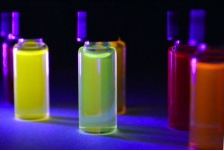
Cadmium Selenide Zinc Sulfide Quantum Dots- Carboxyl (450nm-650nm)
Ideal for bioconjugation due to the carboxyl functional group.
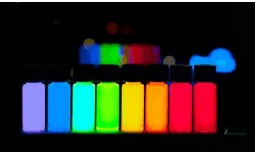
CdTe Quantum Dots, powder, hydrophilic (510 ± 5 nm to 600 ± 5 nm)
Excellent water solubility, perfect for aqueous biological assays.
Frequently Asked Questions
What are quantum dots and why are they ideal for biosensing?
Quantum dots (QDs) are semiconductor nanocrystals with unique optical properties. Their size-tunable, bright, and stable fluorescence makes them superior to traditional organic dyes for highly sensitive and multiplexed detection of biological targets, which is crucial for advanced medical diagnostics.
Are quantum dots safe for medical diagnostics in India?
The safety of quantum dots is a key area of research. Many modern QDs, especially those developed for the Indian market, are designed to be biocompatible. They often feature protective shells (e.g., ZnS) and hydrophilic coatings to minimize toxicity. Cadmium-free alternatives like Zn-Cu-In-S/ZnS dots are also becoming widely available, addressing environmental and health concerns.
How can Indian researchers start working with quantum dots for biosensing?
Indian researchers can access a wide range of quantum dots from specialized suppliers. For biosensing, it's best to start with hydrophilic, functionalized QDs, such as those with carboxyl groups, which allow for easy attachment of biomolecules. Kits are also available that provide various colors for developing multiplexed assays.
What is the future of quantum dot technology in the Indian healthcare market?
The future is incredibly promising. With a strong push for indigenous manufacturing and advanced healthcare solutions under initiatives like 'Make in India,' quantum dot-based technologies are set to grow. We expect to see more point-of-care diagnostic devices, advanced bioimaging tools, and personalized medicine applications emerging from Indian labs and startups.
Can quantum dots be used for detecting specific diseases like cancer or infectious viruses?
Absolutely. This is one of the most powerful applications of quantum dots in medical diagnostics. By attaching specific antibodies or nucleic acids to their surface, QDs can be programmed to bind to cancer biomarkers, viral proteins, or bacterial toxins. Their intense fluorescence allows for the detection of these targets at extremely low concentrations, enabling early and accurate disease diagnosis.
Ready to Advance Your Research?
Explore our comprehensive range of high-performance quantum dots and unlock the next generation of biosensing and medical diagnostics.
Browse Quantum Dots