The Nanoscale Revolution: Powering India's Solar Dream
India stands at a pivotal moment in its energy history. With one of the world's most ambitious renewable energy programs, the nation is aggressively pursuing a sustainable future, with solar power as its centerpiece. The National Solar Mission is not just a policy; it's a testament to India's commitment to harnessing the sun's immense power. However, the efficiency of conventional photovoltaic (PV) solar cells, while constantly improving, faces fundamental physical limits. This is where the world of the infinitesimally small offers a solution of monumental proportions: nanotechnology, and specifically, quantum dots (QDs).
For researchers in India's premier institutions—from the sprawling labs of the CSIR to the innovation hubs at the IITs and IISc—the quest for next-generation solar technology is a top priority. Traditional silicon-based solar cells are excellent at converting a specific range of light into electricity, but they struggle with the broader solar spectrum. Much of the high-energy ultraviolet (UV) light is lost as heat, and lower-energy infrared light passes right through. This is the efficiency bottleneck that quantum dots are uniquely equipped to break.
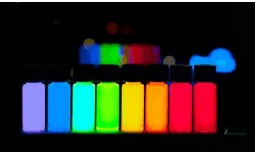
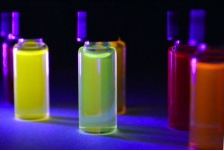
These semiconductor nanocrystals are so small that their properties are governed by quantum mechanics. This gives them an extraordinary ability: their color, and more importantly, their light absorption characteristics, can be precisely tuned just by changing their size. By integrating a layer of quantum dots into a solar cell, we can create a system that harvests a much wider range of solar energy. This efficiency improvement is not just incremental; it represents a paradigm shift in how we think about solar energy conversion. This article explores the science, applications, and immense potential of quantum dots in enhancing photovoltaic panels, offering a roadmap for Indian R&D and industry to lead this global energy transformation.
Why Quantum Dots are a Game-Changer for Photovoltaic Research
For scientists and engineers dedicated to renewable energy, quantum dots offer a versatile and powerful toolkit to overcome the limitations of current solar technology. Their unique properties open up several avenues for groundbreaking research and development.
- Tunable Bandgap for Full Spectrum Coverage: Unlike silicon's fixed bandgap, QDs can be engineered to absorb specific wavelengths of light. A cocktail of different-sized QDs can be used to create a solar cell that captures everything from high-energy UV to mid-range visible and even near-infrared light, dramatically increasing the overall light absorption.
- Multiple Exciton Generation (MEG): This is perhaps the most exciting property of QDs. In conventional materials, one photon of light creates one electron-hole pair (an exciton). With certain QDs, a single high-energy photon can generate two or more excitons. This phenomenon could theoretically push solar cell efficiency beyond the long-standing Shockley-Queisser limit of ~33%, potentially doubling the energy output from the bluer end of the spectrum.
- Enhanced Light Harvesting via Down-Conversion: QDs can be used as a spectral converter. A layer of QDs placed on top of a silicon cell can absorb high-energy photons (e.g., UV light), which are poorly utilized by silicon, and re-emit them as lower-energy photons (e.g., red light) that perfectly match silicon's peak absorption efficiency. This simple addition maximizes the utility of every incoming photon.
- Potential for Low-Cost, Scalable Manufacturing: Quantum dots can be synthesized in a lab via colloidal chemistry and deposited using simple, solution-based techniques like spin-coating or inkjet printing. This approach avoids the high-temperature, high-vacuum, and capital-intensive processes required for silicon wafer fabrication, paving the way for more affordable renewable energy technologies.
From Lab to Grid: Industry Applications of Quantum Dot Solar Technology
Hybrid QD-Silicon Solar Cells
The most immediate application is enhancing existing technology. By adding a thin, transparent film of quantum dots on top of a standard silicon photovoltaic panel, manufacturers can boost its efficiency by 1-2% absolute points. This layer acts as a light harvester, converting unused UV light into useful visible light, directly improving the panel's output without a complete redesign of the manufacturing process. This approach offers a cost-effective path for efficiency improvement in the current market.
Quantum Dot Solar Concentrators (LSC)
Luminescent Solar Concentrators are large plates of transparent material doped with quantum dots. The QDs absorb sunlight from a wide area and then re-emit it. This light is then guided by total internal reflection to the edges of the plate, where small, highly efficient solar cells are placed. This technology allows for the creation of transparent, power-generating windows or facades, opening up new possibilities for urban energy harvesting and building-integrated photovoltaics (BIPV).
Flexible and Lightweight Solar Cells
Because quantum dots can be printed onto flexible plastic substrates, they enable the creation of lightweight, bendable solar cells. This is a stark contrast to the rigid, heavy, and fragile nature of silicon panels. These flexible cells could be integrated into clothing, backpacks, or portable electronics, and deployed on curved surfaces or in remote locations where traditional panels are impractical. This innovation is key for decentralized solar energy solutions.
Next-Generation Full QD Solar Cells
The ultimate goal is the development of solar cells made entirely from quantum dots. These "third-generation" solar cells promise ultra-high efficiency through mechanisms like MEG, coupled with extremely low manufacturing costs. While challenges in material stability and charge extraction remain, ongoing research into robust materials like perovskite quantum dots is rapidly closing the gap, heralding a future where solar power is more efficient and accessible than ever before.
India-Specific Trends: Seizing the Quantum Opportunity
The convergence of India's renewable energy ambitions and the rise of nanotechnology creates a unique set of opportunities. For India to become a global leader in solar technology, embracing innovations like quantum dots is not just an option, but a necessity. Several key trends underscore this opportunity.
First, the "Make in India" initiative provides a powerful framework for establishing domestic manufacturing of high-tech components like quantum dots. Developing indigenous capabilities for quantum dots for photovoltaic panel enhancement would reduce reliance on imports, create high-skilled jobs, and position India as a key player in the global solar supply chain. The government's Production Linked Incentive (PLI) schemes could be extended to support this nascent industry, fostering a local ecosystem for R&D and commercialization.
Second, there is a global shift towards environmentally benign materials. Early research on QDs heavily featured cadmium, a toxic heavy metal. Today, the focus has moved to cadmium-free alternatives like Indium Phosphide (InP) and Perovskite Quantum Dots. This aligns perfectly with India's commitment to sustainable development. Indian researchers can lead the charge in perfecting these safer, more stable materials, creating intellectual property that will be invaluable in the future of renewable energy.
Finally, addressing India's specific environmental challenges requires tailored solutions. Solar panels in India must withstand high ambient temperatures, humidity, and dust, all of which can degrade performance and lifespan. Research focused on creating robust QD encapsulation and integration techniques is critical. Success in this area would not only benefit India but also create products highly sought after in other regions with similar climates, from the Middle East to Southeast Asia. The synergy between academic research and industrial application is key to turning these challenges into a competitive advantage in the global solar cells market.