Seeing the Unseen: The Quantum Leap in Infrared Detection
Imagine a world where firefighters can see through thick smoke to find survivors, where doctors can detect diseases with a simple, non-invasive scan, and where security forces have crystal-clear vision on the darkest nights. This isn't science fiction; it's the future being built today with Quantum Dots (QDs). For researchers and innovators across India, this emerging field represents a monumental opportunity to lead a technological revolution.
Infrared (IR) radiation is all around us, an invisible spectrum of light that carries a wealth of information. Traditional technologies for detecting this light, however, have long been a bottleneck. They are often bulky, require expensive materials like indium gallium arsenide (InGaAs), and need cryogenic cooling to achieve high sensitivity. This has limited their use to high-budget military and industrial applications.
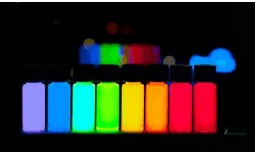
Enter the Quantum Dot. These semiconductor nanocrystals are so small that their electronic properties are governed by quantum mechanics. This unique characteristic gives them a superpower: the ability to have their light-absorbing properties precisely tuned simply by changing their size. By creating QDs of a specific diameter, scientists can design them to be highly sensitive to any wavelength of light, from the visible spectrum right through to the short-wave (SWIR), mid-wave (MWIR), and long-wave (LWIR) infrared. This breakthrough is paving the way for a new generation of high-sensitivity IR photodetectors that are not only powerful but also cheap to produce and versatile in their application.
For the Indian R&D ecosystem, from our premier academic institutions to our burgeoning deep-tech startup scene, the era of the QD infrared sensor is dawning. It aligns perfectly with national missions like 'Make in India' and 'Aatmanirbhar Bharat', offering a chance to develop sovereign capabilities in critical areas like defense, space exploration, healthcare, and industrial automation. This article explores the profound impact of quantum dots on thermal imaging and night vision, and outlines the incredible opportunities awaiting Indian scientists and engineers in this vibrant field.
Why Quantum Dots are a Game-Changer for Researchers
For scientists and engineers working at the cutting edge of materials science and optoelectronics, quantum dots offer a compelling set of advantages over conventional materials. These benefits are democratizing access to high-performance sensing technology.
- Unprecedented Tunability: Unlike bulk semiconductors with fixed bandgaps, the absorption and emission spectrum of QDs can be continuously tuned across the entire IR range by simply adjusting their size. This allows for the creation of custom IR photodetectors tailored to specific applications, from methane gas detection to thermal imaging.
- Exceptional Sensitivity: Quantum dots boast high quantum efficiency, meaning they are incredibly effective at converting photons into electrical signals. This leads to detectors with superior signal-to-noise ratios, enabling the detection of faint IR signals for high-performance thermal imaging and long-range surveillance.
- Low-Cost Manufacturing: QDs can be synthesized using colloidal chemistry techniques and deposited onto substrates using simple, scalable methods like spin-coating or inkjet printing. This "solution-processability" drastically reduces manufacturing costs compared to the complex, high-vacuum deposition methods required for traditional semiconductors.
- Flexibility and Integration: QD-based sensors can be fabricated on flexible or unconventional substrates, opening up possibilities for wearable sensors, conformal imagers on drones, and seamless integration with silicon-based CMOS technology. This allows for the creation of compact, lightweight, and powerful "system-on-a-chip" solutions.
- Room-Temperature Operation: Many QD photodetectors, particularly in the SWIR range, can operate effectively at room temperature. This eliminates the need for bulky and expensive cryogenic cooling systems, making nano IR sensor technology more accessible for a wide range of civilian and commercial applications.
From Lab to Life: Real-World Applications in India
The theoretical advantages of quantum dots are rapidly translating into practical, high-impact applications. Here’s a look at how QD detector technology is set to transform key sectors in India.
Advanced Surveillance & Night Vision
For defense and internal security, clear vision in all conditions is non-negotiable. QD-based night vision systems can detect SWIR light, providing high-contrast imaging even in total darkness. This advanced surveillance technology can be deployed in border monitoring, anti-terrorism operations, and securing critical infrastructure, offering a significant tactical advantage.
Low-Cost Medical Imaging
The high cost of medical imaging equipment is a major barrier to healthcare access in many parts of India. Low-cost QD thermal sensors can be used for non-invasive disease screening, such as detecting inflammation, tumors (which are often warmer than surrounding tissue), and vascular disorders. This could revolutionize rural and community healthcare.
Industrial & Agricultural Monitoring
In manufacturing, thermal imaging helps in predictive maintenance by identifying overheating machinery. In agriculture, IR sensors can monitor crop health, water stress, and soil conditions from drones, enabling precision farming. The affordability of nano IR imaging makes this technology viable for small and medium-sized enterprises (SMEs) and farmers.
Environmental & Gas Sensing
Different gases absorb specific IR wavelengths. By tuning QDs to these wavelengths, highly sensitive detectors can be created to monitor greenhouse gas emissions, detect industrial gas leaks, and ensure air quality. This is crucial for India's environmental goals and industrial safety standards.
The Indian Opportunity: Leading the Nano-Sensor Revolution
The global race for supremacy in quantum technologies is on, and India is well-positioned to become a major player in the field of QD infrared sensors. The convergence of a skilled workforce, a supportive policy environment, and a vast domestic market creates a fertile ground for innovation.
Fostering Indigenous Innovation
The National Mission on Quantum Technologies & Applications (NM-QTA) is a clear signal of the government's commitment to this sector. This provides a significant funding boost for research institutions and universities to pursue fundamental and applied research in quantum dots for high-sensitivity photodetectors. Indian researchers can focus on developing novel, eco-friendly QD materials (such as those based on perovskites or cadmium-free alternatives) and optimizing device architectures for superior performance. There is a specific need for stable QDs that can sense in the MWIR and LWIR bands, a challenge that, if solved, would unlock immense value.
The Startup Ecosystem and 'Make in India'
The true potential of QD thermal sensor technology will be realized when it moves from the lab to the factory floor. India's vibrant startup ecosystem is the perfect vehicle for this transition. Entrepreneurs can leverage the low-cost, solution-processable nature of QDs to build fabless semiconductor companies, designing innovative sensor products for global markets. By focusing on niche applications like agricultural drones, low-cost medical devices, or pollution monitoring systems, Indian startups can create a unique value proposition. This aligns perfectly with the 'Make in India' initiative, building a domestic supply chain for a critical, high-technology component and reducing reliance on imports.
The journey from research to commercial product requires collaboration between academia and industry. Research parks and technology incubators associated with IITs and IISc are already bridging this gap, creating a seamless pipeline for innovation. The future of infrared imaging is not just about better performance, but about accessibility and affordability—a challenge that Indian ingenuity is uniquely suited to solve.
Frequently Asked Questions
Quantum Dots (QDs) possess unique properties like size-tunable bandgaps, allowing them to absorb a wide range of light, including infrared. This tunability, combined with their high quantum efficiency and potential for low-cost, solution-based manufacturing, makes them superior to many traditional semiconductor materials used in IR photodetectors.
While the technology is still emerging globally, the research and development of QD-based thermal imagers are accelerating in India. Several research institutions and startups are actively working on this technology. Commercially available products are on the horizon as manufacturing processes mature and scale up.
Traditional night vision amplifies small amounts of visible light. QD-based systems, however, can detect short-wave infrared (SWIR) light that is invisible to the human eye but present even on moonless nights. This allows for clearer, higher-contrast images without the 'blooming' effect seen in conventional devices, effectively turning night into day for the observer.
The primary challenges include achieving long-term stability of the quantum dots, especially under harsh operating conditions. Scaling up production from lab-scale to industrial-scale while maintaining uniformity and performance is another significant hurdle. Additionally, reducing the toxicity of some QD materials, like those containing cadmium, remains a key area of research.
Indian researchers have immense opportunities in synthesizing novel, non-toxic QDs, developing new device architectures for high-performance photodetectors, and integrating these sensors into practical applications like low-cost medical imaging and advanced surveillance systems. With government initiatives like 'Make in India' and a growing ecosystem for deep-tech startups, this is a prime area for innovation and commercialization.