
The Nanoscale Sentinels: A New Era for Environmental Safety
India, a nation witnessing rapid industrialization and urbanization, faces a critical challenge: escalating environmental pollution. From the industrial effluents clouding our sacred rivers to the smog blanketing our bustling cities, the need for effective, real-time pollutant detection has never been more urgent. Traditional monitoring methods, while reliable, often involve cumbersome laboratory analysis, significant time delays, and high costs. This is where a groundbreaking field of nanotechnology offers a beacon of hope: quantum dots (QDs).
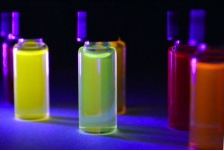
These semiconductor nanocrystals are so small that their properties are governed by quantum mechanics. Their most remarkable feature is their intense, size-tunable fluorescence. When exposed to light, they absorb energy and re-emit it as light of a specific, vibrant color determined by their size. This unique optical characteristic makes them perfect candidates for creating next-generation environmental sensors. By designing quantum dots that interact with specific pollutants, researchers can create systems where the presence of a harmful substance—be it a heavy metal in water or a volatile organic compound in the air—causes a detectable change in the QD's glow. This provides an immediate, highly sensitive visual or electronic signal, transforming how we approach environmental monitoring and pollution control.
Why Researchers are Turning to Quantum Dot Sensors
Unmatched Sensitivity
Quantum dots can detect pollutants at extremely low concentrations, often in the parts-per-billion (ppb) or even parts-per-trillion (ppt) range. This level of sensitivity is crucial for identifying trace amounts of highly toxic substances before they reach dangerous levels.
Real-Time Monitoring
Unlike lab-based tests that can take hours or days, QD-based sensors provide instantaneous feedback. This allows for immediate response to pollution events, such as industrial spills, and enables continuous monitoring of water quality and air quality.
Multiplexed Detection
Because the color of light emitted by a quantum dot is size-dependent, researchers can create a mixture of different-sized QDs in a single sensor. Each size can be tailored to detect a different pollutant, allowing for the simultaneous detection of multiple contaminants with one test—a capability known as multiplexing.
High Photostability and Durability
Compared to traditional organic dyes used in sensors, quantum dots are far more resistant to photobleaching (fading under light). This longevity makes them ideal for creating robust, long-lasting sensor devices suitable for field deployment in harsh environmental conditions.
Key Applications in Pollutant Detection

Monitoring Water Quality
The contamination of water sources with heavy metals like mercury, lead, and cadmium is a grave concern in India. Functionalized quantum dots for environmental pollutant detection can be designed to specifically bind to these metal ions. When this binding occurs, the QD's fluorescence is quenched. This quenching effect is proportional to the concentration of the metal, enabling precise quantification. Researchers are developing portable, on-site testing kits using this principle, which could empower local communities and regulatory bodies to test water quality quickly and affordably.

Improving Air Quality Sensing
Urban air pollution, particularly from gases like nitrogen dioxide (NO₂) and volatile organic compounds (VOCs), poses significant health risks. Nanotechnology-based sensors using QDs can be integrated into thin films. When gas molecules adsorb onto the surface of these films, they alter the electronic properties of the quantum dots, leading to a change in their electrical resistance or fluorescence. This allows for the creation of compact, low-power air quality monitors that can be deployed across cities to build high-resolution pollution maps.

Detecting Pesticides and Herbicides
Agricultural runoff is a major source of water pollution, carrying harmful pesticides into rivers and groundwater. Developing sensors for these organic pollutants is a complex challenge. Quantum dots offer a novel solution through enzyme-inhibition mechanisms. For example, a QD can be paired with an enzyme like acetylcholinesterase. In the presence of organophosphate pesticides, the enzyme's activity is inhibited, which in turn alters the fluorescence of the nearby quantum dot, signaling the presence of the contaminant.
The Nanotechnology Frontier: Opportunities for Indian R&D
The field of quantum dots for environmental monitoring is ripe with opportunity for Indian researchers, startups, and academic institutions. The Indian government's focus on initiatives like the 'National Mission for Clean Ganga' and 'Smart Cities Mission' creates a strong demand for advanced environmental monitoring technologies. Research funding agencies are increasingly prioritizing projects that offer innovative, indigenous solutions to national challenges.
A significant trend is the shift towards 'green' or eco-friendly quantum dots. While early QDs were based on cadmium, a toxic heavy metal, the focus has now moved to cadmium-free alternatives like zinc sulfide (ZnS), indium phosphide (InP), and carbon-based quantum dots. These materials are far less toxic and more suitable for widespread environmental deployment. Indian labs are well-positioned to contribute to the synthesis and large-scale production of these safer nanomaterials. Furthermore, integrating QD sensors with IoT (Internet of Things) platforms to create smart, connected environmental monitoring networks is a major area of growth. This synergy between nanotechnology and digital technology can provide a comprehensive, real-time picture of the nation's environmental health, enabling data-driven policy and effective pollution control.
Recommended Quantum Dots for Sensor Development


Frequently Asked Questions
Quantum dots are semiconductor nanocrystals, typically between 2 to 10 nanometers in size. Their tiny size gives them unique quantum mechanical properties, most notably the ability to emit light of specific frequencies (colors) when excited. The color of the light depends directly on the size of the QD, a property that makes them highly tunable for various applications, including sensor technology.
Quantum dots used in sensors are often functionalized, meaning their surfaces are coated with specific molecules that bind to target pollutants. When the pollutant binds to the QD, it can alter the QD's fluorescence in a detectable way—either by quenching (dimming) the light, enhancing it, or shifting its color. This change in the optical signal is measured to determine the presence and concentration of the pollutant with high sensitivity.
This is a key area of ongoing research. Many traditional quantum dots are made from materials like cadmium, which is a heavy metal and raises toxicity concerns. However, the Indian and global research communities are actively developing cadmium-free alternatives, such as those based on zinc sulfide (ZnS), indium phosphide (InP), and carbon. Encapsulating QDs in a protective silica shell is another common strategy to prevent leaching and improve biocompatibility, making them safer for environmental applications.
Quantum dots offer several advantages over conventional methods. They provide higher sensitivity (detecting pollutants at parts-per-billion levels), faster response times for real-time monitoring, and greater photostability (they don't 'bleach' or fade as quickly as organic dyes). Furthermore, their tunable optical properties allow for multiplexed detection, where a single sensor can detect multiple different pollutants simultaneously, making the process more efficient and cost-effective.
For researchers and institutions in India, sourcing reliable, high-purity quantum dots is crucial. Hiyka, a Reinste company, is a premier supplier of advanced materials, offering a wide range of quantum dots, including cadmium-free and functionalized options suitable for developing environmental sensors. They provide detailed characterization data and support for R&D projects.
Ready to Advance Your Research?
Join the forefront of environmental innovation. Explore our extensive catalog of high-performance quantum dots and find the perfect materials for your next project.
Browse Quantum Dots