The Dawn of a Wearable Revolution: Quantum Dots Take Center Stage
Imagine a world where your t-shirt monitors your vitals with medical-grade accuracy, your jacket displays real-time navigation, and your fitness band is as thin and flexible as a sticker. This isn't science fiction; it's the tangible future being built today with one of the most exciting advancements in materials science: quantum dots (QDs). For researchers and innovators across India, a nation at the forefront of technological adoption, the fusion of quantum dots in wearable electronics represents a monumental leap forward. This is more than an incremental update; it's a paradigm shift, fundamentally changing how we interact with technology and how it integrates into the very fabric of our lives.
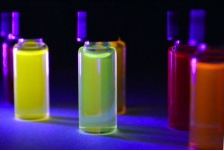
At their core, quantum dots are semiconductor nanocrystals, so small that they are governed by the bizarre and wonderful rules of quantum mechanics. Their size dictates their properties, particularly the color of light they emit. This unique characteristic allows for the creation of incredibly vibrant, efficient, and precise quantum dot displays. But their potential extends far beyond just beautiful screens. When integrated into flexible nanomaterials, QDs become the building blocks for a new generation of devices—from hyper-sensitive wearable sensors nanomaterials to sophisticated quantum dot circuits embedded in clothing. This is the essence of smart textiles nanotech: transforming passive garments into active, intelligent systems. As India continues to champion its 'Make in India' initiative and expand its high-tech manufacturing and R&D sectors, understanding and harnessing the power of wearable tech nanomaterials is not just an opportunity, but a strategic imperative.
Why Indian Researchers Should Be Excited: The Quantum Advantage
For the Indian scientific community, from bustling labs in Bangalore to research institutions in Delhi, the advent of quantum dots in wearables is a goldmine of opportunity. It opens up new frontiers in materials science, electronics, and biomedical engineering. Here’s why researchers should be paying close attention:
- Unprecedented Performance: QDs offer photoluminescence quantum yields approaching 100%, meaning almost no energy is lost as heat. This efficiency is critical for low-power wearable devices that need to run for days, not hours.
- Extraordinary Tunability: By simply changing the size of the nanocrystal, researchers can fine-tune the emitted color with surgical precision. This allows for the development of custom sensors and displays tailored to specific applications, a significant advantage over traditional, more rigid materials.
- Foundation for Flexible Electronics: The core challenge of wearables is making electronics that can bend, stretch, and move with the human body. QDs can be dispersed in flexible polymer matrices, creating composites that form the basis of true flexible nanomaterials and electronic textiles nanotech.
- Enhanced Sensitivity for Sensors: The optical properties of quantum dots are extremely sensitive to their local environment. This makes them ideal candidates for wearable sensors nanomaterials, capable of detecting minute changes in biomarkers, pressure, or temperature with a high degree of accuracy.
- Path to Miniaturization: The goal of wearable technology is seamless integration. The minuscule size of QDs enables the design of nanoscale wearable devices that are less obtrusive, more comfortable, and can be placed in locations previously inaccessible to bulky electronics.
From Lab to Life: Real-World Applications of Quantum Dot Wearables
The theoretical benefits of wearable electronics quantum dots are translating into tangible, life-changing applications across various industries. This technology is not confined to the laboratory; it's actively shaping the next wave of consumer and medical technology.
Advanced Healthcare Monitoring
Imagine a bandage that changes color to indicate infection or a skin patch that continuously monitors blood glucose levels. Wearable sensors nanomaterials using QDs can detect specific biomarkers in sweat or interstitial fluid, providing non-invasive, real-time health data. This is a game-changer for chronic disease management in India.
Brilliant Flexible Displays
The most immediate application is in next-generation quantum dot displays. These are not just for TVs; think rollable screens, smartwatches with displays that curve around your wrist, and clothing with integrated, full-color readouts. Their energy efficiency and superior color gamut make them ideal for portable, battery-powered devices.
Intelligent Clothing & Safety
Smart textiles nanotech is poised to revolutionize fashion and personal safety. Imagine cyclists' jackets with integrated turn signals, or safety vests for construction workers that glow brightly in low light without bulky batteries. The quantum dot integration into fibers makes clothing itself the electronic device.
Security & Anti-Counterfeiting
The unique, unclonable optical signature of a specific batch of quantum dots can be used to create invisible security tags. These can be integrated into currency, luxury goods, and official documents in India to combat counterfeiting, providing a high-tech layer of security that is nearly impossible to replicate.
Tapping into the Nanotech Wave: Opportunities & Trends in India
The global market for wearable technology is exploding, and India is uniquely positioned to become a major player in the R&D and manufacturing of devices powered by wearable tech nanomaterials. Several key trends are converging to create a fertile ground for innovation. The government's focus on domestic manufacturing through initiatives like 'Make in India' and the Production Linked Incentive (PLI) scheme provides a strong policy backbone for setting up advanced R&D labs and fabrication units for nanoscale wearable devices.
Furthermore, India's massive and tech-savvy consumer base presents a ready market for innovative products. There's a growing demand for advanced fitness trackers, smartwatches, and medical monitoring devices. This creates a powerful pull for companies to invest in cutting-edge technologies like quantum dot integration. For researchers, this translates into a higher likelihood of securing funding and industry partnerships. The key opportunity lies in developing cost-effective manufacturing processes for flexible nanomaterials and quantum dot circuits, which would give Indian companies a significant competitive edge. The development of eco-friendly, cadmium-free quantum dots is another major research avenue, aligning with global sustainability trends and opening up new markets for safe and biocompatible electronic textiles nanotech.
Frequently Asked Questions
Quantum dots (QDs) are semiconductor nanocrystals whose tiny size gives them unique quantum mechanical properties. For wearable electronics, their significance lies in their ability to emit pure, vibrant colors, making them ideal for next-generation flexible displays. Their high efficiency and tunable properties also make them perfect for creating highly sensitive wearable sensors and energy-efficient lighting integrated into smart textiles.
Quantum dot integration into smart textiles can be achieved through various methods. They can be blended into polymer fibers before spinning them into yarn, coated onto the surface of fabrics, or embedded within flexible polymer films that are then laminated onto textiles. This integration of flexible nanomaterials allows for the creation of electronic textiles that are stretchable, breathable, and maintain their functionality even when bent or folded.
Researchers in India face several challenges, including achieving stable, long-term performance of QDs in real-world conditions, developing cost-effective and scalable manufacturing processes for quantum dot integration, and ensuring the biocompatibility and safety of materials, especially those containing elements like cadmium. Overcoming these hurdles is key to transitioning from lab-scale prototypes to commercially viable nanoscale wearable devices.
Yes, addressing environmental and health concerns has led to significant research into cadmium-free quantum dots. Materials based on Indium Phosphide (InP) or Zinc Sulfide (ZnS), such as Zn-Cu-In-S/ZnS QDs, are becoming popular alternatives. These materials offer good optical properties and are much safer for consumer applications, making them a key focus for the future of wearable tech nanomaterials.