Introduction: The Nanoscale Revolution in Medicine
In the ever-evolving landscape of medical science, a new hero has emerged from the realm of nanotechnology: the quantum dot (QD). These minuscule semiconductor crystals, no larger than a virus, are poised to redefine how we approach treatment for some of humanity's most challenging diseases. For India, a nation at the forefront of pharmaceutical innovation and research, the advent of quantum dots for targeted drug delivery systems represents a monumental leap towards achieving true precision medicine. This is not just an incremental improvement; it's a paradigm shift from systemic treatments to highly localized, effective therapies with minimal side effects.
Traditional drug delivery often involves a "shotgun" approach, where a therapeutic agent floods the entire body to reach a specific target, like a tumor. This frequently leads to collateral damage to healthy cells, causing the debilitating side effects commonly associated with treatments like chemotherapy. The core challenge has always been precision. How can we deliver a potent drug exclusively to cancerous cells, leaving healthy tissue unharmed? The answer lies in the QD nanocarrier. By functioning as a smart, trackable vehicle, a quantum dot can carry a payload of drugs directly to the intended site. Its inherent fluorescence acts as a real-time GPS, allowing scientists and clinicians to watch the drug delivery process unfold, ensuring the payload reaches its destination. This fusion of diagnostics and therapeutics, known as "theranostics," is the cornerstone of the next generation of medical treatments, and it's a field where Indian researchers are making significant strides.
Unlocking Researcher Potential: Key Benefits of QD Nanocarriers
For researchers in India's burgeoning biotech and medical R&D sectors, adopting QD nanocarrier technology opens up a wealth of opportunities. These are not just theoretical advantages; they are practical benefits that can accelerate discovery and improve clinical outcomes.
- Unprecedented Targeting Accuracy: The surface of a quantum dot can be engineered with specific ligands (like antibodies or peptides) that bind only to receptors on target cells (e.g., cancer cells). This ensures that the therapeutic agent is delivered with pinpoint accuracy, maximizing efficacy and minimizing systemic toxicity.
- Real-Time Imaging and Tracking: Unlike other nanocarriers, quantum dots are brightly fluorescent. This unique property allows researchers to track the QD delivery pathway in real-time using standard imaging techniques. You can visually confirm if the nanocarrier has reached the tumor, how it's being internalized by cells, and where the drug is being released.
- High Drug Payload Capacity: Due to their high surface-area-to-volume ratio, QDs can be loaded with a significant amount of drug molecules. This means a more potent therapeutic effect can be achieved with a smaller overall dose of the nano drug system.
- Controlled Release Mechanisms: The drug's release from the QD nanocarrier can be triggered by specific conditions in the target environment, such as changes in pH or the presence of certain enzymes. This ensures the drug is only activated once it has reached its destination, offering a sophisticated level of controlled release.
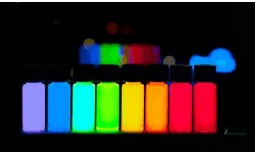
- Multiplexing Capabilities: Different-sized quantum dots emit different colors of light when excited by a single light source. This allows for the simultaneous tracking of multiple types of QD nanocarriers carrying different drugs, opening doors for complex combination therapies and advanced diagnostics.
From Lab to Life: Industry Applications in India
The biomedical application of quantum dots extends far beyond the research bench. Across India, from academic institutions to pharmaceutical giants, this technology is being explored for its transformative potential in several key areas.
Oncology and Targeted Therapy
Cancer treatment is the most promising application for targeted drug delivery using QDs. By loading QD nanocarriers with potent anti-cancer drugs and targeting them to tumors, it's possible to destroy cancer cells selectively, revolutionizing chemotherapy and making targeted therapy a clinical reality.
Neurodegenerative Diseases
Breaching the blood-brain barrier is a major hurdle in treating diseases like Alzheimer's and Parkinson's. Specially designed QD nanocarriers can be engineered to cross this barrier, delivering neuroprotective agents directly to the brain, offering new hope for millions.
Advanced Bio-imaging and Diagnostics
Before treatment even begins, QDs can be used as superior contrast agents for medical imaging. Their bright, stable fluorescence provides clearer, long-lasting images of cells and tissues compared to traditional organic dyes, aiding in early and accurate diagnosis.
Gene Therapy
The QD nanocarrier is not limited to small-molecule drugs. It can also be used to deliver genetic material like siRNA or DNA plasmids for gene therapy. This allows for the correction of genetic disorders at the cellular level, representing a frontier in precision medicine.
The Indian Context: Opportunities and Future Trends
India's unique combination of a world-class pharmaceutical industry, a vast pool of scientific talent, and a growing focus on indigenous R&D makes it a fertile ground for the growth of quantum dot technologies. The "Make in India" initiative is a powerful catalyst, encouraging domestic production of high-tech materials like QDs and fostering collaborations between academia and industry. Research institutions like the IITs, IISc, and CSIR labs are actively engaged in developing novel QD nanocarrier systems, with a particular focus on creating biocompatible, low-toxicity, and cost-effective solutions.
A key trend is the shift towards 'green' synthesis methods and the development of cadmium-free quantum dots to address early concerns about heavy metal toxicity. This focus on safety and biocompatibility is crucial for gaining regulatory approval and clinical acceptance. As the cost of manufacturing these advanced materials decreases, their integration into mainstream diagnostics and therapeutics becomes increasingly viable. For Indian researchers and professionals, this is a golden opportunity to lead the global charge in applying quantum dots for targeted drug delivery systems, creating innovative solutions for healthcare challenges both at home and abroad. The path forward involves interdisciplinary collaboration, strategic investment, and a clear regulatory framework to translate this incredible potential into life-saving treatments.
Frequently Asked Questions
Quantum dots are semiconductor nanocrystals, typically between 2-10 nanometers in size. Their unique, size-tunable optical and electronic properties make them highly valuable in various fields, including biomedical imaging and targeted drug delivery.
As a nanocarrier, a quantum dot's surface can be functionalized to attach specific therapeutic agents. These QD nanocarriers can then be guided to specific cells or tissues (e.g., tumors) using targeting ligands. Their fluorescence allows for real-time tracking of the drug's journey, ensuring it reaches its target, which is a key aspect of precision medicine.
The safety of quantum dots is a critical area of research. Early generations often contained heavy metals like cadmium, raising toxicity concerns. However, modern advancements have led to cadmium-free QDs (e.g., based on indium, zinc, or carbon) and effective surface coatings that significantly improve biocompatibility and reduce toxicity, making them safer for therapeutic use.
The main advantage is the combination of diagnostics and therapeutics, a concept known as 'theranostics.' A QD nanocarrier doesn't just deliver a therapeutic agent; its fluorescent properties allow researchers and clinicians to visualize the drug's accumulation in the target area in real-time. This enables controlled release and confirms that the treatment is localized, minimizing side effects on healthy tissues.