The Dawn of a New Era in Oncology: Quantum Dots Meet Photothermal Therapy
The fight against cancer is a relentless pursuit of more effective, less invasive treatments. In recent years, the convergence of nanotechnology and medicine has opened up unprecedented possibilities, creating the vibrant field of nanomedicine. At the forefront of this revolution are quantum dots (QDs), tiny semiconductor nanocrystals with extraordinary optical properties. When paired with photothermal therapy (PTT), a technique that uses light to generate heat, these nanoparticles become powerful weapons in the arsenal against cancer. For researchers and medical professionals in India, a country with a burgeoning R&D ecosystem and a significant cancer burden, understanding and harnessing this technology is not just an academic exercise—it's a critical step towards developing next-generation cancer treatments.
Photothermal therapy itself is a concept of elegant simplicity: deliver a light-absorbing agent to a tumor, illuminate it with a specific wavelength of light (typically near-infrared, or NIR, which can penetrate deep into biological tissues), and let the resulting heat destroy the malignant cells. The challenge has always been in the agent. An ideal agent must be efficient at converting light to heat, be deliverable specifically to cancer cells to avoid harming healthy tissue (a concept known as targeted therapy), and be safe for the patient. This is where quantum dots excel, offering a level of precision and efficiency previously unattainable. Their emergence signifies a paradigm shift from blunt systemic treatments like chemotherapy to a more focused, intelligent approach to oncology.
Why Researchers are Turning to Quantum Dots for PTT
The unique physicochemical properties of quantum dots make them exceptionally well-suited as therapeutic agents in photothermal therapy. Their adoption in oncology research is driven by a host of compelling advantages over traditional organic dyes and other nanoparticles.
- High Photothermal Conversion Efficiency: Quantum dots are highly efficient at absorbing light and converting it into localized heat. This means less light energy is needed to achieve the temperatures required for thermal ablation of cancer cells, making the procedure safer and more effective.
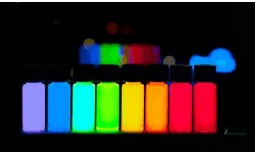
- Tunable Optical Properties: Unlike traditional dyes, the absorption spectrum of QDs can be precisely tuned by simply changing their size. This allows researchers to design nanoparticles that absorb strongly in the "biological window" of NIR light (700-1000 nm), maximizing tissue penetration and treatment depth.
- Enhanced Targeting and Specificity: The surface of quantum dots can be easily functionalized with various biomolecules, such as antibodies, peptides, or aptamers. This allows them to act like guided missiles, actively seeking out and binding to specific receptors overexpressed on the surface of cancer cells. This targeted therapy approach dramatically increases the concentration of the therapeutic agent in the tumor while minimizing accumulation in healthy organs, thereby reducing side effects.
- Multifunctionality (Theranostics): Quantum dots are not just therapeutic; they are also brilliantly fluorescent. This dual capability allows them to be used for both therapy and diagnosis simultaneously—a concept known as "theranostics." Researchers can use the fluorescence of QDs to image the tumor and confirm their accumulation before activating the photothermal effect, ensuring the treatment is delivered exactly where it's needed.
- Superior Photostability: Compared to organic photothermal agents, quantum dots are much more resistant to photobleaching. They can withstand prolonged light exposure without losing their heat-generating capabilities, allowing for more controlled and sustained treatment sessions.
- Biocompatibility Advancements: While early concerns about heavy metal toxicity (particularly from cadmium-based QDs) were valid, significant progress has been made. Modern quantum dots are often encapsulated in biocompatible shells (e.g., silica, PEG) or are made from less toxic materials like zinc, copper, and indium (e.g., Zn-Cu-In-S/ZnS QDs). This focus on creating biocompatible nanomaterials is paving the way for safe clinical translation.
Real-World Applications in Oncology Research
The theoretical benefits of quantum dot-based PTT are being actively translated into practical applications across various cancer types. Indian research institutions are increasingly contributing to this global effort, exploring novel ways to deploy these powerful nanoparticles.
Targeting Drug-Resistant Tumors
Chemoresistance is a major hurdle in cancer treatment. PTT offers a physical mechanism of cell destruction (heat) that is difficult for cancer cells to develop resistance against. Researchers are using quantum dots to target and destroy drug-resistant breast and ovarian cancer cells, offering a new line of attack when conventional therapies fail.
Image-Guided Surgery
The fluorescent properties of quantum dots are invaluable for surgeons. By injecting QDs that accumulate in a tumor, a surgeon can use a fluorescence imaging system to clearly see the tumor's margins. This allows for more precise removal of cancerous tissue while sparing as much healthy tissue as possible, a critical factor in brain and head-and-neck cancers.
Combination Therapy
Quantum dots can be engineered to carry not just themselves but also a payload of chemotherapy drugs. This creates a multi-pronged attack: the PTT effect weakens the tumor and increases its permeability, allowing the co-delivered drug to penetrate more effectively. This synergistic approach can significantly enhance overall treatment efficacy.
Treating Superficial and Deep-Seated Tumors
By selecting quantum dots that absorb light at different NIR wavelengths, scientists can tailor the treatment for tumors at different depths. Shorter NIR wavelengths are suitable for skin cancers, while longer wavelengths can penetrate deeper to target tumors in organs like the liver or lungs, showcasing the versatility of this nanomedicine platform.
The Indian Landscape: Opportunities and Future Directions
India's scientific community is uniquely positioned to make significant contributions to the field of quantum dots for photothermal therapy in oncology. With a strong base in chemistry, materials science, and medicine, coupled with government initiatives like the National Mission on Interdisciplinary Cyber-Physical Systems (NM-ICPS), the ecosystem for advanced oncology research is fertile. The "Make in India" campaign further encourages the domestic development and manufacturing of high-tech medical products, including advanced therapeutic agents like functionalized quantum dots.
A key trend is the push towards developing cost-effective and biocompatible quantum dots. Research labs at various IITs, IISc, and specialized cancer institutes are focusing on cadmium-free quantum dots to overcome toxicity hurdles and facilitate regulatory approval. There is immense potential for Indian startups to collaborate with these academic centers to scale up production and create clinically viable PTT systems. The application of AI in designing novel quantum dot structures and predicting their therapeutic efficacy is another exciting frontier. As India continues to invest in its healthcare infrastructure, integrating advanced medical applications of nanotechnology like PTT will be crucial in providing better outcomes for millions of cancer patients nationwide.