
A New Dawn in Diagnostics: The Quantum Leap for Indian Healthcare
India's healthcare landscape is on the cusp of a technological revolution, and at its heart lies a tiny but mighty particle: the quantum dot. These semiconductor nanocrystals, no larger than a few nanometers, are poised to redefine how we approach medical diagnostics. For a nation grappling with a diverse range of health challenges, from infectious diseases to a rising incidence of cancer, the need for faster, more accurate, and accessible diagnostic tools has never been more critical. This is where quantum dots for medical diagnostics step in, offering unprecedented sensitivity and precision.
Traditional diagnostic methods, while valuable, often face limitations in sensitivity, speed, and the ability to detect multiple biomarkers simultaneously. Imagine a world where a single, rapid test could screen for multiple cancer markers or different viral strains with pinpoint accuracy. This is the promise of quantum dot assays and quantum dot immunoassays. By replacing conventional fluorescent dyes with these highly efficient nanocrystals, researchers and clinicians can visualize biological processes at a molecular level, leading to earlier and more reliable diagnoses.
For the vibrant R&D community in India, from prestigious institutions to burgeoning biotech startups, diagnostic imaging nanomaterials like quantum dots represent a monumental opportunity. They are not just an academic curiosity but a powerful tool to develop indigenous, cost-effective diagnostic solutions tailored to India's unique healthcare needs. This article delves into the transformative potential of quantum dots, exploring their benefits, diverse applications, and the exciting future they hold for Indian researchers, professionals, and patients.
Why Researchers are Turning to Quantum Dots
Quantum dots offer a significant upgrade over traditional fluorophores, providing researchers with a more powerful and versatile toolkit. Here are the key advantages:
-
Unmatched Photostability
Unlike organic dyes that photobleach (fade) quickly under light exposure, quantum dots are exceptionally stable. This allows for long-term imaging and tracking of biological processes without signal loss, crucial for time-lapse studies and reliable quantitative analysis.
-
High Quantum Yield & Brightness
Quantum dots are incredibly bright, absorbing light efficiently and re-emitting it with high intensity. This leads to a superior signal-to-noise ratio, enabling the detection of even minute quantities of quantum dot biomarkers—a task often impossible with conventional probes.
-
Tunable, Narrow Emission Spectra
By simply changing the size of the quantum dot, researchers can precisely tune its emission color. Their emission peaks are narrow and symmetrical, which dramatically reduces spectral overlap. This property is the key to multiplexing—simultaneously detecting multiple targets (e.g., different proteins or genes) in a single experiment, a core principle of advanced quantum dot assays.
-
Broad Absorption, Single Excitation
Quantum dots can be excited by a wide range of wavelengths, yet they emit at a specific, narrow wavelength. This means a single light source can be used to excite a whole panel of different-colored quantum dots in a multiplexed assay, simplifying experimental setups and reducing costs associated with multiple lasers.
Transforming Industries: Key Applications in Medical Diagnostics
High-Sensitivity Immunoassays
Quantum dots are revolutionizing immunoassays. By conjugating antibodies to QDs, researchers create highly sensitive probes for detecting disease antigens. These quantum dot immunoassays are up to 100 times more sensitive than traditional ELISAs, enabling the detection of biomarkers at femtomolar concentrations. This is a game-changer for early cancer diagnosis and monitoring viral loads.
In-Vivo and In-Vitro Imaging
As advanced diagnostic imaging nanomaterials, QDs are used for real-time visualization of cellular and subcellular structures. In cancer research, QDs can be targeted to tumor cells, allowing surgeons to see the precise margins of a tumor during surgery. Their photostability enables long-term tracking of cells and molecules within a living organism, providing deep insights into disease progression.
Point-of-Care & Rapid Tests
The high brightness of quantum dots makes them ideal for developing rapid, point-of-care diagnostic tests. This rapid test nanotechnology can be integrated into lateral flow assays (similar to pregnancy tests) to create low-cost, portable quantum dot diagnostic tools for use in remote or resource-limited settings across India, providing quick results for infectious diseases like dengue, malaria, and COVID-19.
The Indian Horizon: Trends and Opportunities
The convergence of nanotechnology and healthcare is creating unprecedented opportunities in India. The government's 'Make in India' initiative and increased R&D funding are fueling innovation in the field of medical testing nanotech. Indian scientists are actively exploring the use of quantum dot biomarkers for diseases that are highly prevalent in the subcontinent, such as tuberculosis and specific types of cancer.
A significant trend is the development of cadmium-free quantum dots to address toxicity concerns, making these healthcare nanomaterials safer for clinical use. Research labs in India are focusing on scalable, low-cost synthesis methods for these next-generation QDs. This push towards safer and more affordable materials will be crucial for the widespread adoption of medical diagnostics quantum dots in the Indian healthcare system. The potential to manufacture these diagnostic kits locally could drastically reduce import dependency and make advanced diagnostics accessible to a larger population.
Frequently Asked Questions
Quantum dots (QDs) are semiconductor nanocrystals with unique optical properties. Their brightness, photostability, and tunable emission spectra make them superior to traditional fluorescent dyes, enabling highly sensitive and specific detection of diseases through advanced diagnostic imaging and biomarker assays.
The safety of quantum dots depends on their composition. Early QDs contained heavy metals like cadmium, raising toxicity concerns. However, modern research focuses on developing cadmium-free alternatives, such as those based on zinc, copper, and indium, and using biocompatible coatings to ensure they are safe for in-vivo applications like diagnostic imaging.
Quantum dot immunoassays offer significant advantages over traditional methods like ELISA. They provide much higher sensitivity, allowing for the detection of biomarkers at very low concentrations. Their multiplexing capability enables the simultaneous detection of multiple disease markers from a single sample, making diagnostics faster, more efficient, and cost-effective.
The future is incredibly promising. With a growing focus on indigenous R&D and manufacturing, India is poised to become a hub for developing low-cost, high-performance quantum dot diagnostic tools. This can revolutionize healthcare by enabling early disease detection in remote areas, improving patient outcomes for critical illnesses like cancer and infectious diseases, and strengthening India's position in the global nanotechnology market.
Recommended Quantum Dots for Your Research

Cadmium Selenide Zinc Sulfide Quantum Dots- Carboxyl (450nm-650nm)
View Product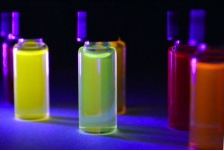
CdTe Quantum Dots, powder, hydrophilic (510 ± 5 nm to 600 ± 5 nm)
View Product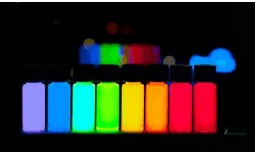
Quantum Dots, CdTe, Hydrophilic (510nm ++10 ...790nm)
View Product
Zn-Cu-In-S/ZnS Quantum Dots, Cadmium Free, Hydrophilic (WCF-530 ++30 ..0700)nm
View ProductReady to Advance Your Diagnostic Research?
Explore our comprehensive range of high-quality quantum dots and find the perfect nanomaterials for your next breakthrough. From carboxyl-functionalized to cadmium-free options, we have the tools to power your innovation.
Explore Our Quantum Dot Solutions