Ensuring Purity from Farm to Fork: The Nanotech Revolution
In a nation as vast and diverse as India, ensuring the safety and quality of the food supply chain is a monumental task. From bustling urban markets to remote agricultural communities, the threat of contamination—be it from pathogens, pesticides, heavy metals, or toxins—is a constant concern for both consumers and regulatory bodies like the FSSAI. Traditional detection methods, while reliable, often face challenges of being time-consuming, labor-intensive, and requiring sophisticated laboratory setups. This is where the world of nanotechnology offers a groundbreaking solution: **quantum dots in food safety testing**.
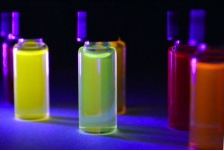
Imagine a sensor so sensitive it can detect a single bacterial cell, or a test that provides results in minutes instead of days. This is the promise of **quantum dot biosensors**. These microscopic semiconductor crystals, thousands of times smaller than a human hair, possess extraordinary optical properties. When illuminated, they emit intensely bright, stable light of a specific color, which can be precisely tuned by changing their size. By linking these quantum dots to antibodies or other biological molecules, researchers have created powerful **contaminant detection nanotech** tools that are poised to revolutionize food quality monitoring. This article delves into how these remarkable nanomaterials are creating new frontiers in food safety, with a special focus on their relevance and potential for Indian researchers and industries.
Why Researchers are Turning to Quantum Dot Assays
For researchers in India and across the globe, **quantum dot analytical tools** offer a significant leap forward. The shift from conventional methods to **quantum dot assays** is driven by a unique combination of advantages that directly address the limitations of older techniques.
-
Unparalleled Sensitivity and Low Detection Limits
Quantum dots are exceptionally bright and resistant to photobleaching, allowing them to produce strong, stable signals. This enables the detection of contaminants at pico- or even femtomolar concentrations, far below what's possible with many traditional organic dyes.
-
Rapid, Real-Time Analysis
Many **quantum dot food testing** protocols can deliver results in minutes rather than the hours or days required for methods like PCR or cell culturing. This speed is critical for on-site inspections and quick decision-making in the food processing industry.
-
Multiplexing Capability for High-Throughput Screening
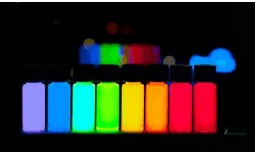
By using QDs of different sizes (and thus different colors) in a single test, scientists can simultaneously screen for multiple contaminants—such as different bacterial strains, toxins, and allergens. This multiplexing dramatically increases efficiency and reduces costs.
-
Enhanced Stability and Shelf-Life
Compared to organic fluorophores, quantum dots exhibit superior photostability and chemical stability. This leads to more robust and reliable sensors with a longer shelf-life, a crucial factor for developing commercially viable **food inspection nanomaterials**.
Key Applications in Food Quality Monitoring
Pathogen Detection
Rapid identification of foodborne pathogens like *E. coli*, *Salmonella*, and *Listeria* is critical. **Pathogen detection nanotech** using quantum dots involves conjugating them with specific antibodies. When the antibody-QD complex binds to a target pathogen, a fluorescent signal is generated, enabling quick and specific identification, preventing widespread outbreaks.
Pesticide and Herbicide Residues
Detecting minute pesticide residues on fruits and vegetables is a major challenge. Quantum dot biosensors can be designed to detect these chemical compounds through mechanisms like fluorescence quenching. This provides a fast screening tool for agricultural produce, ensuring it complies with safety standards.
Mycotoxin and Biotoxin Analysis
Mycotoxins produced by fungi in stored grains and nuts are highly toxic. Highly sensitive **quantum dot assays** can detect toxins like aflatoxin at parts-per-billion levels, safeguarding staple foods that form a core part of the Indian diet. This is a crucial application of **food quality monitoring nanomaterials**.
Heavy Metal Contamination
Heavy metals like lead, mercury, and cadmium can enter the food chain through contaminated water and soil. Specific quantum dots change their fluorescence intensity or color in the presence of these metal ions, offering a simple, colorimetric method for on-site water and food sample analysis, a vital area of **contaminant detection nanotech**.
The Indian Horizon: Trends and Opportunities
The landscape for **nanotech in food safety** in India is ripe with opportunity. With the government's "Make in India" initiative and a growing focus on high-tech R&D, there is significant potential for developing indigenous **food safety quantum dots** solutions. Indian research institutions are increasingly exploring the synthesis and application of novel nanomaterials. The demand for advanced **food inspection nanomaterials** is driven by stricter food export regulations and a more aware domestic consumer base.
Startups and established diagnostic companies have a unique chance to develop and commercialize portable, cost-effective testing kits based on **quantum dot food testing** technology. These kits could be deployed at various points in the supply chain—from farms and collection centers to processing plants and retail outlets. The development of cadmium-free quantum dots is particularly relevant, aligning with global trends towards greener and safer analytical reagents. The successful adoption of these technologies will not only elevate India's food safety standards but also position the country as a leader in the application of advanced **quantum dot analytical tools**.
Recommended Quantum Dots for Biosensing Research

Frequently Asked Questions
Quantum dots (QDs) are semiconductor nanocrystals with unique photoluminescent properties. In food safety, they are used as fluorescent labels in biosensors. When a target contaminant (like a pathogen or toxin) binds to a QD-based sensor, the QD's light emission changes, signaling the presence of the contaminant with high sensitivity.
Yes, for testing purposes. The quantum dots are used in analytical tools and assays to test food samples; they are not added to the food itself. Modern research focuses on developing non-toxic, cadmium-free quantum dots (e.g., those based on Zinc, Copper, Indium) to further enhance the safety profile of these analytical tools.
Quantum dot biosensors offer several key advantages: 1) Higher Sensitivity: They can detect contaminants at much lower concentrations. 2) Speed: Quantum dot assays provide results much faster than traditional culture-based methods. 3) Multiplexing: Different colored QDs can be used to detect multiple contaminants in a single test. 4) Stability: They are more resistant to photobleaching than organic dyes, allowing for longer-lasting and more reliable signals.
Absolutely. This is one of their most powerful features, known as multiplexing. By using different-sized quantum dots that emit different colors of light, and attaching different recognition molecules to each, a single quantum dot assay can simultaneously test for a variety of contaminants, such as E. coli, Salmonella, and specific pesticides, all in one sample.
Ready to Advance Your Research?
Explore our comprehensive range of high-quality quantum dots and nanomaterials to power your next discovery in food safety and biosensing.
Browse All Quantum Dots