Illuminating the Microcosm: The Rise of Quantum Dots in Indian Research
In the intricate world of biomedical research, the ability to see is the ability to understand. For decades, scientists have sought brighter, more stable tools to peer into the inner workings of cells. Today, a new class of nanomaterials is answering that call: **bioimaging quantum dots**. These tiny yet powerful semiconductor nanocrystals are at the forefront of a technological revolution, transforming everything from fundamental biology to clinical diagnostics.
For the vibrant research community in India, this is a particularly exciting time. As the nation pushes the boundaries of **biomedical nanotech**, quantum dots are emerging as indispensable tools. Unlike traditional fluorescent dyes that fade quickly, these **quantum dot markers** offer exceptional brightness and photostability. This allows Indian researchers to conduct longer, more detailed experiments, tracking cellular processes in real-time with stunning clarity. From the bustling labs in Bangalore to the premier institutes in Delhi, these **nanoprobes for diagnostics** are not just a scientific curiosity; they are becoming a cornerstone of modern biological investigation and a key driver of innovation in **in vivo imaging nanotech**.
Why Researchers are Choosing Quantum Dots
The unique photophysical properties of quantum dots provide significant advantages over traditional organic fluorophores, making them superior **cellular imaging agents**.
Exceptional Photostability
Quantum dots are highly resistant to photobleaching, allowing for long-term imaging and tracking of cellular dynamics without signal loss. This is critical for time-lapse microscopy and in vivo studies.
Broad Absorption, Narrow Emission
QDs can be excited by a wide range of wavelengths but emit light in a very narrow, predictable band. This minimizes spectral overlap and makes them perfect for multiplexing—imaging multiple targets at once.
Size-Tunable Fluorescence
The emission color of a quantum dot is directly related to its size. This allows for the production of a full spectrum of colors using the same material, simplifying experimental design for multi-color **fluorescence imaging**.
High Quantum Yield
Quantum dots are incredibly bright, converting absorbed light into emitted light with high efficiency. This results in a strong signal-to-noise ratio, making it possible to detect even low-abundance targets.
Real-World Applications of Quantum Dot Biolabels
Targeted Cancer Imaging
By conjugating quantum dots with antibodies or peptides that specifically bind to cancer cells, researchers can create highly effective **targeted imaging agents**. These QDs accumulate at tumor sites, illuminating them for precise diagnosis and surgical guidance. This application of **medical imaging nanoparticles** is a game-changer for oncology.
In Vivo Cell Tracking
The unmatched photostability of quantum dots makes them ideal for long-term **in vivo imaging nanotech**. Scientists can label stem cells or immune cells with QDs and track their migration, differentiation, and function within a living organism over days or even weeks, providing deep insights into disease progression and regenerative medicine.
High-Throughput Screening
In drug discovery, the ability to screen thousands of compounds quickly is essential. Using multiplexed **quantum dot biolabels**, researchers can develop cell-based assays that simultaneously measure multiple parameters, accelerating the identification of promising drug candidates and our understanding of their mechanisms.
Advanced Diagnostics
Quantum dots are being integrated into biosensors and lab-on-a-chip devices. Their bright signal enhances the sensitivity of these **nanoprobes for diagnostics**, enabling the detection of disease biomarkers at very low concentrations. This holds immense promise for early disease detection in India and beyond.
The Indian Landscape: Opportunities and Trends in Bioimaging
The **bioimaging applications of quantum dots in India** are not just theoretical; they are rapidly becoming a reality. Propelled by government initiatives like 'Make in India' and a growing ecosystem of biotech startups, Indian scientists are making significant strides. Research is heavily focused on developing biocompatible, cadmium-free quantum dots to address toxicity concerns, a crucial step for clinical translation.
Institutions like the Indian Institutes of Technology (IITs), the Indian Institute of Science (IISc), and various CSIR laboratories are pioneering the use of **quantum dot markers** for studying infectious diseases prevalent in the region, such as tuberculosis and malaria. The development of cost-effective **nanoprobes for diagnostics** is a major priority, aiming to bring advanced healthcare solutions to a wider population. As the field of **biomedical nanotech** matures in India, we can expect a surge in homegrown innovations, from novel **cellular imaging agents** to sophisticated platforms for **in vivo imaging nanotech**. This progress positions India as a key player in the future of medical imaging and nanotechnology.
Recommended Quantum Dots for Bioimaging

Cadmium Selenide Zinc Sulfide Quantum Dots- Carboxyl (450nm-650nm)
View Product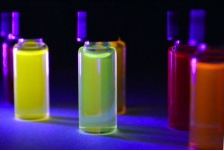
CdTe Quantum Dots, powder, hydrophilic (510 ± 5 nm to 600 ± 5 nm)
View Product
Zn-Cu-In-S/ZnS Quantum Dots, Low-cd, Hydrophilic, QD-WA (470nm ++10 ...630nm)
View Product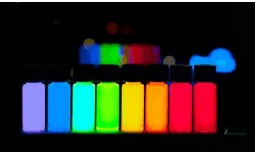
Quantum Dots, CdTe, Hydrophilic (510nm ++10 ...790nm)
View ProductFrequently Asked Questions
Quantum dots are semiconductor nanocrystals, typically between 2-10 nanometers in size. Their unique optoelectronic properties, such as size-tunable fluorescence and high photostability, make them exceptional **quantum dot markers** for advanced bioimaging applications.
Quantum dots can be functionalized to bind to specific targets within cells, such as proteins or nucleic acids. When illuminated with a light source, these **quantum dot biolabels** emit bright, stable fluorescence, allowing researchers to visualize cellular structures and processes with unprecedented clarity and for extended periods, a significant advantage in **in vivo imaging nanotech**.
The safety of quantum dots is a key area of research in India and globally. Many QDs contain heavy metals like cadmium. However, advancements in surface coatings (e.g., silica or polymer shells) and the development of cadmium-free alternatives (like those based on zinc, copper, or indium) are significantly improving their biocompatibility and paving the way for their use as **nanoprobes for diagnostics**.
Multiplexing is the ability to detect multiple targets simultaneously. Because the emission color of quantum dots can be precisely tuned by changing their size, scientists can use several different-colored QDs at once, each targeting a different molecule. This allows for complex, multi-color imaging of cellular events within a single sample, a feat difficult to achieve with traditional organic dyes.
Ready to Revolutionize Your Research?
Explore our wide range of high-performance quantum dots and find the perfect nanoprobes for your bioimaging needs.
Shop Quantum Dots