
A New Dawn for Display Brilliance
The quest for perfect visual fidelity has led display technology down a path of constant innovation. From the bulky Cathode Ray Tubes (CRTs) to the sleek Organic Light-Emitting Diodes (OLEDs), each technological leap has brought us closer to replicating reality on a screen. Today, we stand at the precipice of another revolution, one powered by the incredible science of nanomaterials. At the heart of this transformation are quantum dots (QDs), semiconductor nanocrystals that are fundamentally redefining what’s possible in high-resolution displays.
For researchers, scientists, and technology professionals in India, understanding this shift is not just an academic exercise. It represents a significant wave of opportunity. As a nation rapidly expanding its high-tech manufacturing and R&D capabilities, the rise of quantum dot screen technology is directly relevant. This technology isn't a distant future concept; it's already here, powering the vibrant screens of premium TVs, monitors, and soon, a much wider array of devices. The core innovation lies in quantum dot color enhancement, a process that allows displays to produce purer, more vibrant, and a significantly wider range of colors than ever before.
This article delves into the world of quantum dots for high-resolution displays. We will explore the underlying science, the tangible benefits for researchers and industries, the burgeoning applications, and the specific opportunities this ultra-HD display nanotech presents within the Indian context. From developing next-generation quantum dot display panels to pioneering new uses for this versatile nanomaterial, the field is ripe for exploration and innovation.
Why Quantum Dots are a Game-Changer for Researchers
For the scientific community, quantum dots offer more than just better-looking screens. They are a versatile platform for research, providing tangible benefits that can accelerate discovery and development in materials science, optics, and electronics.
-
Unprecedented Color Purity and Tunability
QDs emit light in very narrow, specific wavelengths, determined precisely by their size. This allows researchers to create custom light sources and displays with an exceptionally pure and predictable color output, crucial for calibration-sensitive scientific imaging and optical experiments.
-
Superior Brightness and Efficiency
The high quantum yield of QDs means they convert energy to light very efficiently. This leads to brighter displays that consume less power. For R&D, this translates to developing more sustainable display technologies and high-intensity light sources for specialized applications like photolithography or medical diagnostics.
-
Material Stability and Longevity
Unlike organic molecules used in OLEDs, inorganic quantum dots are highly resistant to degradation from oxygen and moisture. This stability makes them ideal for creating durable, long-lasting high-definition screens nanomaterials, reducing issues like screen burn-in and color shifting over time.

Beyond the Living Room: Industry Applications
Medical Imaging & Diagnostics
The tunable and bright fluorescence of quantum dots makes them exceptional bio-markers. In medical displays, the display clarity nanomaterials ensure that surgeons and radiologists can see subtle but critical details in scans, improving diagnostic accuracy. The research extends to using QDs as contrast agents themselves.
Professional & Creative Monitors
For graphic designers, video editors, and photographers, color accuracy is non-negotiable. Quantum dot display panels provide a wider color gamut (often covering over 99% of DCI-P3), allowing professionals to work with a truer representation of their final product, from digital art to cinematic productions.
Automotive & Avionics
The high brightness and durability of QD displays make them perfect for the demanding environments of car dashboards and cockpit displays. This visual quality enhancement nanotech ensures that critical information is clearly visible even in direct sunlight, improving safety and user experience.
The Indian R&D Landscape: Opportunities in Quantum Dot Technology
India's "Make in India" initiative and its focus on becoming a global electronics manufacturing hub create a fertile ground for display innovation nanomaterials. The transition to quantum dot technology is a key area where Indian researchers and industries can make a significant impact. The government's Production Linked Incentive (PLI) scheme for large-scale electronics manufacturing, which includes display fabrication, provides a strong financial impetus.
A primary research focus is the development of cost-effective and environmentally friendly quantum dots. While early QDs were cadmium-based, raising toxicity concerns, the industry is rapidly moving towards cadmium-free alternatives like Indium Phosphide (InP) and Perovskite quantum dots. Indian labs at institutions like IISc Bangalore, IITs, and CSIR are actively engaged in synthesizing and characterizing these next-gen materials. Success in this area could lead to homegrown IP and a self-reliant supply chain for quantum dot display panels.
Furthermore, the application of quantum dot backlighting systems in existing LCD manufacturing lines offers a pragmatic path for adoption. This hybrid approach, often marketed as QLED, allows manufacturers to significantly upgrade picture quality without a complete overhaul of their facilities. This presents a massive opportunity for Indian display manufacturers to enhance their product offerings and compete globally. The demand for ultra-HD display nanotech is not limited to consumer electronics; it spans strategic sectors like defense, aerospace, and healthcare, all of which are national priorities.
Frequently Asked Questions
Quantum dots are semiconductor nanocrystals whose tiny size (2-10 nanometers) gives them unique quantum mechanical properties. When hit by light, they emit pure, precise colors determined by their size. In displays, this allows for a much wider and more accurate color gamut, higher peak brightness, and greater energy efficiency compared to traditional LCDs, leading to the development of superior quantum dot display panels.
Both technologies have distinct advantages. OLEDs offer perfect blacks and infinite contrast because each pixel is self-emissive. Quantum dot displays (specifically QLEDs) use a quantum dot color enhancement layer with an LED backlight, achieving higher peak brightness and a wider color volume, making them excellent for HDR content. They are also generally more resistant to burn-in and can be more cost-effective to produce.
In ultra-HD displays, the goal is not just more pixels, but better pixels. Quantum dots are a key nanotech enabler for this. They provide the color purity needed to make each of the 8 million+ pixels in a 4K display vibrant and distinct. This display clarity nanomaterial technology ensures that the expanded resolution translates into a genuinely more lifelike and immersive viewing experience.
The primary challenges include the high initial cost of manufacturing and the reliance on materials like cadmium, which has environmental concerns. However, significant R&D is underway in India and globally to develop cadmium-free quantum dots (e.g., InP or Perovskite-based) and to scale up production, which will drive down costs and accelerate adoption in the Indian market.
Related Quantum Dot Products for R&D
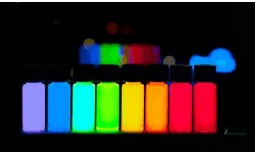
Quantum Dots, CdSe/ZnS, Hydrophobic (530nm - 650nm)
View Product →
Perovskite Quantum Dots, Cadmium Free, Hydrophobic (450nm - 690nm)
View Product →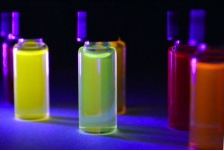
Zn-Cu-In-S/ZnS Quantum Dots, Cadmium Free, Hydrophilic
View Product →
Cadmium Selenide Zinc Sulfide Quantum Dots - Carboxyl (450nm-650nm)
View Product →Ready to Advance Your Research?
Explore our comprehensive range of high-purity quantum dots and nanomaterials to power your next breakthrough in display technology, bio-imaging, or materials science.
Browse All Quantum Dots