
Quantum Dots for Environmental Monitoring: A New Frontier in India's Pollutant Detection Nanotech
Harnessing the power of nanomaterials, quantum dot sensors offer unprecedented sensitivity and real-time data for tackling India's pressing environmental challenges.
Explore NowA Nanotech Revolution for a Cleaner India
India, a nation witnessing rapid industrialization and urbanization, stands at a critical environmental crossroads. The purity of our rivers, the quality of the air we breathe, and the health of our soil are under constant threat from industrial effluents, agricultural runoff, and urban pollution. Traditional methods for detecting these contaminants, while reliable, are often slow, expensive, and require samples to be transported to a lab. This delay can be the difference between timely intervention and ecological damage. This is where **pollutant detection nanotech** emerges as a game-changer for Indian researchers and environmental agencies.
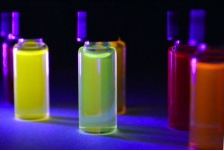
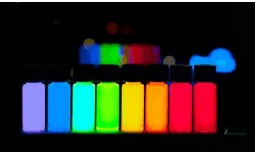
At the forefront of this revolution are **quantum dots (QDs)**—tiny semiconductor nanocrystals, merely a few nanometers in size. What makes them extraordinary are their unique, size-tunable optical properties. They absorb light and re-emit it in a different, vibrant color that depends precisely on their size. This exceptional fluorescence is the key to their power. By engineering the surface of these nanocrystals, scientists can make them act as highly specific **quantum dot sensors**, capable of detecting even trace amounts of pollutants with remarkable accuracy.
For the Indian R&D community, **quantum dots for environmental monitoring** represent a monumental leap. They offer a pathway to developing portable, low-cost, and real-time diagnostic tools. Imagine a field kit that can instantly detect heavy metal contamination in the Ganges, or an aerial drone equipped with **air quality nanomaterials** to map pollution hotspots over Delhi in real-time. This is not science fiction; it is the tangible promise of **quantum dot environmental diagnostics**, a field poised to empower India with the advanced tools needed to safeguard its precious natural resources.
Why Researchers Should Be Excited: The Advantages of QD Sensors
For professionals in environmental science and nanotechnology, the shift towards quantum dot analyzers is driven by a clear set of compelling benefits that overcome the limitations of conventional techniques.
-
Unmatched Sensitivity and Specificity
Quantum dot sensors can be tuned to detect specific pollutants—from heavy metal ions like lead and mercury to pesticides and volatile organic compounds (VOCs)—at concentrations as low as parts-per-billion (ppb). This is critical for early-warning systems.
-
Real-Time and On-Site Analysis
The technology enables the development of portable devices that provide immediate feedback. This eliminates the logistical delays of sample collection and transportation, allowing for rapid decision-making in the field—a core goal of **environmental sensing nanotech**.
-
Multiplexing Capabilities
By using quantum dots of different sizes (and thus different colors) in a single sensor, it's possible to detect multiple pollutants simultaneously. This 'multiplexing' is highly efficient for comprehensive **ecological monitoring nanotech**.
-
Cost-Effectiveness at Scale
While initial R&D can be intensive, the materials required for QD sensors are minimal, and the potential for mass production promises to make this **nanotech for pollution detection** significantly more affordable than traditional equipment in the long run.
Industry Applications Across India
Water Quality and Safety
For a country where water bodies like the Yamuna and Ganga face severe pollution, **environmental monitoring quantum dots** are invaluable. Hydrophilic (water-soluble) QDs can be designed to detect heavy metals (e.g., arsenic, lead, cadmium) and organic pollutants (pesticides, industrial dyes) in real-time. This allows municipal corporations and environmental agencies to monitor water quality at treatment plants and directly at the source of pollution, ensuring safer drinking water for millions.
Air Pollution and Urban Smog
Cities across the Indo-Gangetic plain grapple with hazardous air quality. **Air quality nanomaterials**, specifically QD-based gas sensors, can be integrated into stationary monitoring stations or mobile platforms (like drones). These sensors can detect harmful gases like nitrogen oxides (NOx), sulfur oxides (SOx), and carbon monoxide (CO) with high precision, providing critical data for public health warnings and policy-making.
Agriculture and Soil Health
The judicious use of fertilizers and pesticides is crucial for sustainable agriculture. QD sensors can help. By testing soil and water samples for nutrient levels and pesticide residues directly on the farm, this **environmental sensing nanotech** empowers farmers with data for precision agriculture. This not only improves crop yields but also prevents chemical runoff into groundwater, a major environmental concern in states like Punjab and Haryana.
Industrial Effluent Monitoring
The 'Make in India' initiative is driving industrial growth, but this must be balanced with environmental responsibility. Quantum dot sensors provide a robust tool for industries to self-regulate. By integrating these sensors into their waste streams, factories can ensure they comply with CPCB (Central Pollution Control Board) norms, using these **environmental safety nanomaterials** to prevent the discharge of toxic chemicals and contribute to a cleaner industrial ecosystem.
The Road Ahead: Trends and Opportunities in India
The landscape for **nanotech for pollution detection** in India is ripe with opportunity. The national government's focus on technology-driven solutions, through missions like the National Mission on Interdisciplinary Cyber-Physical Systems (NM-ICPS) and 'Make in India,' creates a fertile ground for R&D in advanced materials. Indian research institutions are increasingly filing patents in nanotechnology, and there's a growing push to translate lab-scale research into commercially viable products.
A key trend is the development of cadmium-free quantum dots (e.g., those based on InP/ZnS or carbon) to address toxicity concerns, making **environmental safety nanomaterials** truly safe for widespread deployment. Furthermore, integrating **quantum dot analyzers** with IoT (Internet of Things) platforms is the next logical step. This would create vast, interconnected networks of sensors providing a live, nationwide map of environmental health, accessible to policymakers, researchers, and the public. For any Indian researcher or startup in the materials science space, focusing on scalable synthesis of eco-friendly quantum dots and developing user-friendly, IoT-enabled sensor kits is a pathway to immense impact and success.
Related Products for Your Research


Frequently Asked Questions
Quantum dots (QDs) are semiconductor nanocrystals whose fluorescence properties are dependent on their size. In sensors, QDs are functionalized to bind with specific pollutants. When a pollutant binds, it alters the QD's fluorescence (either quenching or enhancing it), which can be detected and measured, allowing for highly sensitive and specific pollutant detection.
Quantum dot sensors offer several advantages over traditional methods like chromatography or spectroscopy. They provide real-time results, are highly sensitive (detecting parts-per-billion levels), can be used for on-site analysis, and can be designed to detect multiple pollutants simultaneously. This makes them faster, more portable, and often more efficient for large-scale environmental monitoring.
The primary challenges include the cost of high-quality quantum dot synthesis, potential toxicity concerns (especially with cadmium-based QDs), ensuring sensor stability in harsh environmental conditions, and scaling up production. However, ongoing research into 'green' synthesis and cadmium-free QDs, along with initiatives like 'Make in India,' is actively addressing these issues.
Yes. The versatility of quantum dots allows them to be adapted for different media. Hydrophilic (water-soluble) QDs are ideal for detecting heavy metals or pesticides in water. For air quality, QDs can be integrated into films or arrays to detect gaseous pollutants like NOx, SOx, or volatile organic compounds (VOCs), making them a comprehensive solution for environmental safety.
Ready to Advance Your Research?
Explore our wide range of high-purity quantum dots and nanomaterials to power your next breakthrough in environmental diagnostics. Get in touch with our experts to discuss your specific project needs.
Contact Us