
The Dawn of a New Era: Quantum Dot Photodetectors in India
In the rapidly evolving landscape of materials science and electronics, a new hero is emerging: the quantum dot photodetector. For researchers and professionals across India, from the bustling tech hubs of Bangalore to the esteemed laboratories of Delhi, this technology represents a monumental leap forward. But what exactly are these devices, and why are they generating so much excitement? At their core, quantum dot photodetectors are a class of nanomaterial light sensors that harness the bizarre and wonderful principles of quantum mechanics to detect light with unparalleled precision.
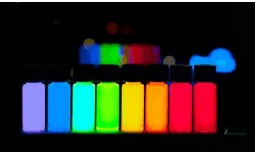
Unlike traditional silicon-based photodetectors, which have long been the industry standard, quantum dot sensors offer a level of versatility and performance previously thought unattainable. These nanocrystals, smaller than a virus, can be engineered to absorb specific wavelengths of light simply by tuning their size. This opens up a world of possibilities, from creating ultra-sensitive cameras that can see in the dark to developing medical devices that can identify cancer cells with pinpoint accuracy. This field of photonic nanotechnology is not just an academic curiosity; it's a practical, powerful tool poised to revolutionize industries and fuel India's ambition to become a global leader in high-tech manufacturing and R&D.
Why Researchers are Turning to Quantum Dot Sensors
The shift towards quantum dot photodetectors is driven by a clear set of advantages that directly address the limitations of conventional technologies. For the Indian research community, these benefits translate into more effective, affordable, and innovative projects.
- Unmatched Tunability: The most significant advantage is the ability to control the spectral range. By simply adjusting the size of the quantum dots, a single material system can be made to detect everything from deep UV to far-infrared light. This eliminates the need for complex and expensive multi-material detectors.
- Exceptional Sensitivity: Quantum dots boast a high quantum efficiency, meaning they are incredibly effective at converting photons (light particles) into electrons (electrical signals). This leads to high-sensitivity detectors capable of operating in low-light conditions, crucial for applications in astronomy, night vision, and medical imaging.
- Low-Cost Fabrication: Unlike the high-temperature, vacuum-based processes required for silicon chips, quantum dots can be synthesized and processed using solution-based chemistry. This makes manufacturing cheaper, more scalable, and accessible to a wider range of labs and startups in India.
- Flexibility and Form Factor: Quantum dots can be incorporated into flexible or transparent substrates. Imagine wearable health monitors, smart windows that harvest energy, or foldable displays. This adaptability is a key enabler for the next generation of consumer electronics and IoT devices.
- Broad Spectral Response: The use of materials like lead sulfide (PbS) or perovskite quantum dots allows for the creation of photodetector quantum dots that are highly sensitive in the short-wave infrared (SWIR) range, a spectrum invisible to silicon but vital for machine vision, security, and remote sensing.
From Lab to Life: Real-World Applications
The theoretical benefits of quantum dots in photodetector applications are already translating into tangible, transformative technologies across various sectors in India and globally.
Medical and Bio-Imaging
Quantum dot imaging sensors are revolutionizing medical diagnostics. Their high sensitivity in the near-infrared (NIR) spectrum allows for deeper tissue imaging with less background noise. This is critical for early-stage cancer detection, real-time surgical guidance, and advanced cellular-level research in Indian biomedical institutes.
Consumer Electronics & IoT
The ability to create tiny, powerful, and cheap sensors makes quantum dot light sensors perfect for the next wave of smart devices. Think of smartphone cameras with incredible low-light performance, ambient light sensors that perfectly adjust screen brightness, or proximity sensors for gesture control in augmented reality glasses.
Industrial & Machine Vision
In manufacturing, SWIR imaging enabled by quantum dot photodetectors can "see through" materials like silicon wafers to inspect for defects. It's also used for sorting plastics, checking moisture content in food products, and enhancing quality control, directly supporting the 'Make in India' initiative.
Environmental Monitoring
This optical sensing nanotech can be used to build compact spectrometers for detecting pollutants in air and water. By tuning detectors to the specific absorption spectra of gases like methane or CO2, Indian environmental agencies can develop more efficient and widespread monitoring networks.
The Indian Horizon: Opportunities in Photonic Nanotechnology
India is uniquely positioned to become a powerhouse in the field of photonic nanotechnology. With a strong base of chemical engineering talent, a burgeoning electronics manufacturing ecosystem, and government support through programs like the National Mission on Interdisciplinary Cyber-Physical Systems, the stage is set. The demand for high-sensitivity detectors is surging, driven by strategic sectors like defense, space exploration (ISRO), and healthcare.
Research in nanomaterials in photodetection is accelerating at premier institutions like the IITs, IISc Bangalore, and TIFR. These institutions are exploring novel materials beyond traditional cadmium-based QDs, such as perovskite quantum dots and carbon dots, which promise even greater performance and environmental safety. For young researchers and established professionals, this translates into immense opportunities. The ability to work with photodetector quantum dots is becoming a highly sought-after skill. Startups focused on creating custom optical sensing solutions have a fertile ground for growth, particularly in developing bespoke sensors for agriculture, industrial automation, and affordable medical devices tailored to the Indian market. The journey from lab-scale synthesis to commercial production of quantum dot photodiodes is the next great challenge and opportunity for Indian innovators.
Featured Quantum Dot Materials for Your Research


Frequently Asked Questions
Quantum dot (QD) photodetectors are advanced light sensors that use quantum dots—tiny semiconductor nanocrystals—as the active material to absorb light and convert it into an electrical signal. Their unique quantum mechanical properties allow for high sensitivity, tunable detection wavelengths, and cost-effective fabrication, making them superior to many traditional photodetectors.
The primary difference lies in tunability and spectral range. Silicon photodetectors have a fixed spectral range, primarily in the visible spectrum. Quantum dot sensors, however, can be tuned to detect light from ultraviolet (UV) to the infrared (IR) spectrum simply by changing the size of the quantum dots. They also offer higher quantum efficiency and can be processed into flexible or transparent devices.
In India, key applications include advanced medical imaging (bio-imaging, diagnostics), environmental monitoring (detecting pollutants), agricultural tech (assessing crop health), and telecommunications (improving optical networks). Their low cost and high performance also make them ideal for developing affordable consumer electronics and security systems.
While still a major area of research and development, components for building quantum dot photodetectors, such as various types of quantum dots (e.g., CdSe/ZnS, Perovskite QDs), are commercially available for researchers and industry pioneers. Companies like Hiyka provide these advanced nanomaterials for R&D purposes, enabling the development of next-generation photonic devices.
Ready to Pioneer the Next Generation of Light Detection?
Start your research with the highest quality quantum dots available. Explore our catalog or contact our experts to find the perfect nanomaterials for your project.
Explore Quantum Dots