The Dawn of a New Display Era: Understanding QD-OLED
For decades, the world of display technology has been on a relentless quest for the perfect pixel—one that is bright, colorful, efficient, and long-lasting. From the bulky Cathode Ray Tubes (CRTs) to the slim Liquid Crystal Displays (LCDs) and the vibrant Organic Light Emitting Diodes (OLEDs), each step has brought us closer to that goal. Now, we stand at the threshold of another revolutionary leap: Quantum Dot OLED (QD-OLED). This hybrid technology marries the best of quantum dots and OLEDs, promising a visual experience that is more vivid, brighter, and more efficient than ever before.
For researchers, engineers, and technology enthusiasts in India, the rise of QD-OLED is not just a global trend; it's a significant opportunity. As India continues to strengthen its position as a hub for electronics manufacturing and R&D through initiatives like "Make in India" and the "Programme for Development of Semiconductors and Display Manufacturing Ecosystem," understanding and harnessing next-generation display technology is paramount. QD-OLED, with its potential for superior performance in televisions, monitors, smartphones, and even futuristic flexible displays, represents a key area of innovation. This article delves into the science behind QD-OLED, its benefits for researchers, its vast application potential, and the burgeoning opportunities it presents within the Indian context.
Why QD-OLED is a Game-Changer for Indian Researchers
For the scientific community in India, from national labs to university research parks, the advent of QD-OLED technology opens up a fertile ground for exploration and innovation. The unique properties of quantum dot OLED systems provide numerous advantages and research avenues:
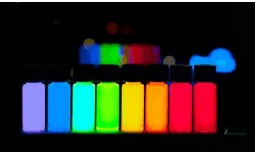
- Superior Color Purity and Gamut: Quantum dots are semiconductor nanocrystals that emit light of a very specific color depending on their size. This property allows for the creation of extremely pure red, green, and blue light, far exceeding the capabilities of the color filters used in traditional OLEDs. Researchers can focus on synthesizing novel QD emitters to push the boundaries of color reproduction, targeting standards like Rec. 2020 for ultra-high-definition content.
- Enhanced Brightness and Efficiency: Traditional OLED displays lose significant energy in their color filters. QD-OLEDs replace these filters with a quantum dot color conversion (QDCC) layer. This results in significantly higher high-brightness levels and better energy efficiency, as less light is wasted. This opens research into optimizing the electroluminescence efficiency of the blue OLED source and the photoluminescence quantum yield (PLQY) of the quantum dots.
- Pathways to Advanced Flexible Displays: Quantum dots can be processed in solution and deposited using printing techniques. This makes them inherently suitable for manufacturing on flexible substrates. Indian researchers can work on developing scalable, low-cost printing methods for QD layers, paving the way for the next generation of rollable televisions, foldable phones, and wearable nano display devices.
- Material Science Innovation: The field is ripe for material innovation. A key area of research is the development of stable, efficient, and environmentally friendly quantum dots. This includes work on cadmium-free QDs (e.g., InP-based) and emerging materials like perovskite quantum dots, which promise even greater performance. Synthesizing and characterizing these materials for stability and longevity is a critical challenge for researchers to solve.
Beyond the Lab: Industry Applications of QD-OLED
The impact of quantum dot OLED technology extends far beyond the research lab, promising to redefine a wide range of industries in India and globally.
Consumer Electronics
This is the most immediate market. QD-OLED TVs and gaming monitors offer unparalleled contrast, color volume, and pixel response times. For India's growing consumer market, this means a more immersive entertainment experience. The technology will also feature in high-end smartphones and tablets, where color accuracy and brightness are key selling points.
Medical Imaging & Diagnostics
In medical fields, diagnostic accuracy is everything. The extremely wide color gamut and precision of QD-OLED displays can help radiologists and surgeons see more subtle variations in medical scans (MRI, CT) and during endoscopic procedures. This enhancement in visual data can lead to better patient outcomes.
Automotive Displays
The modern car cockpit is increasingly digital. QD-OLEDs offer the high brightness needed for clear visibility in daylight and the deep blacks needed for non-distracting night driving. Their potential for creating free-form and flexible displays allows for innovative dashboard designs that seamlessly integrate with the car's interior.
Specialized Lighting (QD Lighting)
The same principles of color conversion can be applied to solid-state lighting. QD lighting can produce light with a tunable spectrum, closely mimicking natural sunlight or creating specific moods. This has applications in horticulture (grow lights with optimized spectra), human-centric lighting for well-being, and high-end retail environments.
The Indian Opportunity: R&D, Manufacturing, and Market Growth
India is at a pivotal moment in the global electronics value chain. The push for self-reliance in semiconductor and display manufacturing creates a massive opportunity for technologies like QD-OLED. The performance benefits of quantum dots for enhancing OLED performance are clear, and a domestic ecosystem can be built around this.
Fostering an R&D Ecosystem
Indian institutions like the IITs, IISc, and national laboratories are already engaged in nanomaterial research. A concerted effort to focus on nano OLED and QD emitter materials could create valuable intellectual property. Key research trends include:
- Developing Cadmium-Free QDs: With global regulations tightening on heavy metals, mastering the synthesis of high-performance, stable, cadmium-free quantum dots is crucial for commercial viability.
- Improving Blue OLED Emitters: The entire QD-OLED system relies on a stable and efficient blue OLED. Research into new host-guest materials and device architectures to improve the lifetime and efficiency of blue OLEDs is a critical area.
- Inkjet Printing and Scalable Manufacturing: Moving from lab-scale spin-coating to industrial-scale inkjet printing of QD layers is a major engineering challenge. Developing the right QD "inks," printheads, and processes is essential for cost-effective production.
The Path to Manufacturing
While establishing a full-scale display fab is capital-intensive, India can strategically enter the value chain. This could involve setting up facilities for quantum dot synthesis and purification, developing specialized polymers for encapsulation, or manufacturing the printing equipment itself. Collaborations between Indian research bodies and global display giants can facilitate technology transfer and skill development, building a workforce ready for the future of display technology.
Frequently Asked Questions
The core advantage of QD-OLED is its ability to produce highly pure, vibrant colors with superior brightness and efficiency. Unlike traditional OLEDs that use color filters (which absorb light and reduce brightness), QD-OLEDs use blue OLEDs as a light source and quantum dots to convert this blue light into pure red and green. This results in a wider color gamut, higher peak brightness, and better energy efficiency.
Yes, cadmium-free quantum dots, particularly those based on Indium Phosphide (InP) or Perovskite materials, are becoming increasingly viable for high-performance displays. While early Cd-free QDs lagged in efficiency and color purity, significant R&D advancements have closed this gap. They now offer excellent performance while complying with global environmental regulations like RoHS, making them a key focus for sustainable display technology in India and worldwide.
Quantum dots are nanocrystals that can be formulated into inks and printed onto flexible substrates using methods like inkjet printing. This process is ideal for creating flexible and even transparent displays. The inherent flexibility of the QD layer, combined with a flexible OLED backplane, allows for the development of rollable, foldable, and wearable screens that maintain exceptional image quality, driving innovation in nano displays and portable electronics.
Electroluminescent QDs, also known as QLEDs or QD emitters, represent the next frontier. In this technology, the quantum dots themselves emit light directly when an electric current is applied, eliminating the need for an OLED backlight entirely. This promises even greater efficiency, higher brightness, purer colors, and a simpler device structure. While still in advanced R&D stages, QLED is the ultimate goal for many researchers in display technology.