
Quantum Dot Biosensors: A New Frontier in Pathogen Detection
Discover how nanotechnology, through quantum dot fluorescence probes, is revolutionizing microbial detection and creating new diagnostic tools for India's healthcare and research sectors.
Explore NowThe Dawn of a New Diagnostic Era
The need for rapid, sensitive, and reliable pathogen detection methods has never been more critical, especially in a populous and geographically diverse country like India. From ensuring public health and food safety to environmental monitoring, the ability to quickly identify harmful microorganisms is paramount. For decades, we've relied on methods like cell culturing, polymerase chain reaction (PCR), and ELISA. While effective, these techniques often face limitations—they can be time-consuming, require sophisticated lab equipment, or lack the sensitivity to detect pathogens at the earliest stages of infection.
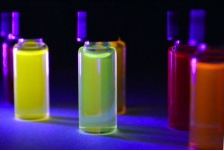
This is where quantum dot-based biosensors are emerging as a transformative technology. These are not just incremental improvements; they represent a paradigm shift in diagnostics. At the heart of this revolution are quantum dots (QDs), semiconductor nanocrystals so small that their properties are governed by the strange and wonderful rules of quantum mechanics. Their most remarkable feature is their intense, stable, and size-tunable fluorescence. This makes them exceptional fluorescence probes, far outshining the traditional organic dyes used in bioimaging and sensing.
For Indian researchers and professionals, this technology opens up a world of possibilities. A quantum dot sensor can be engineered to detect a specific virus or bacterium with unparalleled precision. This nano biosensor technology promises to deliver diagnostic tools that are not only more accurate but also faster and more portable, making advanced microbial detection accessible even in remote areas. As we delve deeper, we will explore how this QD biosensor technology works and why it's poised to become a cornerstone of modern nanotech diagnostics.
Why Should Indian Researchers Embrace Quantum Dot Sensors?
For any new technology to be adopted, it must offer clear, tangible advantages over existing methods. Quantum dot-based biosensors for pathogen detection deliver on this front, providing a compelling suite of benefits for the Indian R&D community.
Key Advantages of QD Biosensors:
- Unprecedented Sensitivity: QDs have extremely high quantum yields and are bright, allowing for the detection of pathogens at femtomolar concentrations. This means identifying an infection far earlier than with many conventional tests.
- Superior Photostability: Unlike traditional organic fluorophores that photobleach (fade) quickly under continuous light exposure, quantum dots are highly robust. This allows for longer observation times and real-time tracking of pathogenic processes, crucial for advanced bioimaging studies.
- Multiplexing Capabilities: By simply changing the size of the quantum dot, we can change its emission color. This allows researchers to create a cocktail of different-colored QDs, each tagged to a different pathogen-specific probe. A single sample can thus be tested for multiple pathogens simultaneously, a powerful feature for diagnosing diseases with similar symptoms.
- Broad and Tunable Emission Spectra: The emission wavelength of a QD is precisely tunable from ultraviolet to near-infrared by controlling its size and composition. This spectral flexibility allows the design of a fluorescence probe tailored to specific experimental setups, avoiding background noise from biological samples (autofluorescence).
- High Surface-Area-to-Volume Ratio: The nanoscale size of QDs provides a large surface area, allowing for the attachment of multiple biorecognition molecules (like antibodies or nucleic acids). This enhances the binding efficiency and overall sensitivity of the nano biosensor.
Transformative Applications Across Industries
The practical applications of quantum dot-based biosensors are vast and directly address some of India's most pressing challenges in health, agriculture, and environmental safety. This isn't just theoretical science; it's a diagnostic tool with real-world impact.
Clinical and Healthcare Diagnostics
This is the most prominent application. QD biosensors are being developed for the rapid detection of viruses like Dengue, Chikungunya, and influenza, as well as bacteria responsible for tuberculosis and typhoid. Their high sensitivity makes them ideal for creating point-of-care devices that can deliver results in minutes, not hours, revolutionizing public health management.
Food and Agriculture Safety
Ensuring the safety of India's vast food supply chain is a monumental task. Quantum dot sensors can be used for the on-site microbial detection of contaminants like E. coli, Salmonella, and Listeria in food products and processing plants, preventing outbreaks and enhancing export quality.
Environmental Monitoring
Waterborne diseases remain a major concern. A portable quantum dot sensor device could be used for real-time monitoring of water sources like rivers and lakes for pathogens such as cholera and giardia, providing an early warning system for communities.
Advanced Bioimaging and Research
Beyond simple detection, the photostability of QDs makes them an invaluable tool for fundamental research. Scientists can use QDs to tag pathogens and observe their lifecycle, their interaction with host cells, and their response to drugs in real-time, accelerating our understanding of infectious diseases and the development of new treatments.
The Indian Landscape: Opportunities and Future Trends
The field of nanotech diagnostics is gaining significant traction in India, driven by government initiatives and a burgeoning ecosystem of researchers and startups. The "Make in India" campaign provides a strong impetus for developing and manufacturing these advanced diagnostic tools domestically, reducing reliance on expensive imports and creating high-tech jobs.
Leading Indian institutions, including the IITs, IISc Bangalore, and various CSIR labs, are at the forefront of nanomaterials research. There is a growing focus on creating cost-effective and field-deployable QD biosensor platforms tailored to Indian needs. The development of cadmium-free quantum dots is a particularly important trend, addressing toxicity concerns and paving the way for safer biomedical applications.
The future will likely see the integration of these nano biosensors with smartphone technology. Imagine a simple test strip where, after applying a sample, a picture taken with a smartphone camera could be analyzed by an app to give a quantitative result. This would democratize advanced pathogen detection, bringing a powerful diagnostic tool to the remotest corners of the country. For any researcher or company in India, investing time and resources into quantum dot-based biosensors for pathogen detection is not just about scientific discovery; it's about being part of a healthcare revolution.
Start Your Research with High-Quality Quantum Dots
The foundation of any successful nano biosensor is the quality of the core nanomaterials. We provide a range of research-grade quantum dots to help you kickstart your work in pathogen detection and bioimaging.


Frequently Asked Questions
Ready to Revolutionize Your Research?
Take the next step in your pathogen detection and nanotech diagnostics research. Explore our extensive catalog of high-purity quantum dots or get in touch with our scientific experts for a personalized consultation.
Have Questions? Contact Us
Our team of experts is ready to assist you with your specific research needs. Fill out the form below, and we'll get back to you shortly.