Introduction: A New Dawn in Optoelectronics
In the ever-evolving world of materials science and optoelectronics, a new class of materials is capturing the imagination of researchers and engineers alike: Perovskite Quantum Dots (PQDs). These tiny semiconductor nanocrystals, with sizes on the order of a few nanometers, are at the forefront of a technological revolution, particularly in the realm of light-emitting diodes (LEDs) and display technology. For the vibrant research and development landscape in India, PQDs represent a monumental opportunity to leapfrog existing technologies and establish leadership in high-performance, cost-effective electronic devices.
At their core, PQDs are defined by their unique crystal structure, which mimics that of the naturally occurring mineral perovskite. This specific atomic arrangement endows them with extraordinary photophysical properties. Unlike their traditional counterparts, such as cadmium selenide (CdSe) quantum dots, PQDs exhibit near-perfect photoluminescence quantum yields (approaching 100%), exceptionally narrow emission bandwidths, and a widely tunable emission spectrum. This means they can convert energy into light with unprecedented efficiency and produce incredibly pure, vibrant colors. This combination of properties makes them a prime candidate for disrupting the multi-billion dollar display and lighting industries.
Why Researchers are Excited: The Unmatched Benefits of PQDs
The buzz surrounding perovskite quantum dots isn't just hype. It's grounded in a set of tangible advantages that make them highly attractive for both fundamental research and commercial applications. For Indian scientists and engineers, leveraging these benefits can pave the way for homegrown innovation.
- Exceptional Color Purity: PQDs boast extremely narrow full-width at half-maximum (FWHM) emission peaks (typically 15-25 nm). This translates to highly saturated, pure primary colors (red, green, and blue), enabling displays to achieve a much wider color gamut, even surpassing the Rec. 2020 standard, which is the benchmark for ultra-high-definition television (UHDTV).
- High Photoluminescence Quantum Yield (PLQY): With PLQY values often exceeding 95%, PQDs convert absorbed light into emitted light with minimal loss. This high efficiency is crucial for creating brighter, more energy-efficient LEDs and displays, a key consideration for India's energy-conscious market.
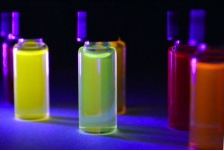
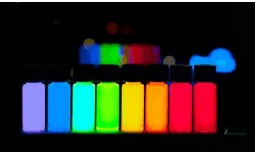
- Tunable Light Emission: The emission color of PQDs can be precisely tuned across the entire visible spectrum simply by controlling the nanocrystal size or composition during synthesis. This "quantum confinement effect" allows for the creation of custom colors for specialized lighting applications or perfectly calibrated RGB pixels for displays.
- Low-Cost, Facile Synthesis: Compared to the complex, high-temperature manufacturing processes required for many traditional semiconductors, PQDs can be synthesized using relatively simple, low-cost solution-based methods. This accessibility lowers the barrier to entry for research labs and startups in India, fostering a more inclusive innovation ecosystem.
- High Defect Tolerance: The unique electronic structure of perovskites makes them remarkably tolerant to surface defects that would typically quench light emission in other materials. This intrinsic property is a key reason for their superior brightness and efficiency.
Beyond the Lab: Real-World Applications in Indian Industries
The theoretical advantages of perovskite quantum dots translate into a host of transformative applications. Here’s a look at where this technology is poised to make the biggest impact, with a focus on opportunities within India.