An Eco-Friendly Leap for Display Enhancement
The quest for brighter, more vibrant, and energy-efficient displays has led to one of the most exciting advancements in nanotechnology: quantum dots (QDs). Among these, Indium Phosphide/Zinc Sulfide (InP/ZnS) core/shell quantum dots are emerging as game-changers, particularly as the world shifts away from heavy-metal-based materials. For Indian researchers and the burgeoning electronics industry, understanding and harnessing the power of these cadmium-free dots is not just an opportunity—it's a necessity. This article delves into the science, benefits, and applications of InP/ZnS QDs, highlighting their role in the future of quantum dot displays and why they are the superior choice for sustainable innovation.
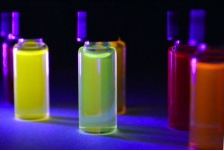
Traditional quantum dots often relied on cadmium, a toxic heavy metal whose use is increasingly restricted by global regulations like the Restriction of Hazardous Substances (RoHS) Directive. This created a critical need for a high-performance, eco-friendly alternative. Enter InP QDs. By themselves, InP dots show promise but lack the stability and efficiency required for commercial applications. However, by encapsulating the InP core with a protective ZnS shell, scientists have unlocked their true potential. This core/shell structure dramatically improves the photoluminescent quantum yield and protects the core from oxidation, leading to the bright, stable, and pure colors demanded by modern display enhancement technologies.
Why Researchers and Industry Leaders are Choosing InP/ZnS QDs
Key Advantages for Researchers:
- Eco-Friendly Composition: Being cadmium-free, these QDs align with green chemistry principles and global safety standards, making them safer for handling in labs and for end-of-life disposal.
- Superior Photostability: The ZnS shell provides a robust barrier against environmental factors, ensuring that experimental results are consistent and repeatable over longer periods.
- Tunable Emission Spectra: Like all QDs, the emission color of InP/ZnS can be precisely tuned by changing the particle size, offering researchers a versatile tool for exploring various applications in optoelectronics.
- High Quantum Yield: Advanced synthesis techniques have enabled InP/ZnS QDs to achieve high quantum yields, rivaling their cadmium-based counterparts in brightness and efficiency.

Transforming Industries: Key Applications
Quantum Dot Displays (QLED)
The most prominent application of InP/ZnS QDs is in quantum dot displays. When integrated into an LCD backlight unit, these photoluminescent nanomaterials absorb blue light from the LED source and re-emit it as highly pure red and green light. This results in a significantly wider color gamut, higher peak brightness, and better energy efficiency compared to standard LCDs. The use of cadmium-free dots is a major selling point for top-tier television and monitor brands aiming for both performance and sustainability.
Advanced LED Backlighting
Beyond full-scale displays, InP/ZnS QDs are revolutionizing LED backlighting systems. By creating a more complete light spectrum, they enable general lighting solutions that can mimic natural sunlight more accurately, improving visual comfort and color rendering. This is crucial for applications in photography, retail, and healthcare, where color accuracy is paramount. The stability afforded by the ZnS shell QDs ensures long operational lifetimes for these lighting systems.
Biomedical Imaging & Sensing
The non-toxic nature of InP QDs makes them highly attractive for biomedical applications. As fluorescent labels, they can be used for in-vitro and in-vivo imaging, offering brighter and more stable signals than traditional organic dyes. Researchers in India are exploring their use in diagnostic assays, flow cytometry, and as targeted probes for cancer cell detection, opening new frontiers in medical nanotechnology.
The Indian Opportunity: R&D and Market Growth
India's focus on self-reliance through initiatives like "Make in India" and its growing consumer electronics market create a fertile ground for display nanotechnology. Local R&D in materials science is pivotal, and working with advanced materials like InP/ZnS QDs positions Indian researchers at the forefront of innovation. As global supply chains diversify, there is a tremendous opportunity for India to become a hub for manufacturing high-tech components, including quantum dot films for displays. For professionals looking to buy InP/ZnS quantum dots for display technology, sourcing from reliable providers who can support this R&D is crucial. The demand for eco-friendly QDs is not just a trend; it's a long-term shift in the industry, and early adoption will provide a significant competitive advantage.
Related Cadmium-Free Quantum Dots
Frequently Asked Questions
InP/ZnS quantum dots are semiconductor nanocrystals with an Indium Phosphide (InP) core and a Zinc Sulfide (ZnS) shell. This core/shell structure enhances their photoluminescent properties and stability, making them ideal for applications like quantum dot displays. They are celebrated as a high-performance, cadmium-free alternative to traditional QDs.
The ZnS shell is crucial for several reasons. It passivates the surface of the InP core, which significantly increases the quantum yield (brightness) and stability of the dots. It also protects the core from environmental degradation, ensuring a longer operational lifetime, which is vital for display enhancement and other long-term applications.
Yes, and in many ways, they are better. While early cadmium-free dots faced challenges in matching the color purity of their cadmium-based counterparts, recent advancements in InP/ZnS synthesis have closed this gap. They now offer comparable, and sometimes superior, color purity and brightness, with the significant advantage of being eco-friendly QDs and compliant with global regulations like RoHS.
Researchers and manufacturers in India can buy InP/ZnS quantum dots for display technology and other photoluminescent nanomaterials from specialized suppliers like Hiyka. They provide a range of cadmium-free dots suitable for R&D in display nanotechnology, LED backlighting, and other advanced applications.
Ready to Innovate with Next-Generation Quantum Dots?
Advance your research and product development with high-performance, eco-friendly InP/ZnS quantum dots.
Contact Us for a Quote