
Powering Tomorrow: The Rise of Graphene Quantum Dots in Energy Storage
In the relentless pursuit of more efficient and powerful energy solutions, the world of materials science has turned its attention to the nanoscale. Among the frontrunners in this microscopic revolution are Graphene Quantum Dots (GQDs)—tiny semiconductor nanocrystals with extraordinary properties. For researchers and professionals in India, a nation at the forefront of technological adoption and innovation, GQDs represent a monumental leap forward. They are not just a scientific curiosity; they are the building blocks for the next generation of energy storage devices, including high-performance supercapacitors and long-lasting batteries.
Graphene, a single layer of carbon atoms arranged in a honeycomb lattice, is already famous for its strength and conductivity. When this 'wonder material' is shrunk down to quantum dots—fragments smaller than 100 nanometers—it exhibits unique quantum confinement and edge effects. These properties give GQDs exceptional electrical conductivity, a massive surface area, and remarkable electrochemical stability. This powerful combination makes them ideal candidates for enhancing electrode materials, which are the heart of any energy storage device. As India's R&D and industrial sectors push for sustainable and high-capacity energy solutions, understanding and harnessing the power of graphene quantum dots is no longer an option, but a necessity.
Key Advantages for Researchers and Innovators
For scientists and engineers in the field, working with graphene quantum dots opens up a new frontier of possibilities. The material offers a unique toolkit to overcome long-standing challenges in energy storage. Here are some of the standout benefits:
- Exceptional Electrical Conductivity: GQDs facilitate rapid electron transport, dramatically reducing internal resistance in batteries and supercapacitors. This leads to higher power density and faster charge-discharge cycles.
- Massive Surface-to-Volume Ratio: Their minuscule size provides a vast surface area for electrochemical reactions. This significantly boosts the energy density, allowing devices to store more energy in a smaller package.
- Superior Electrochemical Stability: GQDs are robust and can withstand numerous charge-discharge cycles without significant degradation. This translates to longer-lasting batteries and more durable supercapacitors.
- Tunable Properties: Researchers can fine-tune the electronic and optical properties of GQDs by controlling their size, shape, and surface chemistry. This allows for the precise design of electrode materials tailored for specific applications, from flexible electronics to grid-scale storage.
Transformative Applications in Energy Devices
Enhancing Supercapacitors
Supercapacitors, also known as ultracapacitors, bridge the gap between conventional capacitors and batteries. They offer immense power density and near-instantaneous charging but traditionally lack the energy density of batteries. Graphene quantum dots are changing this narrative. When used as an electrode material, GQDs provide a high-surface-area scaffold that maximizes ion adsorption, the fundamental mechanism of a supercapacitor.
The result is a device with both high power and significantly improved energy density. Researchers are developing GQD-based hybrid supercapacitors that can power electric vehicles with rapid charging capabilities, stabilize energy grids, and provide reliable backup power for critical systems. The excellent conductivity of GQDs ensures that this energy can be delivered swiftly and efficiently when needed.
Revolutionizing Batteries
In the realm of batteries, particularly lithium-ion batteries, graphene quantum dots serve multiple roles. They can be used as a conductive additive in cathode and anode materials to improve charge transfer and overall performance. By creating a conductive network around active material particles (like silicon or metal oxides), GQDs prevent pulverization and extend the battery's cycle life.
Furthermore, GQDs can act as "spacers" to prevent the restacking of graphene or other 2D material sheets, maintaining a high active surface area. This is crucial for developing next-generation battery chemistries like lithium-sulfur and sodium-ion batteries, which promise higher energy density but suffer from stability issues. GQDs help mitigate these problems, bringing these advanced battery technologies closer to commercial reality.
India-Specific Trends and Opportunities
India's ambitious goals for renewable energy adoption and electric mobility create a fertile ground for advanced energy storage technologies. The demand for high-performance batteries and supercapacitors is set to explode, opening up vast opportunities for research institutions and tech companies working with nanomaterials like graphene quantum dots. The "Make in India" initiative further incentivizes domestic R&D and manufacturing of these high-tech components.
Indian researchers are actively contributing to the global knowledge base on GQDs. Premier institutes are publishing cutting-edge studies on novel synthesis methods for GQDs and their integration into energy devices. The key trend is the development of cost-effective and scalable production techniques to move from lab-scale experiments to industrial production. Collaborations between academia and industry are crucial to translate this research into commercially viable products. For professionals in the field, this is a golden era to be involved in a technology that will directly impact India's energy security and technological sovereignty. Investing in R&D on graphene-based electrode materials is not just an investment in science; it's an investment in a sustainable and powerful future.
Frequently Asked Questions
Graphene Quantum Dots are tiny fragments of graphene, typically less than 100 nanometers in size. Due to their small dimensions, they exhibit quantum confinement effects, which give them unique electronic and optical properties not seen in larger graphene sheets. They are essentially semiconductor nanocrystals made from carbon atoms, combining the benefits of graphene with the tunable properties of quantum dots.
GQDs enhance supercapacitors primarily by increasing both energy density and power density. Their extremely high surface-to-volume ratio provides more sites for ion adsorption, allowing the device to store more energy. Simultaneously, their excellent electrical conductivity ensures that this energy can be charged and discharged very quickly, maintaining high power output. This creates a more balanced and powerful energy storage device.
Graphene quantum dots are generally considered more biocompatible and less toxic than many traditional semiconductor quantum dots, which often contain heavy metals like cadmium. Being carbon-based, they are more environmentally benign. However, as with any nanomaterial, research into their long-term environmental impact and safety is ongoing. The development of "green" synthesis methods using natural precursors is a major focus area to enhance their sustainability profile.
Graphene is a 2D sheet of carbon atoms with no bandgap, making it a semi-metal. Graphene Quantum Dots are 0D (zero-dimensional) nanoparticles derived from graphene. The key difference is that GQDs have a tunable bandgap due to quantum confinement. This means they behave like semiconductors, and their electronic properties can be precisely controlled by changing their size, which is not possible with large-area graphene sheets.
Recommended Materials for Your Research

Perovskite Quantum Dots, Cadmium Free, Hydrophobic (450±15 nm to 690±15 nm)
View Product
CdSe/ZnS(core/shell) Quantum Dots, Powder, Hydrophobic (530 ± 5 nm to 650 ± 5 nm)
View Product
Zn-Cu-In-S/ZnS Quantum Dots, cadmium free, hydrophobic (530-5mg-700-25mg)
View Product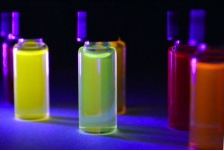
CdTe Quantum Dots, powder, hydrophilic (510 ± 5 nm to 600 ± 5 nm)
View ProductReady to Revolutionize Your Research?
Advance your work in energy storage with the highest quality nanomaterials. Explore our comprehensive range of quantum dots and graphene products.
Browse All Products