The Dawn of a New Era in Cellular Imaging
In the intricate world of biomedical research, the ability to see is the ability to understand. For decades, scientists have sought brighter, safer, and more stable tools to illuminate the microscopic universe within our cells. From organic dyes to fluorescent proteins, each new tool has unlocked deeper insights. Today, we stand at the precipice of another leap forward, powered by one of the most remarkable materials of our time: graphene. Enter Graphene Quantum Dots (GQDs), a new class of fluorescent nanomaterials poised to redefine the boundaries of bioimaging.
For the vibrant scientific community in India, a nation rapidly ascending as a global hub for R&D and pharmaceutical innovation, the advent of GQDs is not just an academic curiosity—it's a strategic opportunity. These carbon-based QDs offer a compelling alternative to traditional, often toxic, heavy-metal quantum dots. They promise enhanced performance, superior biocompatibility, and a versatile platform for developing next-generation diagnostic and therapeutic agents. This article serves as a comprehensive guide for Indian researchers and professionals looking to understand and acquire graphene quantum dots for bioimaging applications, exploring their profound benefits, diverse applications, and the burgeoning opportunities they present within the Indian context.
Why Graphene Quantum Dots are a Game-Changer for Researchers
The excitement surrounding GQDs isn't unfounded. They offer a unique combination of properties that directly address the limitations of conventional fluorescent probes. For any researcher involved in cellular imaging or nanomedicine, these benefits translate into more reliable data, novel experimental possibilities, and safer lab practices.
- Exceptional Photostability: Unlike many organic dyes that photobleach (fade) quickly under prolonged light exposure, GQDs exhibit remarkable stability. This allows for long-term tracking of cellular processes without signal loss, crucial for time-lapse microscopy and dynamic studies.
- Superior Biocompatibility: As a carbon-based nanomaterial, GQDs boast inherently low cytotoxicity. This is a monumental advantage over traditional quantum dots made from materials like Cadmium Selenide (CdSe), which can release toxic heavy metal ions, compromising cell health and the validity of biological experiments.
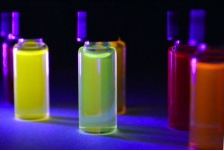
- Tunable Fluorescence: Researchers can fine-tune the emission wavelength of GQDs by controlling their size and surface chemistry. This allows for multicolor imaging, enabling the simultaneous tracking of multiple targets within a single cell, painting a more complete picture of complex biological interactions.
- High Water Solubility & Easy Functionalization: The surface of GQDs is rich with oxygen-containing groups (like carboxyl and hydroxyl), making them highly soluble in aqueous biological environments. These groups also serve as convenient anchor points for attaching specific biomolecules—such as antibodies, peptides, or drugs—turning these quantum dot markers into highly specific photoluminescent probes.
- Resistance to Photoblinking: Many single-molecule emitters "blink" on and off, which can complicate data analysis. GQDs exhibit suppressed blinking, providing a more consistent and stable fluorescent signal for quantitative analysis.
Transformative Applications Across Biomedical Fields
The unique advantages of GQDs unlock a vast array of applications, positioning them as one of the most versatile nanomedicine tools available today. Here’s how they are making an impact:
High-Resolution Cellular Imaging
This is the primary domain where GQDs shine. Their small size allows them to easily cross cell membranes and illuminate subcellular structures like the nucleus, mitochondria, and cytoskeleton with exceptional clarity. Researchers can use them as advanced bioimaging agents to study cell division, apoptosis, and other fundamental processes in real-time.
Targeted Cancer Diagnosis
By functionalizing GQDs with antibodies that specifically bind to cancer cell receptors, scientists can create probes that selectively accumulate in tumors. When illuminated, these GQDs light up the cancerous tissue, enabling highly sensitive and specific cancer detection at very early stages, far surpassing the resolution of many conventional imaging techniques.
Drug Delivery and Theranostics
GQDs are more than just imaging agents; they can be carriers. Their large surface area can be loaded with anti-cancer drugs. The same GQD that illuminates a tumor for diagnosis can be triggered (e.g., by light or a change in pH) to release its therapeutic payload directly at the site of disease. This "see and treat" approach, known as theranostics, is a holy grail of personalized medicine.
Advanced Biosensing
The fluorescence of GQDs can be "quenched" (turned off) in the presence of specific molecules, ions, or even changes in pH. This property is harnessed to create highly sensitive biosensors. For example, a GQD-based sensor could be designed to detect minute quantities of a specific virus, a heavy metal pollutant in water, or a biomarker for a disease in a blood sample, providing rapid and accurate results.
The GQD Revolution: An Opportunity for Indian R&D
The push for self-reliance ('Atmanirbhar Bharat') and the 'Make in India' initiative have created a fertile ground for high-tech R&D in the nation. The field of biomedical imaging and nanomedicine is a key focus area, and GQDs are perfectly aligned with this national mission. Indian researchers and institutions are uniquely positioned to harness the power of these fluorescent nanomaterials.
There's a growing demand for affordable, high-performance diagnostic tools to serve India's vast population. Traditional imaging agents can be expensive and often rely on imported materials. Developing GQD-based diagnostic kits and probes domestically could drastically reduce costs and improve accessibility. Imagine a low-cost, GQD-based biosensor for rapid testing of diseases like dengue or malaria, deployable in remote clinics. This is the kind of high-impact innovation that GQDs enable.
Furthermore, India's strong base in chemistry and materials science provides the intellectual capital needed to not just use GQDs, but to innovate upon them. Research groups across the IITs, IISc, NIPERs, and CSIR labs are actively exploring carbon-based nanomaterials. By focusing on green synthesis methods (using natural precursors to create GQDs) and novel surface functionalization techniques, Indian scientists can carve a niche in the global GQD market. Acquiring high-quality biocompatible dots is the first step for labs to enter this exciting and nationally relevant field of research.
Frequently Asked Questions
The primary advantage is their superior biocompatibility. Graphene Quantum Dots are carbon-based and exhibit significantly lower cytotoxicity compared to heavy-metal-based quantum dots like those containing Cadmium (Cd), making them safer for cellular and in-vivo studies.
Generally, GQDs are considered to have low toxicity, especially when compared to their heavy-metal counterparts. However, their toxicity can be influenced by factors like size, dosage, and surface functionalization. It's crucial for researchers to consult material-specific data and conduct their own assessments for sensitive applications.
Choosing the right GQD depends on your specific needs. Key factors include: 1) Emission Wavelength: Select a wavelength that minimizes autofluorescence from your biological sample. 2) Surface Functionalization: Choose functional groups (like -COOH or -NH2) that allow for easy conjugation with your target biomolecules. 3) Purity and Size Distribution: Ensure high purity and a narrow size distribution for consistent and reproducible results.
Yes, their properties make them suitable for both. Their small size allows them to penetrate cell membranes for detailed in-vitro cellular imaging, while their low toxicity and high photostability make them promising candidates for in-vivo imaging in animal models for disease diagnosis and tracking.
The future is incredibly bright. With national initiatives like 'Make in India' and a growing focus on indigenous R&D, there is a significant push for developing advanced, cost-effective diagnostic tools. GQDs are perfectly positioned to contribute to this, offering a versatile platform for Indian scientists to innovate in nanomedicine, diagnostics, and targeted therapies.