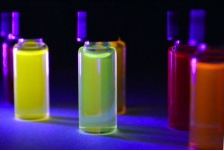
Introduction: The Quantum Leap in Biosensor Technology
In the dynamic landscape of Indian research and development, the quest for faster, more accurate, and cost-effective diagnostic tools is paramount. From healthcare to environmental monitoring, the ability to detect minute quantities of biological molecules can be a game-changer. Enter graphene quantum dots (GQDs), a class of carbon-based nanomaterials poised to revolutionize the field of biosensing. Unlike their semiconductor counterparts, GQDs combine the remarkable properties of graphene—like excellent conductivity and a large surface area—with the quantum-confined photoluminescence of quantum dots.
For researchers and professionals across India, understanding the potential of graphene-based sensors is no longer just an academic exercise; it's a strategic imperative. These tiny powerhouses, often less than 10 nanometers in diameter, are becoming the cornerstone of next-generation electrochemical sensors and optical detection systems. Their inherent biocompatibility, water solubility, and ease of functionalization make them an ideal transducer material in quantum dot biosensing, capable of converting a biological recognition event into a measurable signal with unparalleled precision. This article delves into the world of GQD-based biosensors, exploring their benefits, diverse applications, and the burgeoning opportunities for innovation within the Indian scientific community.
Core Benefits for Researchers: Why Choose Graphene Quantum Dots?
The adoption of biosensor nanomaterials like GQDs is driven by a host of advantages over traditional methods. For Indian labs, where efficiency and cost-effectiveness are crucial, these benefits are particularly compelling.
- Exceptional Sensitivity and Selectivity: The unique electronic structure of GQDs allows for ultra-sensitive detection of analytes. Their large surface-to-volume ratio provides ample sites for immobilizing specific bioreceptors (like enzymes or antibodies), ensuring high selectivity.
- Superior Photophysical Properties: GQDs exhibit strong, stable, and tunable photoluminescence. This resistance to photobleaching makes them far more reliable for fluorescence-based quantum dot detection than conventional organic dyes.
- Excellent Electrochemical Activity: As a key component in electrochemical sensors, GQDs dramatically enhance electron transfer rates. This property boosts the signal-to-noise ratio, enabling the detection of biomarkers at extremely low concentrations.
- Biocompatibility and Low Toxicity: Unlike many heavy-metal-based quantum dots, GQDs are primarily carbon, offering excellent biocompatibility. This is critical for in-vivo imaging and real-time monitoring applications in clinical diagnostics.
- Cost-Effective and Scalable Synthesis: Researchers in India have been at the forefront of developing "top-down" and "bottom-up" methods to synthesize GQDs from affordable precursors like citric acid or graphite, making this advanced sensor nanomaterial accessible for widespread use.
- Versatile Surface Functionalization: The surface of GQDs is rich in oxygen-containing functional groups (carboxyl, hydroxyl), which facilitates easy conjugation with a wide array of biomolecules, simplifying the fabrication of complex nanocarbon biosensors.
Driving Innovation Across Industries: Key Applications
The versatility of quantum dot biosensing using GQDs translates into a wide spectrum of real-world applications, addressing some of India's most pressing challenges.
Healthcare & Clinical Diagnostics
GQDs are being integrated into point-of-care devices for the rapid detection of disease biomarkers, including glucose, cholesterol, dopamine, and specific cancer antigens. Their use in electrochemical sensors enables the development of portable, low-cost glucometers and diagnostic strips, which is vital for managing public health crises in India.
Environmental Monitoring
The detection of heavy metal ions (like lead, mercury, and cadmium) and pesticides in water sources is a major environmental concern. GQD-based fluorescent and electrochemical sensors offer a rapid, on-site method for water quality analysis, providing a significant advantage over time-consuming laboratory techniques.
Food Safety and Quality Control
Ensuring the safety of the food supply chain is critical. Graphene-based sensors can detect contaminants like antibiotics, toxins, and pathogens in food products with high sensitivity, helping to prevent foodborne illnesses and ensuring compliance with national and international standards.
Bio-imaging and Drug Delivery
Beyond sensing, the low toxicity and stable fluorescence of GQDs make them excellent probes for cellular imaging. Researchers are also exploring their potential as nanocarriers for targeted drug delivery, where the GQD can both transport a therapeutic agent and track its location within the body, opening new avenues in bioanalytical nanotech.
Opportunities and Trends: The Indian R&D Landscape
The field of graphene quantum dots for biosensors is not just a global phenomenon; it's a thriving area of research within India. Premier institutions like the IITs, IISc Bangalore, and CSIR laboratories are publishing cutting-edge work on novel GQD synthesis methods and their integration into sophisticated sensor platforms. The "Make in India" initiative and increased funding for nanotechnology provide a fertile ground for translating this academic research into commercial ventures.
A significant trend is the focus on developing low-cost, paper-based electrochemical sensors. These devices leverage the high conductivity of GQDs on a flexible, inexpensive substrate, making them ideal for mass screening in rural and resource-limited settings. Furthermore, the convergence of GQDs with IoT (Internet of Things) is creating a new paradigm of "smart sensors" that can provide real-time data for public health surveillance and environmental mapping. For young researchers and startups, the opportunity lies in creating bespoke sensor nanomaterials and integrated diagnostic systems tailored to specific Indian needs, from detecting dengue fever to monitoring air quality in metropolitan cities. This focus on indigenous innovation is key to unlocking the full potential of bioanalytical nanotech in the country.
Frequently Asked Questions
Graphene Quantum Dots (GQDs) are zero-dimensional nanomaterials derived from graphene, typically less than 10 nm in size. They exhibit quantum confinement and edge effects, leading to unique photoluminescent and electrochemical properties, making them ideal for advanced biosensing applications.
GQDs offer superior photostability (resistance to photobleaching), biocompatibility, low toxicity, and tunable fluorescence. Their large surface area allows for easy functionalization with biomolecules, enhancing the sensitivity and selectivity of biosensors compared to traditional organic dyes.
The primary mechanism is the exceptional electron transfer capability of GQDs. When used to modify an electrode, they significantly increase the electroactive surface area and accelerate the electron transfer between the electrode and the target analyte. This results in a highly sensitive and measurable electrochemical signal (e.g., current or potential change) upon detection.
Challenges include scaling up production of high-quality, uniform GQDs, ensuring long-term stability in complex biological samples, and navigating regulatory pathways for clinical applications. However, ongoing research in Indian institutions is actively addressing these issues, focusing on cost-effective synthesis and robust sensor design.