
A New Dimension in Electronics: The Rise of Flexibility
Imagine a world where your smartphone can wrap around your wrist, where medical sensors are as comfortable as a temporary tattoo, and where vast, lightweight solar panels can be unrolled like a carpet. This isn't science fiction; it's the tangible future being built today, and at its very core lies the science of flexible electronics. For decades, electronics have been defined by rigidity—silicon wafers, and stiff circuit boards. But a paradigm shift is underway, driven by the need for devices that can bend, fold, and stretch to integrate seamlessly into our lives. India, with its burgeoning tech industry and a strong push for indigenous innovation through initiatives like 'Make in India' and 'Digital India', stands at the cusp of this revolution.
The key to unlocking this flexible future lies in materials science, specifically at the nanoscale. Traditional materials simply can't withstand the mechanical stress of repeated bending. This is where bendable nanomaterials, and most notably, quantum dots (QDs), enter the picture. These semiconductor nanocrystals are not just another component; they are a foundational technology poised to redefine the performance, efficiency, and form factor of next-generation devices. This article delves into the world of flexible electronics quantum dots, exploring how they work, their groundbreaking applications, and the immense opportunities they present for researchers and industries across India.
Why Quantum Dots are a Game-Changer for Flexible Devices
Quantum dots offer a unique combination of properties that make them exceptionally suited for flexible and stretchable applications, far surpassing traditional materials like organic LEDs (OLEDs) or liquid crystals (LCDs) in several key aspects.
- Unmatched Optical Purity and Efficiency: QDs emit light of very specific, pure colors determined by their size. This allows for displays with an incredibly wide color gamut, producing images that are more vibrant and true-to-life. They are also highly efficient, converting electricity to light with minimal energy loss, which is critical for battery-powered wearable and portable devices.
- Solution Processability and Printable Electronics: Unlike silicon which requires high-temperature, vacuum-based manufacturing, QDs can be synthesized in a liquid solution. This allows them to be formulated into quantum dot conductive inks. These inks can be deposited onto flexible plastic substrates using low-cost, scalable printing techniques like inkjet or roll-to-roll printing, dramatically reducing manufacturing complexity and cost.
- Inherent Mechanical Flexibility: At the nanoscale, materials behave differently. QDs, being nanoparticles, can be embedded into flexible polymer matrices. This composite material can bend and stretch without damaging the dots or compromising their electronic properties, a crucial requirement for any stretchable electronics nanotech.
- Tunability for Diverse Applications: The ability to tune the properties of QDs (optical, electrical) by simply changing their size or composition makes them incredibly versatile. The same basic technology can be adapted for displays, lighting, solar cells, or biomedical sensors, making it a powerful platform technology.
From Lab to Life: Key Applications of Quantum Dots in Flexible Electronics
The unique advantages of quantum dots are paving the way for a host of innovative applications that were previously impractical. These devices are set to transform consumer electronics, healthcare, and energy sectors.
Flexible QLED Displays
The most visible application is in next-generation displays. By integrating a film of quantum dots into an OLED or LED structure on a plastic substrate, manufacturers can create brilliant, paper-thin, and foldable screens. This is the technology behind the latest foldable smartphones and rollable TVs, offering superior color and efficiency compared to traditional flexible OLEDs. These flexible display nanomaterials are the cornerstone of future mobile devices.
Wearable Biosensors
The field of wearable electronics nanotech is being revolutionized by QDs. Flexible sensors integrated into skin-like patches can monitor vital signs like heart rate, blood oxygen, and glucose levels non-invasively. The fluorescence of quantum dots is highly sensitive to their environment, allowing them to detect minute biochemical changes, with the data potentially being transmitted wirelessly from the flexible quantum dot circuits.
Bendable Solar Cells
Quantum dots are highly efficient at absorbing light and converting it into electricity. When printed onto flexible substrates, they can create lightweight, conformable solar cells. These can be integrated into clothing, backpacks, or the curved surfaces of vehicles and buildings, providing a versatile source of renewable energy where traditional rigid silicon panels cannot be used. This represents a significant leap for portable power generation.
Solid-State Lighting and Quantum Dot Transistors
Flexible lighting solutions using QDs can create large, energy-efficient light sources that can be shaped to fit any surface. Beyond lighting, researchers are developing high-performance quantum dot transistors on flexible substrates. These are the fundamental building blocks for creating fully flexible and transparent logic circuits, paving the way for truly integrated quantum dot flexible devices.
The Indian Horizon: Opportunities and Research Trends
The push for advanced manufacturing and technological self-reliance places India in a prime position to become a key player in the field of flexible electronics. The convergence of India's established IT and software strengths with emerging hardware capabilities creates a fertile ground for innovation in nanotech in flexible electronics.
Leading research institutions like the Indian Institutes of Technology (IITs), the Indian Institute of Science (IISc), and various National Laboratories are already at the forefront of materials science research. There is a growing focus on synthesizing novel bendable nanomaterials and developing low-cost manufacturing processes tailored for technologies like quantum dot circuits. Government funding agencies are increasingly supporting projects that bridge the gap between laboratory research and industrial application, particularly in areas like wearable technology and renewable energy.
For Indian researchers and startups, the opportunity lies in several key areas. First, developing cost-effective and scalable synthesis methods for high-quality, stable quantum dots, especially cadmium-free variants, is a major goal. Second, innovation in formulation of stable quantum dot conductive inks suitable for industrial printing processes is crucial. Finally, designing and prototyping novel quantum dot flexible devices, from specialized sensors to unique display form factors, will be key to capturing a share of this burgeoning global market. The availability of high-purity QDs from suppliers is lowering the barrier to entry for R&D labs across the country, empowering a new generation of innovators.
Recommended Products for Researchers

Perovskite Quantum Dots, Cadmium Free, Hydrophobic
View Product →
CdSe/ZnS(core/shell) Quantum Dots, Powder, Hydrophobic
View Product →
Quantum Dots Educational Exploitation Kit
View Product →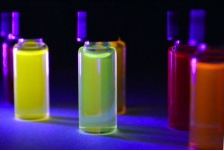
Zn-Cu-In-S/ZnS Quantum Dots, Cadmium Free, Hydrophilic
View Product →Frequently Asked Questions
Ready to Innovate?
Explore our extensive range of high-purity quantum dots and nanomaterials to kickstart your research in flexible electronics.
Browse Quantum Dots