
Phosphonic Acid Derivatives and Nanomaterials: Pioneering the Future of Antibacterial Agents in India
Explore how these innovative compounds are revolutionizing the fight against antimicrobial resistance, offering new hope for Indian researchers and professionals.
Learn MoreIntroduction: A New Dawn in Antibacterial Research
The global fight against antimicrobial resistance (AMR) is one of the most pressing public health challenges of our time, threatening to reverse decades of progress in medicine. The alarming rate at which bacteria are developing resistance to conventional antibiotics necessitates an urgent and concerted effort to discover and develop novel antibacterial agents with innovative mechanisms of action. In this critical quest, phosphonic acid derivatives, particularly when integrated with cutting-edge nanomaterials, are emerging as a powerful and promising frontier. For Indian researchers, scientists, and professionals across the vast landscape of chemical synthesis, material science, and drug development, understanding and harnessing the unique properties of these compounds represents a significant opportunity. It's a chance not only to contribute fundamentally to global health security but also to establish India as a frontrunner in the development of innovative biomedical solutions.
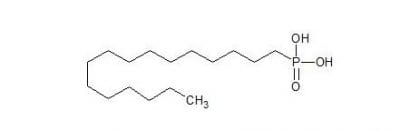
Phosphonic acids are a fascinating class of organic compounds distinguished by a stable carbon-phosphorus (C-P) bond, which imparts exceptional chemical stability and versatility. Unlike their phosphate counterparts, the C-P bond in phosphonates is resistant to hydrolysis, making them highly attractive for applications in biological systems and harsh environments. Their unique chemical architecture allows them to chelate metal ions with high affinity, bind strongly to various inorganic and organic surfaces, and undergo diverse functionalization reactions. These properties have historically positioned phosphonic acids as key players in a wide array of applications, ranging from corrosion inhibitors and flame retardants to bone imaging agents and pharmaceutical intermediates. More recently, however, their inherent antimicrobial properties and their immense potential to serve as versatile scaffolds for designing entirely new classes of antibacterial agents have garnered considerable attention from the scientific community worldwide.
The true transformative potential of these derivatives often becomes apparent when they are engineered at the nanoscale. When phosphonic acid derivatives are integrated with or formulated as nanomaterials – such as nanoparticles, nanocapsules, or nanofibers – their efficacy as antibacterial agents can be dramatically enhanced. This synergistic combination leverages the unique properties of both components: the specific chemical reactivity and binding capabilities of phosphonates, and the increased surface area, enhanced penetration, and novel delivery mechanisms afforded by nanotechnology. The resulting potent nano-antimicrobials offer a multi-pronged approach to combat bacterial infections, effectively addressing complex challenges like persistent biofilm formation, the ability of bacteria to evade host immune responses, and the widespread issue of antibiotic resistance mechanisms. India, with its robust and rapidly expanding pharmaceutical industry, a highly skilled and innovative scientific workforce, and a burgeoning nanotechnology sector, is uniquely poised to lead research and development in this vital and rapidly evolving area. This confluence of scientific expertise and industrial capability positions India as a crucial player in shaping the future of anti-infective therapies.
Key Benefits for Researchers and Professionals
- Enhanced Antimicrobial Efficacy: Nanomaterial-conjugated phosphonic acid derivatives can exhibit superior antibacterial activity due to increased surface area, improved cellular uptake, and novel mechanisms of action, often requiring lower concentrations for desired effects.
- Reduced Toxicity & Improved Biocompatibility: Strategic design of phosphonate-based nanomaterials can lead to antibacterial agents with reduced toxicity to human cells, making them safer for therapeutic applications compared to some conventional treatments.
- Versatile Chemical Modification for Targeted Delivery: The inherent chemical versatility of phosphonic acids allows for easy functionalization, enabling the creation of targeted delivery systems. This means antibacterial agents can be precisely directed to infection sites, minimizing off-target effects and maximizing therapeutic impact.
- Overcoming Drug Resistance Mechanisms: The unique modes of action of phosphonate-nanomaterial conjugates can bypass existing bacterial resistance mechanisms, offering a lifeline against multidrug-resistant pathogens. This includes disrupting bacterial cell membranes, inhibiting essential enzymes, or interfering with quorum sensing.
- Potential for Novel Drug Discovery & Repurposing: Phosphonate chemistry opens avenues for discovering entirely new classes of antibacterial compounds or for repurposing existing phosphonate-containing molecules for antimicrobial applications, accelerating drug development pipelines.
- Cost-Effective Synthesis & Scalability: Many phosphonic acid derivatives can be synthesized using relatively straightforward and scalable chemical processes, which is a significant advantage for industrial production, particularly in cost-sensitive markets like India.
- Biofilm Disruption Capabilities: Phosphonates can interfere with bacterial adhesion and biofilm formation, a major challenge in chronic infections and medical device-associated infections, providing a critical tool in infection control.
Transformative Applications Across Industries
Medical Devices & Implants
Coating medical implants (e.g., orthopedic implants, dental prosthetics, catheters) with phosphonate-nanomaterial composites to prevent bacterial colonization and biofilm formation, significantly reducing the risk of implant-associated infections.
Impact: Enhances patient safety, reduces healthcare costs, prolongs device lifespan.
Advanced Wound Care
Developing innovative wound dressings and topical formulations incorporating nano-antimicrobials based on phosphonic acid derivatives to promote faster healing by actively combating infection in chronic wounds and burns.
Impact: Accelerates recovery, minimizes scarring, effective for complex wound management.
Water Purification & Sanitation
Incorporating phosphonate-functionalized nanomaterials into water filtration systems and disinfectants to effectively remove and inactivate bacterial contaminants, ensuring access to safe drinking water.
Impact: Critical for public health, addresses waterborne diseases.
Antimicrobial Textiles & Coatings
Creating self-sanitizing fabrics for healthcare settings and consumer products, as well as antimicrobial coatings for surfaces in public spaces, food processing units, and homes.
Impact: Reduces infection spread, improves hygiene standards.
Agriculture & Animal Health
Developing phosphonate-based nano-pesticides and veterinary medicines to combat plant pathogens and animal infections, offering more targeted and environmentally friendly alternatives to conventional agrochemicals and antibiotics.
Impact: Improves crop yields, ensures food security, promotes animal welfare.
India's Leading Edge: Opportunities and Emerging Trends
India's vibrant scientific landscape and its strategic focus on innovation present unparalleled opportunities for advancing **phosphonic acid derivatives** and **nanomaterials** as potent **antibacterial agents**. The "Make in India" initiative, coupled with significant governmental and private sector investments in biotechnology and pharmaceutical research and development, is actively fostering a fertile ground for indigenous development and manufacturing of these advanced materials. Indian researchers are increasingly engaged in the cutting-edge **chemical synthesis** of novel **phosphonic acid derivatives**, meticulously exploring their unique **phosphonate chemistry** to design more potent, selective, and environmentally sustainable **antibacterial agents**. This includes a focus on understanding structure-activity relationships to optimize antimicrobial properties while minimizing off-target effects.
A particularly significant trend driving this innovation is the burgeoning **nanotechnology** sector across India. Leading universities, premier research institutions, and dynamic private companies are actively pursuing the synthesis, characterization, and application of various **nanomaterials**. This encompasses a broad spectrum of materials, including metallic nanoparticles (like silver and gold), carbon-based nanomaterials (such as graphene oxide and carbon dots), polymeric nanocarriers, and lipid-based nanostructures. The intelligent integration of these diverse nanomaterials with phosphonic acids to create sophisticated **nano-antimicrobials** is a particularly exciting and rapidly expanding area of research. This interdisciplinary approach strategically leverages the enhanced surface area, tunable physiochemical properties, improved cellular penetration, and novel delivery mechanisms afforded by nanoscale materials to effectively overcome the inherent limitations of traditional antibiotics, especially against resistant strains. The focus is not merely on achieving superior efficacy but also on developing sustainable, scalable, and affordable solutions, which is a critical priority aligning perfectly with India's national healthcare agenda and its commitment to global health equity.
Furthermore, the growing emphasis on personalized medicine and targeted drug delivery systems within India's healthcare innovation ecosystem is profoundly influencing research directions. This is driving the development of smart **biomedical materials** that can precisely deliver antibacterial payloads to specific infection sites, thereby maximizing therapeutic impact while minimizing systemic exposure and potential side effects. **Drug development** in this specialized space is actively exploring how phosphonate-functionalized nanoparticles can be ingeniously engineered to respond to specific infection markers, pH changes, or enzymatic activity, ensuring highly localized and controlled release of the antimicrobial agent. Collaborative efforts between leading academic institutions, government-funded research bodies, and the private industrial sector, often bolstered by competitive grants and public-private partnerships, are significantly accelerating the translation of fundamental laboratory discoveries into commercially viable products and clinical applications. Indian Contract Research Organizations (CROs) are playing an increasingly crucial role in facilitating the rigorous preclinical and clinical evaluation of these novel **nano-antimicrobials**, further solidifying India's position as a global hub for innovative anti-infective research and development. The future of effectively combating bacterial resistance in India, and indeed across the globe, looks increasingly to the intelligent design and strategic application of **phosphonic acid derivatives** within advanced **nanomaterial** frameworks. This synergistic approach promises a new era in the fight against infectious diseases.
Frequently Asked Questions
Phosphonic acid derivatives are organic compounds characterized by a stable carbon-phosphorus bond. They are highly versatile due to their ability to form strong complexes with metal ions and bind to surfaces, making them useful in diverse applications, including as building blocks for new antibacterial agents.
They can exhibit antibacterial activity through various mechanisms, such as chelating essential metal ions required for bacterial growth, disrupting bacterial cell membranes, inhibiting key enzymes, or interfering with bacterial communication (quorum sensing). Their efficacy is often enhanced when combined with nanomaterials.
Nanomaterials, when combined with phosphonic acid derivatives, can significantly boost their antibacterial properties. This is due to increased surface area for interaction with bacteria, improved penetration into bacterial cells or biofilms, and the potential for synergistic effects, leading to more potent nano-antimicrobials.
India faces a significant challenge with antimicrobial resistance. Research into phosphonic acid derivatives and nanomaterials offers a pathway to develop novel, effective, and potentially affordable antibacterial agents. It aligns with national initiatives to foster innovation in pharmaceuticals and biotechnology, positioning India as a leader in global health solutions.
Challenges include ensuring the stability and biocompatibility of the nanomaterials, optimizing the synthesis and functionalization processes, understanding long-term toxicity profiles, and scaling up production for clinical and industrial applications. Regulatory pathways for nanomedicines are also evolving.
The future prospects are very promising. Continued research is expected to lead to the development of highly targeted, multi-modal nano-antimicrobials that can effectively combat drug-resistant bacteria, disrupt biofilms, and offer new therapeutic strategies for a wide range of infections. This field is poised for significant growth in drug discovery and biomedical materials.



Advance Your Research with Reinste
Ready to explore cutting-edge phosphonic acid derivatives for your research? Discover our comprehensive range of high-purity chemicals and advanced materials to accelerate your innovations in antibacterial agents and nanotechnology.
Explore Our Products