Phosphonates, Smart Materials, and Nanomaterials: Driving Innovation in Indian Research & Industry
Dive into the transformative world of phosphonic acid derivatives and their crucial role in developing cutting-edge smart materials and nanomaterials, offering unprecedented opportunities for Indian scientists and industries.
Explore InnovationsThe Dawn of Advanced Materials: Phosphonates in the Indian Context
In the rapidly evolving landscape of material science, phosphonates have emerged as a class of compounds with extraordinary potential, particularly in the realm of smart materials and nanomaterials. These versatile organic molecules, characterized by their stable carbon-phosphorus bonds, offer a unique combination of properties that make them indispensable for advanced technological applications. For Indian researchers and professionals, understanding and leveraging phosphonate chemistry is not just an academic pursuit but a strategic imperative to foster innovation and self-reliance in critical industrial sectors.
India's scientific community is at the forefront of a materials revolution, with significant investments in nanotechnology and advanced manufacturing. Phosphonic acid derivatives, with their exceptional ability to modify surfaces, enhance adhesion, and provide corrosion resistance, are becoming key enablers in this journey. From developing next-generation functional coatings to engineering sophisticated drug delivery systems, phosphonates are paving the way for groundbreaking discoveries and practical applications. This blog explores the multifaceted roles of phosphonates, their transformative impact on smart materials and nanomaterials, and the burgeoning opportunities they present for India's scientific and industrial landscape. We delve into their unique chemistry, diverse applications, and the future trends that promise to reshape various industries, making them a cornerstone for future innovations.
The demand for high-performance materials in sectors ranging from automotive and aerospace to healthcare and electronics is continuously growing. Phosphonates, with their tunable properties, allow for the creation of materials that can respond to stimuli, self-heal, or exhibit enhanced durability. This adaptability is particularly crucial for India, where diverse environmental conditions and specific industrial needs necessitate robust and innovative material solutions. By focusing on phosphonate-based research, India can strengthen its position as a global leader in advanced materials, contributing significantly to both economic growth and technological advancement.
Unlocking Potential: Key Benefits of Phosphonates for Researchers
Enhanced Material Stability & Durability
Phosphonates form strong, covalent bonds with metal oxide surfaces, leading to highly stable and durable coatings that resist degradation from harsh environments, chemicals, and UV radiation. This makes them ideal for protective layers on various substrates.
Versatile Surface Modification
Their bifunctional nature allows phosphonates to anchor to surfaces while presenting various functional groups (e.g., alkyl chains, amino groups) for further chemical modification, enabling precise control over surface properties like hydrophobicity, biocompatibility, or reactivity.
Improved Adhesion & Corrosion Resistance
Phosphonates are excellent adhesion promoters, forming robust interfaces between dissimilar materials. Their strong interaction with metal surfaces provides superior corrosion protection, crucial for extending the lifespan of metallic components in industrial applications.
Biocompatibility for Medical Applications
Certain phosphonate derivatives exhibit biocompatibility, making them suitable for surface modification of medical implants, drug delivery carriers, and biosensors, reducing immune response and improving integration with biological systems.
Tunable Properties for Smart Functionalities
The ability to tailor the organic moiety of phosphonates allows for the design of smart materials with tunable optical, electrical, or mechanical properties, enabling responsive systems for sensing, actuation, and controlled release.
Cost-Effective Synthesis Routes
Compared to some other advanced material precursors, phosphonates can often be synthesized using relatively straightforward and scalable methods, making them economically viable for both academic research and industrial production in India.
Diverse Applications: Where Phosphonates Make a Difference
Corrosion Protection & Functional Coatings
Phosphonates are revolutionizing protective coatings by forming self-assembled monolayers (SAMs) on metal surfaces, offering unparalleled corrosion resistance. These functional coatings are crucial for industries like automotive, marine, and construction, where material longevity is paramount. Indian industries can significantly benefit from these advanced solutions to enhance product lifespan and reduce maintenance costs.
- Self-healing coatings for enhanced durability.
- Anti-fouling surfaces for marine applications.
- Protective layers for aerospace components.
Biomedical Devices & Drug Delivery
The biocompatibility and surface functionalization capabilities of phosphonates make them ideal for advanced biomedical applications. They are used to modify implant surfaces, create targeted drug delivery systems, and develop highly sensitive biosensors, opening new avenues in healthcare technology for India's growing medical sector.
- Surface modification of orthopedic and dental implants.
- Nanocarriers for controlled drug release.
- Biosensors for early disease detection.
Electronics & Optoelectronics
In the electronics industry, phosphonates are employed to create dielectric layers, enhance adhesion in microelectronic devices, and develop organic semiconductors. Their ability to form ordered thin films is critical for the fabrication of high-performance flexible electronics, OLEDs, and advanced display technologies, aligning with India's digital transformation goals.
- Gate dielectrics for thin-film transistors.
- Surface passivation for semiconductor devices.
- Enhanced charge injection in organic LEDs.
Water Treatment & Environmental Remediation
Phosphonates play a vital role in addressing environmental challenges. They are effective scale inhibitors in water treatment, preventing mineral deposition in pipes and industrial systems. Furthermore, phosphonate-functionalized materials can act as efficient adsorbents for heavy metals and other pollutants, contributing to cleaner water and sustainable environmental practices in India.
- Scale and corrosion inhibition in industrial water systems.
- Removal of heavy metal ions from wastewater.
- Membrane antifouling agents for desalination.
India's Leap Forward: Opportunities and Trends in Phosphonate Research
India is strategically positioned to become a global hub for advanced materials research and development, with phosphonates playing a crucial role. Government initiatives like "Make in India" and "Atmanirbhar Bharat" are actively promoting indigenous innovation and manufacturing, creating a fertile ground for the application of smart materials and nanomaterials. Indian academic institutions and research labs are increasingly focusing on the synthesis of novel phosphonic acid derivatives and exploring their applications in high-impact areas. This concerted effort is not only boosting domestic capabilities but also attracting international collaborations.
Key trends in India's phosphonate research include the development of cost-effective and scalable synthesis methods for organic phosphonates, the integration of phosphonate chemistry with nanotechnology for enhanced material performance, and the exploration of sustainable phosphonate-based solutions. There's a growing emphasis on creating functional coatings for extreme environments, developing advanced biosensors for point-of-care diagnostics, and engineering next-generation energy storage materials. The rise of specialized startups in the advanced materials sector further underscores the vibrant ecosystem for phosphonate innovation in India.
Collaboration between public research organizations, private industries, and startups is accelerating the translation of laboratory discoveries into market-ready products. Events and conferences focused on nanotechnology, surface science, and advanced materials are fostering knowledge exchange and partnership building. As India continues its trajectory towards technological self-sufficiency, phosphonates will undoubtedly remain a cornerstone, enabling the creation of smart, sustainable, and high-performance materials that cater to both national needs and global demands. The future of advanced materials in India is bright, with phosphonates at its core.
Frequently Asked Questions about Phosphonates
Phosphonates are organic compounds containing a carbon-phosphorus bond (C-PO(OH)2 or C-PO(OR)2). They are known for their strong chelating abilities, high thermal and chemical stability, and excellent adhesion to various surfaces, making them invaluable in material science.
In smart materials, phosphonates act as versatile building blocks or surface modifiers. Their ability to form robust bonds with metal oxides and other substrates allows for the creation of responsive coatings, self-healing polymers, and sensor components that react to external stimuli like temperature, pH, or light.
In nanotechnology, phosphonates are crucial for stabilizing nanoparticles, functionalizing quantum dots, creating highly ordered self-assembled monolayers (SAMs) on surfaces, and developing advanced drug delivery systems. Their unique surface chemistry enables precise control over nanoscale architectures.
For Indian R&D, phosphonates offer a pathway to develop indigenous advanced materials for critical sectors like defense, healthcare, electronics, and sustainable energy. They enable researchers to create innovative solutions that align with national priorities such as 'Make in India' and 'Atmanirbhar Bharat', fostering self-reliance in high-tech materials.
The environmental impact of phosphonates varies. While some industrial phosphonates have raised concerns regarding biodegradability, ongoing research focuses on developing greener, more biodegradable phosphonate derivatives. Their use in applications like water treatment can also contribute to environmental remediation by removing pollutants.
Phosphonic acid derivatives can be synthesized through various methods, including the Michaelis-Arbuzov reaction, Pudovik reaction, and hydrophosphonylation. The choice of method depends on the desired phosphonate structure and functional groups. Researchers often utilize specialized reagents and controlled reaction conditions to achieve high yields and purity.
Explore Related Phosphonic Acid Derivatives

n-Octadecylphosphonic Acid
View Product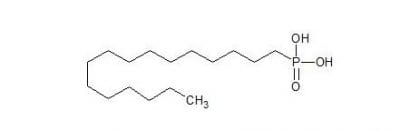
n-Hexadecylphosphonic Acid
View Product
n-Tetradecylphosphonic Acid
View Product
n-Dodecylphosphonic Acid
View ProductReady to Innovate? Discover High-Quality Phosphonic Acid Derivatives for Your Research.
Reinste provides a comprehensive range of advanced materials to fuel your next breakthrough. Explore our catalog and find the perfect phosphonate for your smart material and nanomaterial applications.
View Our ProductsGet in Touch with Reinste
Have questions about phosphonates, smart materials, or need assistance with your research? Fill out the form below, and our experts will get back to you.