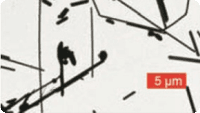
Copper Nanowire Transparent Electrodes: A Breakthrough for Solar Cell Technology

Discover how cost-effective and highly conductive copper nanowires are set to replace traditional materials and revolutionize the future of photovoltaic technology in India.

Explore Now

The Dawn of a New Era in Solar Energy

As the world grapples with the urgent need for sustainable energy, India has emerged as a global leader in the push for solar power. Central to this revolution is the continuous innovation in photovoltaic technology. For years, the efficiency of solar cells has been intrinsically linked to the performance of their transparent conductive electrodes (TCEs)—the crucial layer that allows sunlight to pass through while efficiently collecting the generated electrical current.

The industry standard for TCEs has long been Indium Tin Oxide (ITO). However, ITO's dominance is being challenged by significant drawbacks: the scarcity and high cost of indium, and its inherent brittleness, which makes it unsuitable for the next generation of flexible solar panels. This is where a remarkable nanomaterial steps into the spotlight: the copper nanowire (CuNW). For researchers and manufacturers in India, understanding and adopting copper nanowire transparent electrodes for solar cells is not just an option; it's a strategic imperative for building a competitive and sustainable solar industry.

This article delves deep into the world of copper nanowire electrodes, exploring how this advanced material is poised to redefine the landscape of solar energy. We will cover its unparalleled benefits, diverse applications, and the immense opportunities it presents for the Indian R&D and industrial sectors.

Why Researchers and Industry are Turning to Copper Nanowire Electrodes

The shift from traditional materials to nanowire electrode technology, specifically using copper, is driven by a compelling set of advantages that directly address the limitations of ITO.

  • Exceptional Cost-Effectiveness: Copper is thousands of times more abundant and significantly cheaper than indium. This dramatic cost reduction in the copper electrode makes solar panel manufacturing more economical, a critical factor for large-scale deployment in a price-sensitive market like India.
  • Superior Electrical Conductivity: Copper is one of the most conductive materials on Earth. A percolating network of copper nanowires can achieve sheet resistance values comparable to or even lower than ITO, ensuring minimal energy loss and maximizing the power output of the solar cell.
  • Unmatched Mechanical Flexibility: Unlike the rigid and brittle nature of ITO, films made from copper nanowires are incredibly flexible and resilient. They can be bent, stretched, and rolled without cracking or losing conductivity. This property is the cornerstone for developing flexible solar cells for wearables, portable devices, and curved architectural surfaces.
  • High Optical Transparency: A sparse network of CuNWs allows over 90% of visible light to pass through to the active solar material. This high transparency is crucial for ensuring that a maximum number of photons are converted into electrons, directly boosting the solar cell electrode performance.
  • Solution-Processability: Copper nanowires can be formulated into inks and deposited onto substrates using simple, scalable techniques like spin-coating, slot-die coating, or even printing. This simplifies the manufacturing process, reducing the need for expensive vacuum deposition equipment required for ITO.

Beyond Solar Panels: Diverse Applications of CuNW Technology

While the impact on photovoltaic technology is profound, the applications of copper nanowire transparent electrodes extend across the entire field of optoelectronics.

High-Efficiency Photovoltaics

The primary application driving CuNW research. They are used as the front electrode in various solar cell architectures, including perovskite, organic (OPV), and dye-sensitized solar cells. Their use in nanotechnology solar research is leading to record-breaking efficiencies and lower production costs.

Flexible and Wearable Electronics

The inherent flexibility of the nanowire electrode makes it a game-changer for flexible displays, smart textiles, and wearable biomedical sensors. Imagine clothes that can harvest solar energy or foldable smartphones with robust touch screens.

Advanced Touch Screens and Displays

CuNW films can serve as the transparent conductive layer in capacitive touch sensors for smartphones, tablets, and large interactive displays. They offer a more durable and cost-effective alternative to the currently used materials.

Transparent Heaters and EMI Shielding

When current is passed through a CuNW film, it generates heat, making it useful for transparent heating elements in car windshields or optical lenses to prevent fogging. The conductive network also effectively shields against electromagnetic interference (EMI).

Seizing the Nanotechnology Opportunity in India's Solar Market

For India, the transition to copper nanowire transparent electrodes aligns perfectly with national strategic goals. The "Make in India" initiative encourages domestic manufacturing, and developing indigenous solar panel technology based on abundant materials like copper is a significant step towards self-reliance in the energy sector.

Indian research institutions, from the IITs to specialized CSIR labs, are already contributing to the field of nanotechnology solar research. The availability of high-quality, locally sourced raw materials like research-grade copper nanowires can accelerate this R&D cycle. The ultimate goal is to translate laboratory breakthroughs into commercially viable products that can power the nation. The government's ambitious National Solar Mission, which targets massive increases in installed solar capacity, creates a fertile ground for new technologies that promise lower costs and higher efficiency. Adopting advanced materials like the conductive electrode made from CuNWs will be key to meeting these targets and establishing India as a hub for next-generation solar manufacturing.

Frequently Asked Questions

Copper nanowires (CuNWs) are minuscule, thread-like structures made of copper, with diameters on the nanometer scale (typically less than 100 nm). Despite their tiny size, they can be several micrometers long. This high aspect ratio, combined with copper's inherent electrical conductivity, makes them ideal for forming transparent, conductive networks or films on various surfaces.

CuNW electrodes outperform traditional Indium Tin Oxide (ITO) on several key fronts. They are significantly more cost-effective as copper is an abundant element, unlike the rare and expensive indium. CuNWs also offer superior mechanical flexibility, making them perfect for next-generation flexible solar cells. Furthermore, they provide comparable, if not better, electrical conductivity and optical transparency, boosting overall solar cell efficiency.

A primary concern with copper is its susceptibility to oxidation. However, significant research advancements have led to effective solutions. Modern synthesis methods and encapsulation techniques, such as coating the nanowires with protective layers of graphene, nickel, or transparent polymers, have drastically improved their chemical and thermal stability. This ensures the long-term reliability required for commercial solar panel technology.

The future is incredibly bright. Nanowire electrodes, particularly those made from copper, are enabling the development of not just more efficient and cheaper rigid solar panels, but also a new class of flexible, lightweight, and even semi-transparent solar devices. This opens up applications in building-integrated photovoltaics (solar windows), portable solar chargers, and wearable electronics, driving the next wave of innovation in solar energy.

For researchers and labs in India, sourcing high-quality nanomaterials is crucial. Specialized suppliers like Hiyka provide research-grade copper nanowires and a wide range of other nanomaterials. They offer reliable products with detailed specifications, catering to the needs of the Indian scientific community and supporting advanced R&D in fields like photovoltaic technology.

Ready to Advance Your Research?

Access high-purity copper nanowires and other essential nanomaterials for your next breakthrough in solar technology. Browse our extensive catalog.

Visit Hiyka Store

Have Questions? Contact Us