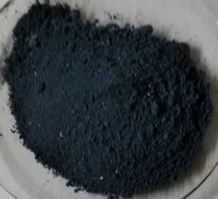
Introduction: The Unseen Challenge of Nanodiamonds
Nanodiamonds (NDs), with their exceptional mechanical, thermal, and optical properties, are at the forefront of materials science innovation. From reinforcing polymers to delivering life-saving drugs, their potential seems limitless. However, there's a critical hurdle that every researcher and engineer in India's burgeoning nanotechnology sector must overcome: achieving stable and uniform nanodiamond dispersion. Without it, these powerful nanoparticles remain clumped together, their extraordinary properties locked away in useless agglomerates.
This guide is crafted specifically for the Indian research and industrial community. We will delve into the science and art of nanodiamond dispersion techniques, exploring everything from mechanical methods to advanced surface modification. Understanding these methods is not just an academic exercise; it's a fundamental requirement for translating laboratory breakthroughs into commercially viable products. Whether you're developing advanced antimicrobial coatings—a field where materials like nanosilver dispersion for textile coating are already making waves in India—or pioneering new biomedical devices, mastering optimal nanodiamond dispersion is your key to success.
Why is Achieving Optimal Nanodiamond Dispersion So Critical?
Properly dispersing nanodiamonds is the difference between theoretical potential and real-world performance. When NDs are well-dispersed, they exhibit remarkable benefits that are crucial for researchers:
- Unlocking Unique Properties: Individual nanodiamonds have a massive surface area and unique quantum effects. Dispersion ensures these properties are expressed throughout the host material, rather than being hidden within clumps.
- Ensuring Reproducibility: For any scientific study or industrial process, consistency is key. A stable, well-defined dispersion protocol ensures that results are reproducible, a cornerstone of reliable R&D.
- Enhancing Material Performance: In composites, a uniform dispersion leads to superior mechanical strength, thermal conductivity, and wear resistance. In biomedical applications, it ensures consistent drug loading and release.
- Preventing Defects: Agglomerates act as stress concentrators in materials, leading to premature failure. In coatings, like those used in the nano textile industry, clumps can cause surface defects and inconsistent performance, compromising the antibacterial fabric's efficacy.
A Deep Dive into Nanodiamond Dispersion Techniques
The core challenge in dispersing nanodiamonds lies in overcoming the powerful van der Waals forces that pull them together. The choice of technique depends on the type of nanodiamond, the solvent, and the final application.
Mechanical Methods: Brute Force for Deagglomeration
Mechanical methods use physical energy to break apart nanodiamond clusters. They are often the first step in any dispersion process.
- Ultrasonication: This is the most common technique. A high-frequency sound wave creates cavitation bubbles in the liquid. The collapse of these bubbles generates intense, localized shockwaves that break apart agglomerates. A probe sonicator provides more concentrated energy than a bath sonicator but risks overheating the sample.
- Bead Milling: For larger volumes and tougher agglomerates, bead milling (or ball milling) is highly effective. The nanodiamond slurry is mixed with tiny, hard beads (e.g., zirconia). As the container rotates or shakes, the beads collide with the nanodiamond clusters, grinding them down to primary particles.
- High-Shear Mixing: This method uses a rotor-stator mechanism to create intense mechanical and hydraulic shear, tearing apart particle clumps. It is highly scalable and suitable for industrial production.
Chemical Methods: The Finesse of Surface Modification
While mechanical methods separate particles, chemical methods keep them separated. Surface modification for nanodiamond dispersion is crucial for achieving long-term nanodiamond colloidal stability.
- Surface Oxidation: Treating nanodiamonds with strong acids (like a mix of sulfuric and nitric acid) introduces carboxyl (-COOH) and hydroxyl (-OH) groups onto their surface. These groups make the nanodiamonds hydrophilic (water-loving) and allow them to form stable dispersions in polar solvents like water through electrostatic repulsion.
- Use of Surfactants: Surfactants are molecules with a "two-faced" nature: one end is attracted to the nanodiamond surface, and the other end is compatible with the solvent. They form a protective layer around each particle, preventing them from sticking together. This is conceptually similar to how a silver colloid is stabilized to create a uniform silver dispersion for coatings.
- Polymer Grafting: For ultimate stability, polymers can be chemically bonded ("grafted") to the nanodiamond surface. These long polymer chains create a steric barrier—a physical cushion that keeps the particles far apart.
Applications Driving Dispersion Research in India
The demand for effective nanodiamond dispersion techniques is fueled by a wide range of advanced applications taking root in India's industrial and research landscape.
Advanced Coatings & Composites
Just as India's textile industry looks to buy nanosilver dispersion for textile coating to create antimicrobial fabrics, other sectors seek nanodiamonds to create ultra-hard, low-friction coatings. Proper dispersion is essential for a smooth, defect-free nano finish that enhances durability and performance.
Biomedical & Drug Delivery
The biocompatibility of nanodiamonds makes them ideal candidates for targeted drug delivery and bio-imaging. A stable, monodisperse suspension is non-negotiable to ensure safety, efficacy, and predictable behavior in biological systems.
High-Performance Lubricants
Dispersed nanodiamonds in oils and greases act like microscopic ball bearings, dramatically reducing friction and wear in engines and industrial machinery. Agglomerates would be abrasive and counterproductive, making stable dispersion paramount.
Electronics & Thermal Management
With its high thermal conductivity, nanodiamonds are used to create thermal interface materials that dissipate heat from powerful computer chips. Uniform dispersion ensures an efficient heat transfer pathway without any insulating gaps or performance-degrading clumps.
Future Trends and Opportunities in the Indian Market
As India's "Make in India" initiative pushes for domestic manufacturing of high-tech products, the mastery of nanomaterial handling, including nanodiamond dispersion, becomes a strategic capability. The future lies in developing scalable, cost-effective, and environmentally friendly dispersion methods. We are seeing a growing interest in "green" solvents and bio-compatible surfactants. Furthermore, the synergy between different nanoparticles is a promising frontier. Imagine a single textile treatment that combines the wear-resistance of nanodiamonds with the antimicrobial power of a nanosilver dispersion, creating a truly next-generation smart fabric. For Indian companies, developing expertise in these advanced material systems is a direct path to global competitiveness.
Frequently Asked Questions (FAQ)
What is the best solvent for dispersing nanodiamonds?
The ideal solvent depends heavily on the nanodiamonds' surface chemistry. For carboxylated (oxidized) nanodiamonds, polar solvents like deionized water, ethanol, or dimethyl sulfoxide (DMSO) are excellent choices. For pristine or hydrogen-terminated nanodiamonds, non-polar solvents like toluene or dichlorobenzene may be more effective. Often, a mixture of solvents is used to fine-tune the dispersion.
How can I measure the quality of my nanodiamond dispersion?
Several techniques can assess dispersion quality. Dynamic Light Scattering (DLS) is commonly used to measure the hydrodynamic size distribution of particles in the suspension. A narrow peak indicates a uniform dispersion. Zeta Potential analysis measures surface charge and predicts colloidal stability. Additionally, UV-Vis spectroscopy and simple visual inspection (checking for sedimentation over time) are also useful methods.
Why do my nanodiamonds keep aggregating after sonication?
Aggregation after sonication is a common issue, often due to strong van der Waals forces and incompatible surface chemistry with the solvent. Sonication provides the energy to break up agglomerates, but if the particles are not properly stabilized, they will quickly re-aggregate. This is why surface modification (e.g., oxidation) or the use of stabilizing agents like surfactants or polymers is crucial for long-term colloidal stability.
Is surface modification always necessary for good dispersion?
While not 'always' necessary, surface modification is one of the most effective strategies for achieving stable, long-term dispersions, especially in polar solvents. For applications where the pristine surface of the nanodiamond is required, careful solvent selection and the use of specific, non-covalently bonding surfactants can achieve dispersion without permanent chemical alteration of the surface.