
The Dawn of a New Era in Biosensing
In the dynamic landscape of Indian research and development, the quest for faster, more accurate, and cost-effective diagnostic tools is relentless. At the heart of this revolution lies nanotechnology, and specifically, the use of **silver nanoparticles (AgNPs)**. These minuscule powerhouses are fundamentally transforming **biosensor development**, creating unprecedented opportunities in healthcare, environmental science, and food safety. A **nano biosensor** enhanced with silver isn't just a marginal improvement; it's a quantum leap in detection technology.
For researchers and professionals across India, understanding the mechanics and potential of **biosensing nanoparticles** is no longer optional—it's essential. The unique properties of silver, particularly its superior electrical conductivity and plasmonic resonance, make it an ideal material. When integrated into a biosensor, AgNPs act as powerful amplifiers, turning a faint biological interaction into a strong, clear **silver electrochemical** signal. This guide delves into the core of **silver nanoparticles for biosensor development**, offering insights for both seasoned experts and newcomers to the field.
Why Researchers Champion Silver Nanoparticles
Unmatched Signal Amplification
The high electrical conductivity of AgNPs drastically enhances the electron transfer rate in electrochemical biosensors. This results in a significantly amplified **silver signal**, allowing for the detection of analytes at incredibly low concentrations—a critical factor in early disease diagnosis.
Superior Surface Area
The nano-scale size of these particles provides an enormous surface-area-to-volume ratio. This allows a denser **biosensor coating** of biorecognition elements (like enzymes or antibodies), increasing the sensor's sensitivity and capacity to capture target molecules.
Enhanced Stability and Biocompatibility
Modern synthesis methods allow for the creation of highly stable AgNPs that resist aggregation. They can be easily functionalized to improve biocompatibility, ensuring that the **nano biological sensor** maintains its integrity and performance in complex biological samples like blood or urine.
Versatility in Detection Methods
Beyond electrochemistry, the Localized Surface Plasmon Resonance (LSPR) of AgNPs gives them unique optical properties. This allows them to be used in colorimetric sensors, where a color change indicates the presence of the target analyte, making them a versatile **silver diagnostic tool** for point-of-care testing.
Revolutionizing Industries: Key Applications
Medical Diagnostics
In the clinical setting, AgNP-based biosensors are enabling rapid and ultrasensitive detection of disease biomarkers. From glucose monitoring for diabetics to identifying cancer markers and viral pathogens, the **detection nano** capabilities of these sensors are making early diagnosis more accessible. They are the core technology behind many next-generation point-of-care **silver diagnostic tools**.
Environmental Monitoring
Protecting India's vital natural resources requires robust monitoring of pollutants. **Nano biosensors** using AgNPs can detect heavy metals (like mercury and lead), pesticides, and industrial toxins in water and soil with high precision. The **silver electrochemical** response provides real-time data, crucial for environmental remediation efforts.
Food Safety & Quality Control
Ensuring the safety of the food supply chain is a national priority. AgNP-based biosensors can rapidly detect foodborne pathogens (e.g., *E. coli*, *Salmonella*), allergens, and spoilage indicators. This technology allows for on-site testing, reducing the time and cost associated with traditional laboratory methods.
Pharmaceutical Analysis
In drug development and quality control, precision is paramount. Biosensors utilizing AgNPs can accurately measure the concentration of active pharmaceutical ingredients (APIs) and detect impurities. The role of the **nano transducer** here is to ensure that medicines meet stringent quality standards before reaching the consumer.
The Indian Horizon: Trends and Opportunities
India is uniquely positioned to become a global leader in the field of **nano biosensor** technology. With a strong base of scientific talent and burgeoning government support through initiatives like 'Make in India' and the National Mission on Nano Science and Technology, the ecosystem is ripe for innovation. Research institutions and startups are increasingly focusing on developing indigenous **biosensing nanoparticle** platforms tailored to local needs, such as low-cost diagnostic kits for endemic diseases.
A key trend is the integration of **biosensor silver** technology with IoT (Internet of Things) and AI. This creates smart, connected diagnostic devices that can provide real-time health data, enabling remote patient monitoring and large-scale epidemiological studies. The development of stable and effective **biosensor coating** techniques is a major area of research, as it directly impacts the reliability and shelf-life of the final product. For any researcher or company in India, mastering the art of creating a powerful **silver electrochemical** interface is the gateway to success in this competitive yet rewarding field.
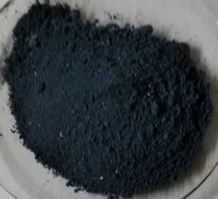
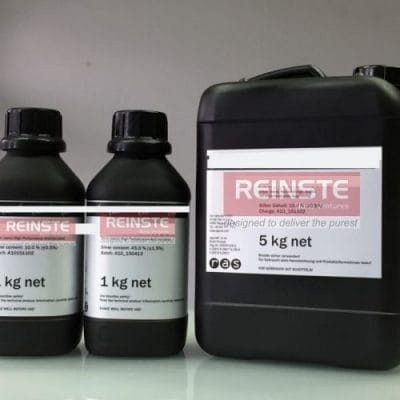
Featured Silver Nanoparticle Products for R&D


Frequently Asked Questions
Silver nanoparticles are preferred due to their exceptional electrical conductivity, which enhances the silver electrochemical signal for sensitive detection. Their high surface-area-to-volume ratio allows for greater loading of bioreceptors, and their plasmonic properties can be used for colorimetric and optical sensing, making them a versatile nano transducer.
A nano transducer is a critical component that converts a biological recognition event (like an antibody binding to an antigen) into a measurable signal (electrical, optical, etc.). Silver nanoparticles are excellent nano transducers because they can effectively translate these molecular interactions into strong, quantifiable silver signals.
Yes, AgNPs have been extensively researched for developing rapid and sensitive diagnostic tools for viruses, including SARS-CoV-2. They can be functionalized with specific antibodies or DNA probes that bind to viral proteins or RNA, leading to a detectable signal, making them a promising silver diagnostic tool.
A biosensor coating with silver nanoparticles involves depositing a thin layer of AgNPs onto an electrode or sensor surface. This nano biological sensor coating serves two purposes: it provides a stable matrix for immobilizing biorecognition molecules and it acts as a signal amplifier, improving the detection nano capabilities of the sensor.
Ready to Advance Your Research?
Leverage the power of silver nanoparticles in your next project. Explore our high-purity materials and accelerate your biosensor development today.
Get in Touch