
The Invisible Threat on Every Surface
In a country as vibrant and populous as India, our daily lives involve countless interactions with public surfaces. From the door handle of a bustling Mumbai local train to the knob of a clinic in Chennai, these "high-touch" points are silent hubs for the transmission of bacteria and viruses. Traditional cleaning methods, while essential, offer only a temporary reprieve. The moment a surface is cleaned, it's immediately ready to be re-contaminated. This constant cycle poses a significant public health challenge, especially in critical environments like hospitals, schools, and public transportation.
This is where material science offers a groundbreaking solution: **nanosilver coating**. Imagine a door handle that disinfects itself, a **silver touchpoint** that actively neutralizes pathogens 24/7. This isn't science fiction; it's the reality of **nano antimicrobial surface** technology. For Indian researchers, entrepreneurs, and industries, this represents a monumental opportunity to innovate and address a core societal need. By integrating nanosilver into coatings, we can create a new standard of hygiene, making our shared spaces safer for everyone.
Why Nanosilver is a Game-Changer for Indian R&D
Continuous Antimicrobial Action
Unlike chemical sprays that evaporate, a **nano handle coating** provides persistent protection. Silver ions are continuously released, disrupting microbial cell membranes and preventing their proliferation. This reduces the overall microbial load on surfaces, lowering the risk of cross-contamination day and night.
Durability and Longevity
These coatings are designed to withstand wear and tear. They bond strongly to surfaces, ensuring the **antimicrobial handle coating** remains effective for extended periods, making it a cost-effective solution in the long run by reducing the frequency and volume of chemical disinfectants needed.
Versatility in Application
Nanosilver can be incorporated into various mediums like paints, polymers, and sprays. This allows for its application on a vast array of materials including metals, plastics, textiles, and ceramics. For researchers, this opens up a wide field of product development, from medical devices to consumer goods.
Addressing Public Health Mandates
As India focuses more on public health infrastructure and hygiene (e.g., Swachh Bharat Mission), technologies that offer passive, continuous protection are invaluable. **Silver door surface** technology aligns perfectly with national goals, providing a scalable solution for healthier public spaces.
Key Application Areas in the Indian Context
Healthcare Settings
Hospitals are ground zero in the fight against infections. Applying **nanosilver-infused coatings for antimicrobial door handles**, bed rails, IV poles, and medical equipment can drastically reduce the incidence of Hospital-Acquired Infections (HAIs), protecting both patients and healthcare workers.
Public Transportation
The handrails in buses, metros, and trains are touched by millions. A durable **nano handle coating** provides an essential layer of protection, enhancing **door handle hygiene** and making daily commutes safer for the massive Indian population that relies on public transport.
Hospitality & Food
In hotels and restaurants, maintaining impeccable hygiene is paramount. Using a **silver door knob** or treating tabletops and counters with nanosilver ensures a safer environment for guests, enhancing brand reputation and customer trust.
Schools and Universities
Children are particularly susceptible to infections. Implementing **silver touchpoint** technology on desks, doorknobs, and cafeteria surfaces can create a healthier learning environment, reducing student absenteeism due to illness.
Corporate and Public Offices
High-traffic office buildings can benefit immensely from **nano door hygiene**. Coating elevator buttons, entry doors (**silver entry point**), and shared equipment ensures a safer workspace, promoting employee well-being and productivity.
R&D and Manufacturing
For Indian scientists, developing novel **nanosilver coating** formulations tailored to local conditions is a major opportunity. For manufacturers, integrating these additives into existing product lines (paints, plastics) can create high-value, differentiated products for a growing market.
The Road Ahead: Trends and Opportunities in India
The market for antimicrobial coatings in India is poised for significant growth, driven by increasing health awareness post-pandemic and government initiatives. Researchers have the opportunity to innovate by exploring green synthesis methods for nanosilver, reducing costs, and enhancing the biocompatibility of coatings. The "Make in India" campaign provides a fertile ground for setting up manufacturing units for **nano silver antimicrobial additives**, reducing import dependency and creating local jobs.
Furthermore, there is a growing demand for smart materials. Integrating nanosilver technology into everyday products is a clear path forward. From antimicrobial paints for homes to self-sanitizing ATM screens, the potential is vast. The key will be to develop robust, scalable, and cost-effective **nano antimicrobial surface** solutions that can be widely adopted across different sectors of the Indian economy.
Frequently Asked Questions
Durability is a key feature. A high-quality nanosilver coating can last for months or even years, depending on the formulation and the frequency of use and abrasion of the surface. It provides continuous antimicrobial protection, unlike traditional disinfectants that need constant reapplication.
Nanosilver, when integrated into a stable coating matrix, is generally considered safe. The silver ions are released in minute, controlled quantities sufficient to kill microbes but well below levels harmful to humans. Researchers are continuously working on optimizing these coatings for maximum safety and minimal environmental impact, a key focus in Indian R&D.
Yes, one of the major advantages of nanosilver coating solutions is their versatility. They can be formulated as sprays, paints, or lacquers that can be applied to a wide range of existing surfaces, including metal, plastic, and wood. This makes retrofitting high-touch surfaces like existing door handles and knobs a viable option.
Regular disinfectants provide a temporary effect; they kill microbes present at the time of application but offer no residual protection. A nanosilver coating creates a permanent nano antimicrobial surface that works 24/7 to continuously neutralize pathogens, ensuring the surface remains hygienic between cleanings.
Related Products for Your Research

Warrior W5KSilver Antimicrobial Additive ( Water Based )
View Product →
Nano Silver Antimicrobial Additive
View Product →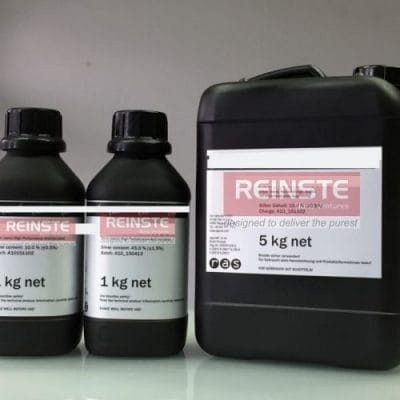
Antibacterial Colorless Nano Silver Solution
View Product →
Nano silver hygiene products finishing agent
View Product →Ready to Innovate with Nanosilver?
Join the forefront of material science in India. Explore our range of high-purity nanosilver products and additives to power your next breakthrough in antimicrobial technology.
Get in Touch