
Simple Nanofiber Fabrication: Cost-Effective & Quick Synthesis for Indian R&D
Discover accessible and efficient methods for nanofiber production, empowering Indian researchers and industries with advanced materials.
Learn MoreThe Dawn of Accessible Nanofiber Synthesis in India
Nanofibers, with their extraordinary surface-area-to-volume ratio, superior mechanical properties, and customizable functionalities, are revolutionizing fields from medicine to environmental science. In India, the burgeoning research and development sector is increasingly recognizing the transformative potential of these advanced materials. However, traditional `nanofiber synthesis` methods often involve complex equipment and high operational costs, posing a significant barrier for many Indian institutions and startups. This article delves into `simple nanofiber fabrication` techniques, emphasizing `cost-effective nanofiber synthesis` strategies that can democratize access to this cutting-edge technology for our nation's brightest minds.
The global shift towards sustainable and efficient material solutions places nanofibers at the forefront of innovation. For Indian researchers and professionals, the ability to engage in `benchtop nanofiber production` without extensive capital investment means faster prototyping, localized solutions, and the fostering of indigenous technological advancements. We will explore various `nanofiber production techniques` that are not only efficient but also adaptable to existing laboratory infrastructures, making `DIY nanofiber synthesis` a tangible reality. This approach aims to accelerate the adoption of nanofibers across diverse `nanofibers applications`, from advanced filtration systems to biomedical implants, propelling India into a new era of material science excellence.
Understanding the fundamental principles behind `how to make nanofibers` quickly and efficiently is crucial. This guide is tailored to provide practical insights, ensuring that the next generation of Indian innovators can harness the power of `high performance nanofibers` with readily available resources. By focusing on practical, scalable, and affordable methods, we aim to bridge the gap between theoretical knowledge and real-world application, making advanced `nanofiber materials` accessible to all who seek to innovate.
Unlocking Research Potential: Benefits of Simple Nanofiber Fabrication
Cost-Effective Synthesis
Enables `cost-effective nanofiber synthesis` by reducing the need for expensive, specialized equipment and complex reagents, making advanced materials research accessible to a wider range of institutions in India.
Benchtop Production
Facilitates `benchtop nanofiber production`, allowing researchers to fabricate nanofibers within standard laboratory settings, fostering rapid experimentation and innovation without dedicated cleanroom facilities.
DIY Accessibility
Promotes `DIY nanofiber synthesis`, empowering individual researchers and small teams to develop their own fabrication setups, encouraging hands-on learning and practical skill development.
Quick Preparation
Allows for `quick nanofiber preparation`, significantly reducing the time from concept to prototype, which is critical for fast-paced research and development cycles in competitive environments.
Reduced Resource Dependency
Minimizes reliance on imported technologies and materials, fostering self-sufficiency and promoting the use of locally available resources for sustainable `nanofiber production techniques`.
Educational Advancement
Serves as an excellent educational tool, providing students and budding scientists with practical experience in advanced materials science, thereby strengthening India's scientific workforce.
Nanofibers in Action: Industry Applications for the Indian Market
Medicine & Healthcare
Nanofibers are transforming `nanofibers in medicine` with applications in drug delivery, tissue engineering scaffolds, wound dressings, and advanced diagnostics. Their biocompatibility and high surface area make them ideal for controlled release of therapeutics and mimicking extracellular matrix for cell growth, offering new hope for complex medical challenges in India.
Advanced Filtration Systems
With pressing environmental concerns, nanofibers offer superior filtration efficiency for both air and water purification. Their intricate pore structure can capture ultrafine particles, bacteria, and viruses, providing `high performance nanofibers` solutions for industrial emissions, potable water treatment, and personal protective equipment, crucial for public health in India.
Smart Textiles & Apparel
The integration of `nanofiber materials` into textiles leads to innovative products like smart fabrics with enhanced breathability, water repellency, UV protection, and even self-cleaning properties. These can be used in high-performance sportswear, military uniforms, and protective clothing, catering to India's diverse climatic conditions and growing demand for advanced apparel.
Energy Storage & Conversion
Nanofibers are critical components in the next generation of energy devices. They are being explored for their roles in high-capacity batteries, efficient fuel cells, and supercapacitors, offering improved power density and longer lifespans. This is vital for India's push towards renewable energy and electric vehicles, enhancing the performance of `nanofiber materials` in energy applications.
Advanced Sensors & Diagnostics
Due to their high surface area and tunable electrical properties, nanofibers are excellent candidates for developing highly sensitive and selective sensors. These can be used for detecting pollutants, biomolecules, and gases, providing rapid and accurate diagnostics for environmental monitoring and health screening, particularly beneficial in remote and rural areas of India.
Catalysis & Chemical Engineering
The unique `chemical properties of nanofibers`, including their high porosity and catalytic activity, make them valuable in various chemical processes. They are used as supports for catalysts, enhancing reaction rates and selectivity, and in separation technologies. This contributes to more efficient and sustainable industrial processes within India's growing chemical sector.
India's Nanofiber Horizon: Emerging Trends and Opportunities
India is poised to become a global leader in advanced materials, and `nanofiber technology trends` are playing a crucial role in this transformation. Government initiatives like 'Make in India' and increased funding for scientific research are creating a fertile ground for innovation in `nanofiber synthesis` and application. Researchers are increasingly exploring sustainable and biodegradable `nanofiber materials` derived from natural polymers, aligning with India's environmental goals and rich agricultural resources. This focus not only reduces the ecological footprint but also opens up new avenues for `cost-effective nanofiber synthesis` using indigenous raw materials.
The rise of academic-industry collaborations is another significant trend. Universities and research institutions are partnering with local industries to translate laboratory-scale `benchtop nanofiber production` into commercial products. This synergy is vital for developing `nanofiber production techniques` that are scalable and economically viable for the Indian market. Emphasis is also being placed on developing multi-functional nanofibers, integrating various properties like antimicrobial activity, electrical conductivity, and thermal insulation into a single material, expanding their utility across diverse sectors.
Furthermore, the demand for `high performance nanofibers` in specialized applications, such as advanced defense materials and critical healthcare solutions, is driving rapid advancements. Indian startups are emerging with innovative solutions for `DIY nanofiber synthesis` kits and accessible electrospinning setups, making `how to make nanofibers` a less daunting task for new entrants. These developments are not just about creating new products; they are about building a robust ecosystem for `nanofiber materials` research, manufacturing, and application, ensuring India's self-reliance and global competitiveness in this cutting-edge field. Adhering to `best practices for nanofiber synthesis` is becoming paramount to ensure quality and consistency in these rapidly evolving applications.
The future of nanofibers in India is bright, characterized by a blend of indigenous innovation, strategic collaborations, and a strong commitment to sustainable development. As research continues to unravel the intricate `chemical properties of nanofibers`, we can expect even more groundbreaking applications to emerge, further solidifying India's position on the global nanotechnology map.
Frequently Asked Questions on Nanofiber Synthesis
Indian researchers can adopt `simple nanofiber fabrication` methods like electrospinning with modified setups, solution blowing, or self-assembly techniques. Focusing on locally sourced materials and optimizing existing lab equipment can significantly reduce costs, making `benchtop nanofiber production` more accessible. Collaborations with local industries for material supply and equipment sharing also contribute to `cost-effective nanofiber synthesis`.
Nanofibers hold immense potential across various sectors in India. Key `nanofibers applications` include advanced filtration systems for water and air purification, drug delivery systems and wound dressings in healthcare (`nanofibers in medicine`), smart textiles for protective wear, energy storage solutions, and highly sensitive sensors for environmental monitoring and diagnostics. Their high surface area and tunable properties make them ideal for solving critical challenges in these areas.
Achieving `high performance nanofibers` involves several `best practices for nanofiber synthesis`. These include precise control over precursor solution properties (viscosity, conductivity, surface tension), optimizing process parameters (voltage, flow rate, tip-to-collector distance in electrospinning), ensuring environmental stability during fabrication, and selecting appropriate `nanofiber materials`. Post-processing treatments like annealing or cross-linking can further enhance their mechanical and `chemical properties of nanofibers`, leading to more robust and functional materials.
Recent `nanofiber technology trends`, such as the development of sustainable and biodegradable nanofibers, multi-functional composite nanofibers, and advanced manufacturing techniques like 3D nanofiber printing, significantly impact Indian R&D and industry. These trends open new avenues for innovation in eco-friendly products, personalized medicine, and high-tech manufacturing. They encourage local development of `nanofiber production techniques` and foster a competitive edge in global markets, aligning with India's 'Make in India' initiatives.
Explore Related Advanced Fiber Solutions

Ice silk Fibre
View Product
Silver Antibacterial and Deodorant Fiber FreeCool
View Product
Silver ion antibacterial and deodorant wrap Yarn
View Product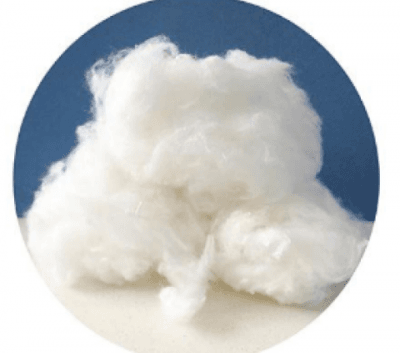
Silver antibacterial and deodorant staple fiber
View ProductAdvance Your Research with Reinste's Fiber Solutions
Ready to explore innovative `nanofiber materials` or need expert guidance on `nanofiber production techniques`? Reinste offers a range of high-quality fiber solutions and consultation services tailored for your research and industrial needs.
Contact Us for Expert Consultation