
Nanofibers: Unlocking Future Innovations for Indian Research and Industry
Dive into the microscopic world of nanofibers and discover their transformative potential across diverse sectors, from advanced materials to cutting-edge medical applications, shaping India's technological landscape.
Explore Nanofiber ApplicationsThe Microscopic Revolution: Nanofibers in India's R&D Landscape
In the rapidly evolving landscape of material science, nanofibers stand out as a revolutionary class of materials poised to redefine technological capabilities. These ultrafine fibers, with diameters typically ranging from a few tens to hundreds of nanometers, exhibit extraordinary properties due to their exceptionally high surface area to volume ratio, superior mechanical strength, and tunable porosity. This unique combination makes them invaluable for a myriad of advanced nanofibers applications, from biomedical engineering to environmental remediation and advanced textiles.
For Indian researchers and professionals, understanding the intricacies of nanofiber manufacturing and their potential impact is not just academic; it's a strategic imperative. India's burgeoning R&D sector and growing industrial base present fertile ground for the adoption and innovation of nanofiber technology. From enhancing air and water purification systems to developing next-generation medical devices and high-performance nanofiber composites, the scope for contribution is immense. This blog delves into the world of nanofibers, highlighting their significance, diverse applications, and the exciting opportunities they present for India's scientific and industrial progress, fostering a humanized and informative perspective for our innovators.
The global nanofiber market is expanding, driven by demand for high-performance materials. India, with its vast talent pool and focus on sustainable development, is uniquely positioned to become a leader in nanofiber production and innovation. This exploration will provide insights into how these minute structures are creating monumental shifts in various sectors, emphasizing their relevance to the Indian context.
Key Advantages for Indian Researchers and Innovators
The distinctive nanofiber properties offer a wealth of benefits that are particularly attractive for research and development efforts in India. These advantages translate into enhanced performance, cost-efficiency, and novel functionalities across various scientific and industrial domains.
- Unparalleled Surface Area: The extremely high surface area of nanofibers allows for superior interaction with other materials, making them ideal for catalysts, sensors, and nanofiber filtration membranes. This is crucial for applications requiring high efficiency in small footprints, such as water purification systems for rural and urban India.
- Enhanced Mechanical Strength: Despite their minute size, many nanofibers exhibit exceptional tensile strength and flexibility, paving the way for lightweight, durable nanofiber composites for aerospace, automotive, and construction industries, supporting India's infrastructure development.
- Tunable Porosity and Permeability: The ability to precisely control the pore size and distribution during nanofiber production enables the creation of highly selective membranes for separation processes, drug delivery, and protective textiles, addressing specific needs in healthcare and environmental protection.
- Biocompatibility and Bioactivity: Many polymeric nanofibers can be engineered to be biocompatible, making them excellent candidates for advanced wound dressings, tissue engineering scaffolds, and drug delivery platforms, aligning with India's growing biotechnology and pharmaceutical sectors.
- Versatility in Material Choice: Nanofibers can be fabricated from a wide array of materials, including polymers, ceramics, and metals, allowing researchers immense flexibility in tailoring properties for specific nanofibers applications and overcoming material limitations.
- Cost-Effective Solutions: While initial nanofiber manufacturing can be complex, the long-term benefits in terms of efficiency, durability, and reduced material usage often lead to cost-effective solutions, especially when scaled for mass nanofiber production in industrial settings.
- Sustainable Innovation: Focusing on nanofibers life cycle assessment methodology, researchers can develop environmentally friendly nanofiber technology, contributing to sustainable practices in manufacturing and product development, a key goal for India's future.
These benefits underscore why nanofiber research is a high-priority area, promising to deliver innovative solutions that can address some of India's most pressing challenges and drive economic growth.
Diverse Applications of Nanofibers Across Indian Industries
The versatility of nanofibers translates into a broad spectrum of practical nanofibers applications that are directly relevant to India's industrial and societal needs. From enhancing public health to boosting manufacturing efficiency, nanofiber technology is at the forefront of innovation.
Healthcare and Biomedical
Nanofibers are revolutionizing healthcare in India. Their use in advanced wound dressings promotes faster healing and prevents infection due to their high surface area and ability to mimic extracellular matrix. In drug delivery, nanofibers offer controlled release mechanisms, improving therapeutic efficacy. Furthermore, nanofiber scaffolds are critical for tissue engineering, providing structural support for cell growth and regeneration, a vital area for medical advancements in India. This sector heavily relies on precise nanofiber production techniques.
Filtration and Environmental Remediation
With increasing concerns over air and water quality, nanofiber filtration membranes offer highly efficient solutions. Their ultra-fine pores can effectively remove sub-micron particles, bacteria, viruses, and heavy metals from water, providing access to clean drinking water. Similarly, in air purification, nanofiber filters are superior in trapping fine particulate matter (PM2.5), which is a significant environmental challenge in many Indian cities. This demonstrates a critical nanofibers application for public health and environmental sustainability.
Energy and Electronics
The energy sector benefits significantly from nanofiber technology. They are being explored for enhanced battery separators, supercapacitors, and fuel cells due to their high porosity and ionic conductivity. In electronics, nanofibers contribute to flexible sensors, transparent electrodes, and advanced insulation materials. These innovations are vital for India's push towards renewable energy and smart technologies, impacting the overall nanofiber market in the region.
Advanced Textiles and Composites
In the textile industry, nanofibers are used to create smart fabrics with enhanced properties like water repellency, breathability, and antibacterial functions. For instance, nanofiber production can lead to protective clothing for defense and industrial workers. Furthermore, nanofiber composites, where nanofibers reinforce polymer matrices, result in materials with superior strength-to-weight ratios, ideal for automotive, aerospace, and sporting goods, driving advancements in Indian nanofiber manufacturing.
Agriculture and Food Packaging
Nanofibers are finding novel uses in agriculture, such as in controlled-release pesticide and fertilizer delivery systems, improving crop yield and reducing environmental impact. In food packaging, antimicrobial nanofibers can extend the shelf life of perishable goods, reducing food waste – a significant benefit for India's food supply chain. This showcases the broad impact of nanofibers applications.
Defence and Security
The defence sector can leverage nanofiber technology for lightweight ballistic protection, chemical and biological warfare filters, and advanced sensor systems for surveillance. The superior nanofiber properties contribute to enhanced safety and performance for personnel and equipment, bolstering India's national security capabilities through advanced materials. Continued nanofiber research is paramount for these strategic areas.
India's Nanofiber Horizon: Opportunities and Emerging Trends
India stands at the cusp of a significant technological leap, with nanofiber technology emerging as a key enabler. The confluence of a robust scientific community, government support for 'Make in India' and 'Atmanirbhar Bharat' initiatives, and a pressing need for sustainable solutions creates a unique ecosystem for nanofiber research and industrial growth. The nanofiber market in India is projected to expand, driven by increasing demand from healthcare, environmental, and defense sectors.
One of the most prominent trends is the focus on developing indigenous capabilities in nanofiber manufacturing and nanofiber production. This includes optimizing electrospinning techniques for scalability and cost-effectiveness, as well as exploring novel methods for creating functionalized nanofibers. Indian institutions are actively engaged in developing advanced nanofiber composites for high-performance applications, aiming to reduce reliance on imported materials and foster self-sufficiency.
Furthermore, there's a growing emphasis on the nanofibers life cycle assessment methodology. Indian researchers are keenly evaluating the environmental impact of nanofiber production, use, and disposal, ensuring that these advanced materials contribute to a circular economy. This holistic approach is critical for the long-term sustainability of nanofiber technology in India, addressing concerns about nanomaterial safety and waste management.
The integration of Artificial Intelligence and Machine Learning in designing and optimizing nanofiber properties is another exciting trend. This allows for rapid prototyping and prediction of material behavior, accelerating the development of new nanofibers applications. Collaborative efforts between academia, industry, and government bodies are crucial to harness these opportunities, creating a vibrant ecosystem for nanofiber innovation. India's strategic investments in R&D infrastructure and skilled human resources position it well to become a global hub for nanofiber research and development, driving both economic prosperity and societal well-being.
The demand for efficient nanofiber filtration solutions in areas like air purifiers and water treatment plants is also pushing the nanofiber market forward. As urbanisation and industrialisation continue, the need for advanced filtration technologies will only grow, cementing the role of nanofibers in India's future.
Frequently Asked Questions about Nanofibers
Nanofibers are ultrafine fibers with diameters typically ranging from 50 to 1000 nanometers. Their exceptionally high surface area to volume ratio, superior mechanical properties, and tunable porosity make them crucial for advanced materials. For India, nanofibers represent a frontier in innovation, offering solutions for critical sectors like water purification, healthcare, energy, and defense, aligning with national initiatives for self-reliance and technological advancement.
The most common and versatile method for nanofiber manufacturing is electrospinning. Other significant techniques include melt-blowing, drawing, template synthesis, and self-assembly. Each method has distinct advantages in terms of scalability, material compatibility, and the specific properties of the resulting nanofibers, catering to diverse nanofiber production requirements.
In India, nanofibers find critical nanofibers applications in water and air filtration, where their fine pores efficiently remove pollutants. In healthcare, they are used in wound dressings, drug delivery systems, and tissue engineering. The automotive and aerospace industries utilize nanofiber composites for lightweight, high-strength materials. Furthermore, their use in sensors, batteries, and protective textiles demonstrates their broad impact on Indian innovation and industry.
Nanofiber research in India is significantly contributing to sustainable development by enabling advanced filtration systems for clean water and air, developing efficient energy storage solutions, and creating biodegradable materials. The focus on nanofibers life cycle assessment methodology ensures that their production and disposal are environmentally responsible, supporting India's commitment to green technologies and a circular economy.
Explore Related Advanced Fibers and Materials
While exploring the vast potential of nanofibers, consider these related advanced fiber products that complement and extend the capabilities of modern material science, offering solutions across various industries.

Ice silk Fibre
View Product
Silver Antibacterial and Deodorant Fiber FreeCool
View Product
Silver ion antibacterial and deodorant wrap Yarn
View Product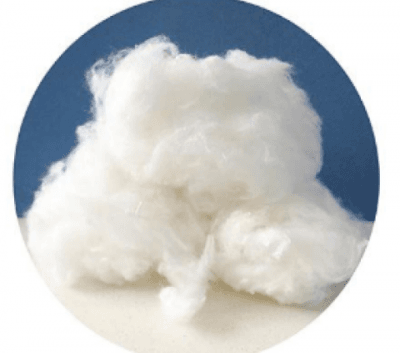
Silver antibacterial and deodorant staple fiber
View ProductReady to Innovate with Nanofibers?
Connect with experts to explore how nanofiber technology can transform your research or industrial applications. Our team is ready to assist you in navigating the exciting world of nanofiber manufacturing and its vast potential.
Contact Our Experts Today