
A Diamond-Bright Future for Indian Medical Research
In the heart of India's rapidly advancing scientific community, a material of extraordinary promise is capturing the attention of researchers and innovators: the nanodiamond. Far from being mere specks of luxury, these carbon-based nanoparticles are unlocking unprecedented capabilities in high-stakes fields, most notably in biomedical imaging. For a nation grappling with complex healthcare challenges and simultaneously pioneering global R&D, the advent of nanodiamonds for biomedical imaging enhancement represents a monumental leap forward.
Traditional imaging techniques, while powerful, often face limitations in resolution, toxicity, and signal stability. Fluorescent dyes can fade, and quantum dots can pose toxicity risks. Nanodiamonds, however, offer a solution that is as robust as it is brilliant. Containing special defects known as Nitrogen-Vacancy (NV) centers, they act as perfectly stable, non-toxic, and incredibly bright beacons that can be attached to molecules and tracked deep within living tissue. This article delves into the properties, applications, and immense potential of nanodiamonds, exploring how they are set to redefine the landscape of diagnostics and targeted therapy in the Indian context.
Unmatched Advantages for Researchers
The unique properties of nanodiamonds provide a compelling list of benefits for researchers in the biomedical field, addressing many of the shortcomings of conventional imaging agents.
-
Exceptional Photostability
Unlike organic dyes that photobleach or quantum dots that blink, the fluorescence from nanodiamonds' NV centers is endlessly stable. This allows for long-term, continuous tracking of cells and biological processes without signal degradation—a critical requirement for studying disease progression or the efficacy of drug delivery systems.
-
Superior Biocompatibility and Low Cytotoxicity
Made of carbon, the fundamental element of life, nanodiamonds are inherently non-toxic to cells. This safety profile is a significant advantage over heavy-metal-based quantum dots, making them ideal for in-vivo (within a living organism) studies and future clinical applications.
-
Tunable Surface Chemistry
The surface of nanodiamonds can be easily modified and functionalized. This allows scientists to attach a wide array of specific biomolecules—such as antibodies, proteins, or drugs—enabling highly targeted imaging and therapy. This is one of the key applications of nanodiamonds in precision medicine.
-
Quantum Sensing Capabilities
Beyond just imaging, the NV centers in nanodiamonds are sensitive to their local environment. They can be used as nanoscale sensors to measure temperature, magnetic fields, and pH inside a single living cell, providing data that was previously impossible to obtain.
Key Industry Applications in India
High-Resolution Cancer Cell Imaging
One of the most promising nanodiamonds uses is in oncology. By functionalizing nanodiamonds to bind specifically to cancer cells, researchers can track the movement and proliferation of tumors with single-cell resolution. Their photostability allows for long-term monitoring of metastasis, revolutionizing how we study cancer biology.
Targeted Drug Delivery Systems
Nanodiamonds can serve as robust vehicles for delivering therapeutic agents directly to diseased cells. Their large surface area can be loaded with drugs, and their non-toxic nature ensures safe transport through the body. The imaging capability allows clinicians to see exactly where the drug is delivered, confirming treatment efficacy in real-time.
Advanced MRI Contrast Agents
Hyperpolarized nanodiamonds are emerging as powerful contrast agents for Magnetic Resonance Imaging (MRI). They can enhance the MRI signal by several orders of magnitude, enabling the visualization of metabolic processes at the molecular level—a game-changer for early disease detection and personalized medicine.
Neuroscience and In-Vivo Sensing
The quantum sensing nanodiamonds properties are being explored in neuroscience. These tiny sensors can measure the faint magnetic fields from neuronal firing or subtle temperature changes within the brain, offering unprecedented insights into neural activity and degenerative diseases.
The Indian Nanodiamonds Research Ecosystem
India's focus on indigenous R&D, championed by initiatives like "Make in India" and the Atal Innovation Mission, creates a fertile ground for the nanodiamonds industry. Premier institutions such as the Indian Institutes of Technology (IITs), the Indian Institute of Science (IISc), and the Tata Institute of Fundamental Research (TIFR) are already engaged in nanomaterials science. The integration of nanodiamond technology into their biomedical research programs is a natural and powerful next step.
The growing medical tourism sector in India also stands to benefit. Offering cutting-edge diagnostic services based on biomedical imaging nanodiamonds could attract international patients and further cement India's position as a healthcare leader. For this to happen, a robust supply chain for high-quality, research-grade nanodiamonds is essential. This is where the synergy between Indian researchers and specialized material providers becomes critical, ensuring access to the foundational materials that drive innovation.
Frequently Asked Questions
Nanodiamonds (NDs) are tiny diamond particles with a diameter typically less than 100 nanometers. They are created through detonation or high-pressure, high-temperature (HPHT) methods. Their unique properties, such as high biocompatibility, low cytotoxicity, and stable fluorescence from nitrogen-vacancy (NV) centers, make them ideal for advanced biomedical applications.
Nanodiamonds offer significant advantages. Unlike quantum dots, they do not 'blink' (intermittent fluorescence) and are highly photostable, meaning they don't fade under prolonged light exposure. Furthermore, they are exceptionally biocompatible and non-toxic, whereas many quantum dots contain heavy metals, posing toxicity risks.
Extensive research has shown that purified nanodiamonds have excellent biocompatibility and very low cytotoxicity. Their carbon-based structure is inherently safer than many other nanoparticles. However, like any nanomaterial for clinical use, they are subject to rigorous testing and regulatory approval for specific in-vivo applications.
A Nitrogen-Vacancy (NV) center is a point defect in the diamond's crystal lattice where one carbon atom is replaced by a nitrogen atom, and an adjacent lattice site is empty (a vacancy). This defect creates a quantum system that can be manipulated with light and microwaves, giving nanodiamonds their powerful fluorescence and sensing capabilities, which are central to their use in nanodiamonds for imaging.
Indian researchers can source high-purity, functionalized nanodiamonds from specialized suppliers like Hiyka, which provides a range of products tailored for R&D, including single-digit nanodiamonds and surface-modified variants suitable for biomedical imaging and other advanced nanodiamonds in technology.
Explore Relevant Nanodiamond Products

Single-Digit NanoDiamonds (SDND)
View Product →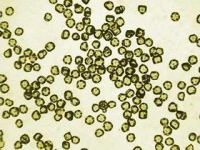
Nanodiamonds, Extra Pure
View Product →
Nanodiamonds, Surface Modified, Positively Charged
View Product →
Nanodiamonds, Agglomerate-Free, Purified
View Product →Ready to Revolutionize Your Research?
Embrace the future of biomedical imaging and nanotechnology. Connect with us to learn how our high-purity nanodiamonds can elevate your research and development projects.
Contact Us Today