The Dawn of a New Material Age: Nanodiamonds and 3D Printing
India, a nation rapidly ascending the global technology ladder, stands at the cusp of a manufacturing revolution. At the heart of this transformation is Additive Manufacturing (AM), or 3D printing. While the technology itself is groundbreaking, its true potential is unlocked by the materials it employs. Enter nanodiamonds (NDs), microscopic particles with properties so extraordinary they seem borrowed from science fiction. The fusion of nanodiamonds technology with 3D printing is not just an incremental improvement; it's a paradigm shift, promising to redefine the boundaries of what's possible in Indian research, development, and industry.
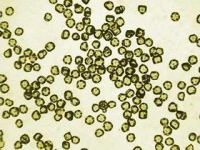
For decades, diamonds have been synonymous with hardness and luxury. Now, imagine shrinking that power down to the nanoscale—particles a thousand times smaller than a human hair—and embedding them into polymers, metals, and ceramics. This is the essence of nanodiamonds for 3D printing. These tiny titans are synthesized, often through cost-effective detonation methods, to create materials that are stronger, more durable, and more functional than their conventional counterparts. For Indian researchers and innovators, this opens a treasure trove of opportunities. From developing next-generation aerospace components to creating patient-specific medical implants, the applications of nanodiamonds are as vast as they are impactful.
Why Should Indian Researchers Care? The Unmatched Benefits
The integration of nanodiamonds into 3D printing filaments offers a compelling value proposition for the Indian R&D community. It's about elevating material performance to an entirely new level. Here’s a breakdown of the key benefits:
- Unprecedented Mechanical Strength: Even a small percentage of nanodiamonds can dramatically increase the tensile strength and hardness of polymer composites. This means creating parts that are lighter yet significantly more robust, a critical factor in sectors like automotive and defense.
- Superior Thermal Management: Nanodiamonds possess exceptional thermal conductivity. When added to polymers, they create a pathway for heat to dissipate efficiently. This is a game-changer for 3D-printing electronic casings and components that require effective thermal management.
- Enhanced Wear and Abrasion Resistance: The inherent hardness and low friction coefficient of NDs translate to materials that can withstand significant wear and tear. This is invaluable for printing functional prototypes, jigs, fixtures, and end-use parts that experience constant friction.
- Biocompatibility and Medical Potential: The non-toxic and inert nature of nanodiamonds makes them ideal for biomedical applications. Researchers in India can leverage this property to 3D-print biocompatible scaffolds for tissue engineering, durable dental implants, and advanced drug delivery systems.
- Facilitating Complex Geometries: By improving the mechanical and thermal properties of the base material, nanodiamonds allow for the successful printing of more complex and intricate designs that might otherwise fail due to material weakness or thermal stress.
These benefits collectively empower researchers to move beyond prototyping and into the realm of functional, high-performance additive manufacturing, directly contributing to the 'Make in India' initiative with cutting-edge materials science.
From Lab to Life: Real-World Applications in the Indian Context
The theoretical advantages of nanodiamonds technology translate into tangible, high-impact applications across various industries vital to India's growth. Here are some of the most promising areas where nanodiamonds applications in 3D printing are making a mark.