Introduction: The Unseen Power of Nanodiamonds
In the ever-evolving landscape of material science, few substances capture the imagination quite like diamonds. But what happens when you shrink this marvel of nature down to the nanoscale? You get nanodiamonds (NDs) – microscopic particles with properties that far exceed their size. For researchers and industries across India, particularly in the burgeoning electronics, manufacturing, and R&D sectors, one aspect of nanodiamonds is becoming critically important: their extraordinary ability to manage heat.
As devices become smaller, faster, and more powerful, the challenge of thermal management has become a primary bottleneck. Efficiently dissipating heat is no longer a secondary concern; it's a fundamental requirement for performance, reliability, and longevity. This is where the unique nanodiamond thermal conductivity and stability come into play, offering a groundbreaking solution to one of modern technology's most pressing problems. This guide delves into the thermal characteristics of nanodiamonds, exploring why they are a game-changer for Indian innovators.
The Core of the Matter: Decoding Nanodiamond Thermal Properties
The secret to a nanodiamond's thermal prowess lies in its atomic structure. The same rigid, three-dimensional lattice of carbon atoms that makes bulk diamond the hardest known material also makes it an incredibly efficient conductor of heat.
Unmatched Thermal Conductivity
Bulk diamond has a thermal conductivity of over 2000 W/m·K, five times higher than copper. Nanodiamonds inherit this incredible trait. Heat travels through their crystal lattice via vibrations known as phonons. In the perfect, tightly-bound structure of a diamond, these phonons move with minimal resistance, creating a "superhighway" for nanodiamond heat transfer. When incorporated into polymers, oils, or metals, even a small percentage of nanodiamonds can dramatically boost the composite material's ability to dissipate heat.
Exceptional Thermal Stability
Heat management isn't just about conduction; it's also about endurance. The nanodiamond thermal stability is another key advantage. These particles can withstand extreme temperatures (up to 700-800°C in air) without decomposing or losing their structural integrity. This makes them perfect additives for materials used in high-temperature environments, from high-power electronics to industrial lubricants and aerospace components, ensuring consistent performance where other materials would fail.
Thermal Characterization of Nanodiamonds
For researchers, understanding and verifying these properties is crucial. The thermal characterization of nanodiamonds involves several advanced techniques. Thermogravimetric Analysis (TGA) is used to determine their thermal stability by measuring weight loss as temperature increases. Differential Scanning Calorimetry (DSC) helps analyze phase transitions and heat capacity. Laser flash analysis (LFA) is often employed to measure the thermal diffusivity and conductivity of nanodiamond-based composites. Mastering these techniques is essential for developing and validating new applications.
Harnessing the Heat: Key Applications in Indian Industry
The superior thermal properties of nanodiamonds are not just a scientific curiosity; they are enabling tangible technological advancements. Here are some of the most promising application areas relevant to India's "Make in India" and high-tech growth ambitions.
Electronics and LED Cooling
As microchips and LEDs become more powerful, they generate more heat in a smaller space. Nanodiamonds are used as fillers in thermal interface materials (TIMs) – the pastes and pads that sit between a chip and its heat sink. This drastically improves heat transfer, allowing devices to run cooler, faster, and have a longer lifespan. This is critical for India's growing consumer electronics and semiconductor industries.
Thermally Conductive Polymers
Plastics are typically thermal insulators. By adding nanodiamonds, it's possible to create polymer composites that are both lightweight and highly conductive. These materials are in demand for automotive parts, electronic casings, and heat exchangers, replacing heavier metal components without sacrificing thermal performance.
Advanced Lubricants and Greases
In high-friction environments like engines and industrial machinery, heat is a major cause of wear and tear. Dispersing nanodiamonds in lubricating oils (nanodiamond dispersions) not only reduces friction but also carries heat away from critical components more effectively, extending machine life and improving efficiency.
High-Performance Coatings
A nanodiamond coating can provide a dual benefit: exceptional hardness and wear resistance combined with high thermal conductivity. Such coatings are ideal for protecting tools, mechanical seals, and electronic components that operate under intense thermal and mechanical stress.
The Indian R&D Landscape: Opportunities and Trends
For Indian researchers, the field of nanodiamonds offers a fertile ground for innovation. There is a significant opportunity to develop homegrown solutions for thermal management tailored to local industries. Research into optimizing nanodiamond dispersions and surface functionalization to reduce interfacial thermal resistance is a key area. Developing cost-effective methods for incorporating nanodiamonds into existing manufacturing processes could provide a significant competitive advantage for Indian companies.
Furthermore, exploring the synergy between nanodiamond thermal conductivity and their other unique nanodiamonds properties—like their biocompatibility for drug delivery or their optical properties for quantum sensing—opens up multidisciplinary research avenues. As India pushes towards self-reliance in advanced materials, mastering the science and application of nanodiamonds is a strategic imperative.
Recommended Nanodiamond Products for Research

Single-Digit NanoDiamonds (SDND)
View Product →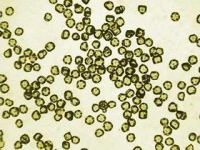
Nanodiamonds, Extra Pure
View Product →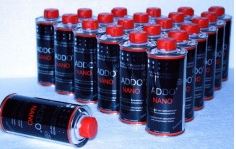
ADDO(R) Additives to oils
View Product →
Nanodiamonds, Agglomerate-Free, Purified
View Product →Ready to Revolutionize Your Research?
Leverage the power of nanodiamonds in your next project. Explore our comprehensive range of high-purity nanodiamond products or contact our experts to discuss your specific application needs.
Get in TouchFrequently Asked Questions
Nanodiamonds exhibit exceptional thermal conductivity due to their perfectly structured diamond lattice, which allows for highly efficient heat transfer through lattice vibrations called phonons. Their strong covalent bonds and low phonon scattering create a 'superhighway' for heat, making them one of the most conductive materials known.
Nanodiamonds possess remarkable thermal stability, capable of withstanding temperatures up to 700-800°C in the presence of oxygen and even higher in inert environments. This resilience makes them ideal for high-temperature applications where other materials would degrade.
Yes, dispersing nanodiamonds into fluids like oils, water, or glycols can create 'nanofluids' with significantly enhanced thermal conductivity. These are being explored for advanced cooling systems in high-performance computing, automotive engines, and industrial machinery.
The primary challenges include achieving uniform, agglomerate-free dispersion of nanodiamonds within a host material (like polymers or fluids) and ensuring a strong interfacial connection between the nanodiamond and the matrix to minimize thermal resistance. Surface modification of nanodiamonds is a key strategy to overcome these hurdles.
High-quality, research-grade nanodiamonds with varying properties like purity, size, and surface functionalization can be sourced from specialized suppliers like Hiyka, who provide materials tailored for advanced R&D and industrial applications in India.