
A New Era for Material Science in India
In the bustling landscape of Indian research and development, nanomaterials stand out as a cornerstone of innovation. Among these, Nano Zinc Oxide (ZnO) has long been a subject of intense study due to its unique piezoelectric, semiconducting, and optical properties. However, the true potential of this versatile material is now being unlocked through a sophisticated process known as doping. So, what exactly is Nano Zinc Oxide Doping?
Imagine you have a perfectly constructed building. Doping is like strategically replacing a few key bricks with stronger, more functional ones. In material science, it involves introducing a small, controlled amount of foreign atoms (dopants) into the crystal lattice of Nano ZnO. This seemingly minor alteration creates a Modified Nano Zinc Oxide with profoundly Enhanced Properties. This isn't just a simple mixture; it's a fundamental re-engineering at the atomic level.
For Indian researchers and industries, understanding the Doping Effects on Materials like ZnO is not just an academic exercise. It's the key to developing next-generation technologies that are more efficient, powerful, and cost-effective. From creating highly sensitive gas sensors that can monitor pollution in our cities to developing more effective sunscreens that protect our population, the applications are vast and directly relevant to India's pressing needs. This article delves into the science, benefits, and exciting opportunities that Nano Zinc Oxide doping presents for the nation's scientific community.
Why Doping is a Game-Changer for Researchers
Tailored Electrical Conductivity
By introducing dopants like aluminum or gallium, researchers can transform insulating Nano ZnO into a transparent conducting oxide (TCO). This is critical for developing transparent electrodes used in solar cells, LEDs, and touch screens—a cornerstone of India's growing electronics manufacturing sector.
Enhanced Optical Properties
Doping can fine-tune the bandgap of Nano ZnO, altering how it absorbs and emits light. This allows for the creation of superior UV blockers for cosmetics and coatings, as well as developing advanced phosphors for solid-state lighting. The enhanced properties of Nano Zinc Oxide in this domain are a major focus of current research.
Superior Catalytic and Photocatalytic Activity
The introduction of dopants can create defects and active sites on the nanoparticle surface, dramatically boosting its ability to catalyze chemical reactions. This is vital for industrial processes and environmental remediation, such as purifying water by breaking down organic pollutants under sunlight—a low-cost solution for many Indian communities.
Amplified Antimicrobial Efficacy
While pure Nano ZnO has antibacterial properties, doping with elements like silver or copper can significantly increase its potency. This opens doors for creating long-lasting antimicrobial coatings for medical devices, textiles, and food packaging, addressing critical public health challenges.
Industry Applications: From Lab to Market
Electronics & Sensors
Doped Nano ZnO is a key component in gas sensors that can detect toxic pollutants like CO and NOx with high sensitivity. It's also used in varistors to protect electronic circuits from voltage surges, a common issue in India's power grid. The field of transparent electronics heavily relies on these modified Nano Zinc Oxide films.
Healthcare & Biomedicine
The enhanced antibacterial properties make doped ZnO ideal for wound dressings and biomedical coatings that prevent infections. Researchers are also exploring its use in targeted drug delivery systems and as a bio-imaging agent, showcasing the diverse Nano Zinc Oxide applications in modern medicine.
Cosmetics & Personal Care
The cosmetics industry is leveraging doped Nano ZnO to create next-generation sunscreens. These formulations offer broad-spectrum UV protection without the thick, white residue of older products. The improved Nano Zinc Oxide properties ensure better dispersion and stability in cosmetic formulations.
Environmental Remediation
As a powerful photocatalyst, doped Nano ZnO can degrade industrial dyes, pesticides, and other pollutants in wastewater. This technology offers a sustainable and energy-efficient method for water purification, aligning with the goals of the 'Clean Ganga' and 'Swachh Bharat' missions.
Opportunities & Market Trends in India
The landscape for Nano Zinc Oxide research in India is more vibrant than ever. Propelled by government initiatives like the National Mission on Nanoscience and Nanotechnology (Nano Mission), there is a significant push for indigenous R&D and commercialization. The Nano Zinc Oxide market trends indicate a strong growth trajectory, driven by increasing demand from the rubber, ceramics, cosmetics, and pharmaceutical industries.
Indian researchers are at the forefront of exploring novel dopants and synthesis methods to reduce costs and improve efficiency. There's a growing focus on 'green synthesis' routes, using plant extracts to create doped nanoparticles, which is both environmentally friendly and cost-effective. The synergy between academic institutions like the IITs and IISc, and private sector players is crucial. This collaboration is accelerating the transition of lab-scale innovations to industrial-scale production. For any professional in this field, understanding the nuances of Nano Zinc Oxide doping effects on properties is no longer optional—it's essential for staying competitive and contributing to India's technological advancement.
Recommended Products for Your Research
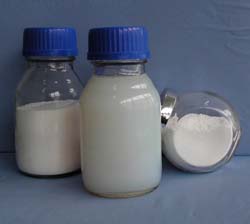
Frequently Asked Questions
Doping is the intentional introduction of impurities (dopants) into the crystal lattice of Nano Zinc Oxide (ZnO). This process modifies its electronic, optical, and chemical properties, creating a 'Modified Nano Zinc Oxide' with enhanced functionalities tailored for specific applications.
A variety of elements can be used as dopants. Common examples include metals like Aluminum (Al), Gallium (Ga), and Indium (In) to enhance electrical conductivity, and transition metals like Manganese (Mn) or Cobalt (Co) to introduce magnetic properties.
Doping can significantly alter Nano Zinc Oxide properties. It can increase electrical conductivity, shift the optical bandgap (affecting UV absorption), improve photocatalytic efficiency, enhance antibacterial activity, and introduce new properties like ferromagnetism.
In India, doped Nano ZnO is crucial for developing advanced applications such as transparent conducting oxides for solar cells, gas sensors for environmental monitoring, UV-blocking agents in high-performance sunscreens, and as powerful antimicrobial agents in textiles and water purification systems.
For reliable, research-grade Nano Zinc Oxide and other nanomaterials in India, suppliers like Hiyka (a Reinste company) offer a wide range of products tailored for scientific and industrial R&D. You can explore their offerings through the related products section on this page.
Ready to Advance Your Research?
Explore our range of high-purity Nano Zinc Oxide products or contact our team of experts to discuss your specific requirements.
Contact Us Today