Nano Zinc Oxide in Food Packaging: A Game-Changer for India's Food Safety and Exports
Discover how nanotechnology is revolutionizing food packaging, enhancing safety with non-toxic solutions, and opening new avenues for Indian researchers and food industry professionals.
Explore NowAn Introduction to a Micro-Revolution in Food Safety
The Indian food industry, a cornerstone of our economy, faces a persistent challenge: ensuring the safety and extending the shelf life of its products across a complex supply chain. From farm to fork, food spoilage due to microbial contamination and oxidation leads to significant waste and poses health risks. In this context, the emergence of Nano Zinc Oxide (nZnO) represents a monumental leap forward. This remarkable nanomaterial is at the forefront of active food packaging, a technology designed not just to contain food, but to actively protect it.
For Indian researchers and professionals in the food technology sector, Nano Zinc Oxide in food packaging is more than just a novel material; it's a gateway to innovation. Its unique properties offer a powerful, non-toxic tool to combat spoilage, enhance food quality, and align with the global demand for safer, more sustainable packaging. As India strives to boost its food exports and strengthen domestic food security, harnessing the potential of nanotechnology in food applications like nZnO-infused packaging is not just an opportunity, but a necessity.
Key Benefits of Nano Zinc Oxide for Indian Researchers
For the vibrant R&D community in India, Nano Zinc Oxide offers a fertile ground for exploration. Its multifaceted properties open up numerous research avenues with direct industrial applications:
-
Potent Antimicrobial Activity
nZnO exhibits broad-spectrum antimicrobial properties against common foodborne pathogens like E. coli and Salmonella. This allows for the development of packaging films that actively inhibit microbial growth, a critical area of research for extending the shelf life of perishable goods.
-
Effective UV Radiation Blocking
One of the standout Zinc Oxide properties is its ability to absorb harmful UV rays. This is invaluable for protecting light-sensitive foods and beverages from degradation, preserving their nutritional value, color, and flavor for longer.
-
Enhanced Mechanical & Thermal Properties
Incorporating nZnO nanoparticles into biopolymers (like PLA or chitosan) can significantly improve the strength, durability, and heat resistance of packaging films. This opens up research into creating more robust and versatile bio-plastics.
-
GRAS Status & Non-toxic Potential
Zinc Oxide is 'Generally Recognized as Safe' (GRAS) by the FDA. This provides a strong foundation for developing non-toxic food packaging solutions, a critical focus area as consumer awareness and regulatory scrutiny around food contact materials intensifies.
Industry Applications: From Lab to Market
Fresh Produce & Meats
Incorporating Nano Zinc Oxide into packaging films for fruits, vegetables, and meats can drastically reduce spoilage. The antimicrobial properties inhibit bacterial and fungal growth, directly extending the product's freshness and reducing waste in the supply chain.
Dairy Products & Beverages
The UV-blocking capabilities of nZnO are perfect for protecting dairy products and juices from light-induced oxidation, which can cause off-flavors and nutrient loss. This ensures a higher quality product reaches the consumer.
Ready-to-Eat (RTE) Meals
For the rapidly growing RTE market in India, ensuring safety is paramount. Zinc Oxide in packaging provides an active barrier against contamination, offering consumers a safer and more reliable product, thereby building brand trust.
Smart & Active Packaging
Research is underway to use nZnO in sensors that can detect food spoilage by reacting to gases released by microbes. This is the future of smart packaging, providing real-time quality indicators to both suppliers and consumers.
The Indian Landscape: Trends and Opportunities
The push for advanced food technology in India is stronger than ever. Government initiatives like "Make in India" and a focus on increasing agricultural exports create a fertile environment for innovations like Nano Zinc Oxide in food packaging. The Food Safety and Standards Authority of India (FSSAI) is continually updating regulations to ensure food safety, and nanomaterials are a key area of interest. Indian researchers have a unique opportunity to contribute to this field by conducting localized studies on the efficacy and safety of nZnO with indigenous food products and biopolymers.
Furthermore, the Indian consumer is becoming more health-conscious, demanding transparent and safe products. Packaging that is not only functional but also non-toxic and sustainable is a significant market differentiator. Research into biodegradable polymers infused with Nano Zinc Oxide could lead to a new generation of eco-friendly, active packaging solutions. This directly addresses the dual challenges of food waste and plastic pollution, positioning India as a leader in sustainable food technology.
Frequently Asked Questions (FAQ)
Nano Zinc Oxide is generally recognized as safe (GRAS) by the US FDA. However, its use in food packaging is subject to regulations that govern nanoparticle migration. Research, particularly in the Indian context under FSSAI guidelines, is crucial to establish safe limits and ensure consumer safety. The key is to embed nZnO within the packaging polymer matrix to prevent direct contact and migration into the food.
Nano Zinc Oxide acts as a potent antimicrobial agent. It generates reactive oxygen species (ROS) that damage the cell walls of bacteria, fungi, and other microbes, inhibiting their growth. Additionally, its ability to block UV radiation prevents the photo-degradation of sensitive nutrients and lipids in food, thereby extending its shelf life and preserving quality.
The primary difference lies in the particle size. Nano Zinc Oxide has particles typically smaller than 100 nanometers. This incredibly small size gives it a much larger surface-area-to-volume ratio, which significantly enhances its properties like reactivity, UV blocking, and antimicrobial activity compared to its bulk (regular) counterpart.
The Food Safety and Standards Authority of India (FSSAI) regulates food packaging materials. While specific guidelines for nanotechnology are still evolving, any new material must undergo rigorous testing for safety and migration limits. Researchers and industries in India must adhere to the Food Safety and Standards (Packaging) Regulations, 2018, and stay updated on emerging FSSAI directives concerning nanomaterials.
For reliable, research-grade Nano Zinc Oxide and other nanomaterials, specialized suppliers are essential. Platforms like Hiyka and Reinste provide high-purity, well-characterized nanomaterials tailored for academic and industrial R&D, ensuring consistency and quality for your experiments. You can explore our related products section for direct links.
Recommended Products for Your Research
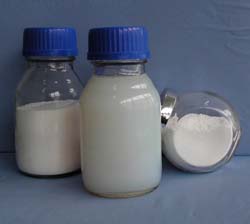
Zinc-Oxide Powder ( White)
View Product
Nano Zinc Oxide Powder, (White Powder)
View Product
Zinc oxide nanopowder
View ProductReady to Innovate with Nanotechnology?
Take the next step in your research and development. Explore our comprehensive range of high-purity Nano Zinc Oxide and other advanced materials to fuel your next breakthrough.
Browse Our Nano Materials