
The Dual-Edged Sword: Unpacking Nano Zinc Oxide
Nano Zinc Oxide (nZnO) stands as a titan in the world of nanomaterials. Its unique physicochemical properties—strong UV absorption, high catalytic efficiency, and potent antimicrobial activity—have catapulted it into countless applications, from sunscreens and cosmetics to advanced electronics and agricultural products. For the burgeoning Indian R&D landscape and its rapidly growing industries, nZnO represents a significant opportunity for innovation and economic growth.
However, this remarkable utility comes with a critical responsibility. As the production and use of nZnO scale up, so do the questions surrounding its long-term impact. What happens when these nanoparticles enter our ecosystems? What are the potential health effects for researchers, factory workers, and consumers? This article provides a comprehensive, humanized overview of the current scientific understanding of Nano Zinc Oxide's ecotoxicity, environmental fate, health effects, and the safety regulations governing its use, with a special focus on the Indian context.
Nano Zinc Oxide's Environmental Footprint
The journey of a nanoparticle doesn't end after its use. Through wastewater, industrial runoff, and product degradation, nZnO finds its way into our soil and water systems. Understanding its environmental fate and ecotoxicity is paramount for sustainable nanotechnology.
The Environmental Fate: Where Does It Go?
Once released, nZnO nanoparticles undergo several transformations. In aquatic environments, they tend to aggregate into larger clusters and settle into the sediment. A key process is dissolution, where they release zinc ions (Zn²+). This dissolution is highly dependent on factors like pH, temperature, and the presence of organic matter. Acidic conditions, for instance, accelerate the release of zinc ions, which are a primary source of toxicity for many organisms.
Ecotoxicity: The Impact on Flora and Fauna
Aquatic Life
Aquatic ecosystems are particularly vulnerable. Studies have shown that nZnO can be toxic to algae, daphnids (water fleas), and fish. The primary mechanism is the generation of Reactive Oxygen Species (ROS), which induces oxidative stress, damaging cell membranes and DNA. The released Zn²+ ions also contribute significantly to this toxicity.
Soil and Terrestrial Plants
In soil, nZnO can impact microbial communities essential for nutrient cycling. For plants, the effects are complex. While zinc is a crucial micronutrient, excessive concentrations from nZnO can inhibit root growth, reduce biomass, and interfere with photosynthesis. The uptake and bioaccumulation of nZnO in crops is a critical area of research for ensuring food safety.
The Nano Zinc Oxide environmental impact assessment is therefore not a simple checkbox exercise; it requires a nuanced understanding of the nanoparticle's lifecycle and its interaction with specific environmental conditions.
Human Health and Safety Considerations
The conversation around Nano Zinc Oxide safety is crucial, especially for those working directly with the material. The primary routes of potential exposure are inhalation, dermal contact, and ingestion.
Inhalation: The Primary Concern
The most significant health risk is associated with inhaling airborne nZnO particles, particularly in occupational settings like manufacturing and research labs. Once in the lungs, these nanoparticles can cause inflammation and oxidative stress. Long-term exposure risks are still under investigation, making proper respiratory protection (e.g., N95 or P100 respirators) and ventilated workspaces non-negotiable safety protocols.
Dermal Contact: The Sunscreen Debate
This is perhaps the most publicly debated aspect, given the widespread use of Nano Zinc Oxide in sunscreens. The overwhelming scientific consensus is that nZnO is safe for use in cosmetics. Numerous studies have shown that the nanoparticles do not penetrate the outer layer of healthy, intact skin. They sit on the surface, forming a highly effective barrier against harmful UV radiation. The benefits of UV protection far outweigh the negligible risk of dermal absorption.
Safety in the Lab: Best Practices for Indian Researchers
- Engineering Controls: Always handle nZnO powders in a fume hood or ventilated enclosure to minimize inhalation risk.
- Personal Protective Equipment (PPE): Wear gloves, safety glasses, and a lab coat. For handling dry powders, respiratory protection is essential.
- Waste Disposal: Dispose of nZnO waste as hazardous material according to institutional and national guidelines. Do not pour it down the drain.
- Standard Operating Procedures (SOPs): Develop and strictly follow SOPs for handling, storing, and disposing of nanomaterials.
Industry Applications: The Power of Nano Zinc Oxide
Despite the safety considerations, the benefits and uses of Nano Zinc Oxide are vast and continue to expand, driving market trends in India and globally.
Cosmetics & Personal Care
As a broad-spectrum UV filter, nZnO is a star ingredient in sunscreens and daily-wear cosmetics, offering superior protection without the chalky residue of its larger-particle counterparts.
Antimicrobial Coatings
Its ability to kill bacteria and prevent fungal growth makes it ideal for antimicrobial coatings on medical devices, food packaging, and textiles, contributing to public health and safety.
Agriculture
In agriculture, nZnO is used as a nano-fertilizer to deliver essential zinc to crops more efficiently. It's also being explored for its potential in pest control and enhancing plant resilience.
Electronics & Sensors
The unique semiconductor properties of nZnO are leveraged in gas sensors, varistors, and transparent conductive films for solar cells and displays, pushing the boundaries of technology.
Navigating the Regulatory Maze in India
The Nano Zinc Oxide Regulations landscape is a critical piece of the puzzle. Globally, frameworks like Europe's REACH (Registration, Evaluation, Authorisation and Restriction of Chemicals) are adapting to include nanomaterials.
In India, the regulatory environment is still maturing. While there isn't a single, overarching law for nanotechnology, several existing acts and guidelines apply:
- The Bureau of Indian Standards (BIS) has published guidelines on nanotechnology terminology and safety protocols.
- The Department of Science and Technology (DST) has released guidelines for the safe handling of nanomaterials in research labs.
- Broader environmental laws, such as the Environment (Protection) Act, 1986, govern the release of any potentially hazardous substance, including nZnO.
For Indian companies and researchers, staying updated on these evolving regulations is crucial for compliance and responsible innovation. The government's focus on 'Make in India' is likely to accelerate the development of a more robust, nano-specific regulatory framework in the near future.
Frequently Asked Questions
The primary environmental risks of Nano Zinc Oxide (nZnO) stem from its potential toxicity to aquatic organisms, including algae, crustaceans, and fish. When released into waterways, nZnO nanoparticles can generate reactive oxygen species (ROS), leading to oxidative stress and cellular damage. They can also interfere with nutrient uptake in plants and disrupt microbial communities in soil and water, affecting ecosystem balance. The environmental fate of nZnO is complex, as its toxicity depends on factors like particle size, coating, and water chemistry.
Yes, based on current scientific consensus, Nano Zinc Oxide used in sunscreens is considered safe for topical application. Major regulatory bodies like the FDA and the European Commission's SCCS have concluded that nZnO particles are too large to penetrate healthy, intact skin. They form a protective layer on the skin's surface, effectively blocking UV radiation. The primary health concerns are related to inhalation of airborne nanoparticles, not dermal application in cosmetic formulations.
India's regulatory framework for nanomaterials, including Nano Zinc Oxide, is still evolving. The Bureau of Indian Standards (BIS) has published several standards related to nanotechnology terminology and characterization. However, specific regulations governing the EHS (Environment, Health, and Safety) aspects of nZnO are largely covered under the broader 'Rules for the Manufacture, Use, Import, Export, and Storage of Hazardous Microorganisms/Genetically Engineered Organisms or Cells, 1989' and the 'Manufacture, Storage and Import of Hazardous Chemical Rules, 1989'. There is an ongoing effort to develop a comprehensive, nano-specific regulatory policy.
The environmental fate of Nano Zinc Oxide involves several processes. In aquatic systems, nZnO nanoparticles tend to agglomerate and settle into sediment. They can also dissolve, releasing zinc ions (Zn2+), which are a primary mechanism of their toxicity. In soil, nZnO can bind to organic matter, reducing its bioavailability. The ultimate fate depends on environmental conditions like pH, ionic strength, and the presence of natural organic matter, which can stabilize the nanoparticles or promote their dissolution.
Related Products
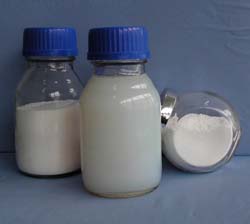
Zinc-Oxide Powder (White)
View Product
Nano Zinc Oxide Powder, (White Powder)
View Product
Zinc oxide nanopowder
View ProductReady to Advance Your Research?
Explore high-purity Nano Zinc Oxide and other nanomaterials for your next project. Get in touch with our experts to find the right solution for your application.
Contact Us Now