
Unlocking the Potential: Nano Titanium Dioxide in Coatings for Indian Industries
Explore the transformative power of Nano TiO2 in advanced coatings, driving innovation and sustainability across various sectors in India.
Learn MoreThe Dawn of Nano Titanium Dioxide: A Revolution in Coatings
In the dynamic landscape of materials science, Nano Titanium Dioxide (Nano TiO2) stands out as a groundbreaking innovation, particularly in the realm of coatings. For Indian researchers and professionals, understanding the multifaceted properties and applications of Nano TiO2 is not just an academic exercise but a gateway to significant industrial advancements. This blog delves into how these minuscule particles are creating monumental impacts, offering a comprehensive overview tailored to the unique needs and opportunities within India's burgeoning R&D and industrial sectors.
Titanium Dioxide (TiO2) is a naturally occurring oxide of titanium, widely used as a pigment in paints, sunscreens, and food colorings. However, when TiO2 is engineered at the nanoscale, typically ranging from 1 to 100 nanometers, its properties transform dramatically. These nanoparticles exhibit enhanced UV absorption, superior photocatalytic activity, and unique optical characteristics that are not present in their bulk counterparts. This shift in properties at the nanoscale opens up a plethora of possibilities for advanced coatings, moving beyond mere aesthetics to provide functional benefits like self-cleaning, anti-corrosion, and enhanced durability.
The relevance of Nano TiO2 for Indian R&D and industry cannot be overstated. With a rapidly expanding manufacturing base, a strong emphasis on sustainable development, and a growing demand for high-performance materials, India is perfectly positioned to leverage the advantages offered by nanotechnology. From automotive and construction to textiles and healthcare, the integration of Nano TiO2 into coatings can lead to more efficient, long-lasting, and environmentally friendly products. This article aims to be a valuable resource, shedding light on the scientific principles, practical applications, and future potential of Nano Titanium Dioxide in the Indian context.
Understanding Nano TiO2: Properties that Propel Innovation
The exceptional utility of Nano Titanium Dioxide stems from its unique physical and chemical properties. These properties are primarily influenced by the reduced particle size, which leads to a significantly increased surface area-to-volume ratio and quantum mechanical effects. Let's explore the core properties that make Nano TiO2 indispensable for advanced coatings:
- High Refractive Index: Even at the nanoscale, TiO2 retains its high refractive index, contributing to excellent opacity and brightness in coatings, crucial for pigments and paints.
- Superior UV Absorption and Scattering: Nano TiO2 is highly effective in absorbing and scattering ultraviolet (UV) radiation. This property is vital for protecting underlying substrates from UV degradation, extending the lifespan of materials, and is widely utilized in sunscreens and protective coatings.
- Photocatalytic Activity: This is perhaps the most celebrated property of Nano TiO2. Under UV or even visible light, Nano TiO2 acts as a photocatalyst, generating reactive oxygen species (ROS). These ROS can break down organic pollutants, leading to self-cleaning surfaces and air purification applications. This property is particularly attractive for environmental remediation and maintenance-free coatings.
- Hydrophilicity/Hydrophobicity Modification: The surface properties of Nano TiO2 can be engineered to be either highly hydrophilic (water-attracting) or hydrophobic (water-repelling), depending on the desired application. This allows for the creation of anti-fogging, self-cleaning, or water-resistant coatings.
- Chemical Stability and Non-Toxicity: Nano TiO2 is chemically inert, non-toxic, and biocompatible, making it safe for a wide range of applications, including those in contact with food or human skin (e.g., cosmetics).
- Enhanced Hardness and Scratch Resistance: When incorporated into polymer matrices, Nano TiO2 can significantly improve the hardness and scratch resistance of coatings, contributing to the durability of products.
These properties, when meticulously controlled during synthesis and formulation, allow for the creation of "smart" coatings that do more than just protect. They actively interact with their environment, offering functionalities that were once the domain of science fiction. The ability to fine-tune these properties makes Nano TiO2 a versatile component for researchers looking to push the boundaries of materials science in India.
Benefits for Indian Researchers and Innovators
- Novel Material Development: Nano TiO2 enables the creation of next-generation materials with tailored properties, fostering innovation in various fields.
- Sustainable Solutions: Research into photocatalytic and self-cleaning coatings offers pathways to reduce maintenance costs and environmental impact, aligning with India's sustainability goals.
- Enhanced Product Performance: Opportunities to significantly improve the durability, functionality, and aesthetic appeal of existing products across industries.
- Interdisciplinary Research: Bridges chemistry, physics, engineering, and environmental science, promoting collaborative research and holistic problem-solving.
- Cost-Effective Innovations: Developing coatings that extend product lifespan or reduce energy consumption can lead to significant cost savings for industries.
- Addressing Local Challenges: Tailoring Nano TiO2 applications to specific Indian challenges like air pollution, water purification, and infrastructure durability.
- Competitive Advantage: Developing expertise in Nano TiO2 coatings can give Indian industries a competitive edge in global markets.
- Intellectual Property Generation: Significant scope for patents and publications in novel synthesis methods, functionalization techniques, and application-specific formulations.
- Skill Development: Fosters advanced skills in nanotechnology, material characterization, and surface engineering among young researchers.
- Global Collaboration: Opens doors for international collaborations and funding opportunities in advanced materials research.
Transforming Industries: Key Applications of Nano TiO2 Coatings
The versatility of Nano Titanium Dioxide allows for its application across a wide spectrum of industries, each benefiting from its unique properties.
Construction & Infrastructure
Nano TiO2 coatings are revolutionizing the construction sector by enabling self-cleaning facades, anti-pollution surfaces, and energy-efficient building materials. They help break down NOx and VOCs, contributing to cleaner urban air and reduced maintenance for buildings and roads in India's bustling cities.
Automotive Sector
In the automotive industry, Nano TiO2 is used in durable, scratch-resistant, and self-cleaning paints. These coatings protect vehicle surfaces from environmental damage, maintain aesthetic appeal, and can even contribute to reducing pollutants from exhaust, aligning with stricter emission norms in India.
Textiles & Apparel
Nano TiO2 coatings provide textiles with enhanced UV protection, antimicrobial properties, and self-cleaning functionalities. This is particularly beneficial for outdoor fabrics, sportswear, and medical textiles, offering value-added features for consumers and specialized applications.
Cosmetics & Personal Care
Due to its excellent UV blocking capabilities and non-toxicity, Nano TiO2 is a key ingredient in sunscreens, offering broad-spectrum UV protection without leaving a white residue. It's also used in other cosmetic formulations for its pigmentary properties and skin benefits.
Environmental Remediation
Beyond coatings, the photocatalytic properties of Nano TiO2 are harnessed for water and air purification. It can degrade organic pollutants, making it invaluable for treating industrial effluents and developing advanced air filters, addressing critical environmental challenges in India.
Electronics & Optoelectronics
Nano TiO2 finds applications in transparent conductive coatings, dielectric layers, and components for solar cells due to its semiconductor properties and high refractive index. These applications are critical for the advancement of India's electronics manufacturing and renewable energy sectors.
India's Nanotechnology Horizon: Opportunities and Emerging Trends
India is rapidly emerging as a hub for nanotechnology research and industrial application. The unique properties of Nano Titanium Dioxide are particularly well-suited to address many of the country's developmental needs and market demands. The "Make in India" initiative and increasing investments in R&D are creating fertile ground for the growth of advanced materials like Nano TiO2.
Key Opportunities:
- Smart Cities Initiative: Nano TiO2 coatings can play a crucial role in developing sustainable and smart infrastructure, offering self-cleaning buildings, pollution-reducing surfaces, and energy-efficient materials.
- Automotive Manufacturing Growth: As India's automotive sector expands, there's a growing demand for high-performance, durable, and aesthetically pleasing coatings, where Nano TiO2 can provide significant value.
- Textile Innovation: India's vast textile industry can leverage Nano TiO2 for functional textiles, including UV-protective clothing, antimicrobial fabrics, and self-cleaning apparel, catering to both domestic and international markets.
- Environmental Sustainability: With increasing concerns about air and water quality, Nano TiO2 offers scalable solutions for photocatalytic purification systems and coatings that actively combat pollution.
- Healthcare and Biomedical: Though not directly coatings, the biocompatibility of TiO2 nanoparticles opens avenues for research in medical devices, drug delivery, and antimicrobial surfaces in healthcare settings.
Emerging Trends in Nano TiO2 Coatings:
- Visible Light Photocatalysis: Research is intensely focused on doping or modifying Nano TiO2 to enhance its photocatalytic activity under visible light, making it more efficient for indoor applications and areas with less direct sunlight.
- Multi-functional Coatings: The trend is towards developing coatings that offer a combination of properties, such as self-cleaning, anti-corrosion, anti-fouling, and superhydrophobicity, all in one layer.
- Sustainable Synthesis Methods: Emphasis on green chemistry approaches for synthesizing Nano TiO2, reducing environmental impact during production.
- Hybrid Nanocomposites: Integrating Nano TiO2 with other nanomaterials (e.g., graphene, carbon nanotubes) to create hybrid composites with synergistic properties for even higher performance.
- Smart Coatings with Sensors: Developing coatings that can respond to external stimuli, such as temperature, pH, or light, and integrate sensor functionalities for real-time monitoring.
- AI and Machine Learning in Material Design: Utilizing computational tools to predict and optimize the properties of Nano TiO2 and its formulations, accelerating the discovery and development process.
These trends highlight a future where Nano Titanium Dioxide will be at the forefront of advanced materials, offering solutions that are not only high-performing but also intelligent and sustainable. Indian researchers and industries have a pivotal role to play in shaping this future, contributing to both national development and global innovation in nanotechnology. Embracing these advancements requires continuous investment in research infrastructure, fostering industry-academia collaborations, and developing a skilled workforce capable of harnessing the full potential of Nano TiO2.
Frequently Asked Questions about Nano Titanium Dioxide
Nano Titanium Dioxide (Nano TiO2) refers to titanium dioxide particles engineered at the nanoscale (typically 1-100 nanometers). At this size, TiO2 exhibits unique optical, electrical, and photocatalytic properties that are significantly different from its bulk counterpart. In coatings, these nanoparticles provide enhanced UV protection, self-cleaning capabilities, improved durability, and superior aesthetic qualities, making them crucial for advanced material science.
The key properties include high refractive index, excellent UV absorption and scattering, photocatalytic activity, high surface area, and chemical stability. These properties enable applications ranging from sunscreens and self-cleaning surfaces to photocatalytic air purifiers and advanced paint formulations, offering both protective and functional benefits.
In India, Nano TiO2 is increasingly adopted in sectors like construction for self-cleaning and anti-pollution coatings, automotive for durable and aesthetic paints, textiles for UV-protective and antimicrobial fabrics, and cosmetics for effective sunscreens. Its versatility supports innovation across various manufacturing and R&D domains, aligning with the country's push for advanced materials.
While Nano TiO2 offers significant benefits, its environmental and safety aspects are subjects of ongoing research. Concerns include potential release into aquatic environments and occupational exposure during handling. Responsible manufacturing, encapsulation strategies, and adherence to regulatory guidelines are crucial for safe and sustainable use, ensuring minimal ecological impact and human health risks.
Future trends point towards the development of multi-functional coatings combining self-cleaning, anti-corrosion, and antimicrobial properties. Research is also focused on enhancing photocatalytic efficiency under visible light, developing more sustainable synthesis methods, and exploring novel applications in smart materials and energy-efficient building solutions. The integration of AI and machine learning in material design will further accelerate these innovations.
Explore Related Nano Titanium Dioxide Products

Nano Titanium Dioxide for Coating (Nano TiO2), Oleophilic
View Product →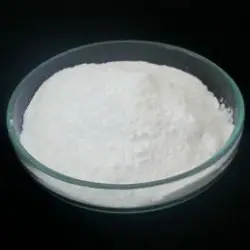
Nano Titanium Dioxide for Automobile Paint (Nano TiO2)
View Product →
Nano Titanium Dioxide for Color Change Coatings
View Product →
Nano Titanium Oxide White Powder, (25nm)
View Product →Ready to Innovate with Nano Titanium Dioxide?
Connect with our experts to discover how Nano TiO2 can transform your research or industrial applications. Explore our high-quality nanomaterials and solutions tailored for your specific needs.
Get in Touch Today