
Unlocking the Future: Nano Silica's Transformative Role in Indian Aerospace Applications
Explore how nano silica for aerospace applications is revolutionizing material science, enhancing performance, and driving innovation across India's burgeoning aerospace sector. Discover the critical advantages of high purity nano silica in modern aircraft and spacecraft design.
Learn MoreIntroduction: The Dawn of a New Era in Aerospace Materials
The Indian aerospace industry is on an exponential growth trajectory, driven by ambitious space missions, expanding commercial aviation, and a robust defense sector. This rapid evolution demands cutting-edge materials that can withstand extreme conditions, offer superior performance, and contribute to lighter, more fuel-efficient designs. Enter nano silica – a remarkable nanomaterial poised to redefine the landscape of aerospace engineering.
Nano silica, also known as silica nanoparticles, refers to silicon dioxide particles typically ranging from 1 to 100 nanometers in size. At this nanoscale, silica exhibits unique properties that are dramatically different from its bulk counterpart, making it an ideal candidate for advanced applications. Its high surface area, exceptional strength-to-weight ratio, and chemical inertness open up unprecedented possibilities for innovation in aerospace components, coatings, and structural materials.
For Indian researchers and professionals, understanding the potential of nano silica application in aerospace is not just academic; it's a strategic imperative. From enhancing the durability of aircraft wings to improving the thermal resistance of spacecraft shields, these nanoparticles are becoming indispensable. This blog delves into the multifaceted role of high purity nano silica, exploring its benefits, diverse applications, and the emerging trends that are shaping its future in India's aerospace domain.
The integration of such advanced materials is crucial for India to achieve self-reliance and global leadership in aerospace technology. By leveraging the unique characteristics of silica nanoparticles, we can develop next-generation aircraft and spacecraft that are safer, more efficient, and capable of pushing the boundaries of human exploration and defense.
Key Benefits of Nano Silica for Aerospace Researchers and Engineers
- Enhanced Mechanical Strength: Nano silica significantly improves the tensile strength, flexural modulus, and fracture toughness of polymer composites, leading to lighter yet stronger structural components for aircraft and spacecraft.
- Superior Thermal Stability: Aerospace materials often face extreme temperature fluctuations. Silica nanoparticles act as excellent thermal barriers, increasing the heat resistance of coatings and composites, crucial for engine components and re-entry vehicles.
- Improved Corrosion and Abrasion Resistance: Coatings infused with nano silica offer enhanced protection against harsh environments, preventing corrosion and wear on critical surfaces, extending the lifespan of aerospace assets.
- Reduced Weight and Fuel Efficiency: By enabling the creation of stronger, lighter materials, nano silica application directly contributes to reduced aircraft weight, leading to significant improvements in fuel efficiency and operational costs.
- Fire Retardancy: Certain forms of nano silica can act as effective fire retardants, improving the safety profile of interior cabin materials and other vulnerable components.
- Advanced Sensor Integration: The unique electrical and optical properties of silica nanoparticles facilitate their use in developing highly sensitive sensors for structural health monitoring, detecting stress, cracks, or temperature changes in real-time.
- Tailorable Surface Properties: High purity nano silica can be surface-modified to achieve specific functionalities, such as hydrophobicity for anti-icing coatings or improved dispersion in various matrices, offering versatility in design.
- Cost-Effectiveness in Long Run: While initial material costs might vary, the extended lifespan, reduced maintenance, and improved fuel efficiency offered by nano silica-enhanced materials result in significant long-term cost savings for aerospace operators.
Diverse Applications of Nano Silica Across the Aerospace Industry
Lightweight Composites for Structural Components
The most prominent nano silica application is in reinforcing polymer matrix composites. By incorporating silica nanoparticles into resins used for aircraft fuselages, wings, and rotor blades, manufacturers can achieve significant weight reduction without compromising structural integrity. This leads to substantial improvements in fuel efficiency and payload capacity, critical for both commercial and military aircraft.
Thermal Protection Systems and Coatings
Spacecraft re-entry and high-speed flight generate immense heat. Nano silica-based thermal protection systems (TPS) and coatings offer superior insulation, protecting sensitive components and structures from extreme temperatures. These coatings also provide excellent abrasion and erosion resistance, vital for parts exposed to harsh atmospheric conditions or space debris.
Advanced Sealants and Adhesives
Aerospace vehicles rely on high-performance sealants and adhesives to maintain structural integrity and prevent leaks. Nano silica can be incorporated into these formulations to enhance their mechanical properties, durability, and resistance to environmental degradation, ensuring reliable performance under stress and varying temperatures.
Smart Materials and Sensors
The integration of silica nanoparticles into smart materials allows for the development of advanced sensors for structural health monitoring. These sensors can detect minute changes in stress, temperature, or humidity, providing real-time data crucial for predictive maintenance and ensuring the safety and operational readiness of aircraft and spacecraft. This is a rapidly growing area for nano silica uses.
India-Specific Opportunities and Emerging Trends in Nano Silica for Aerospace
India's "Make in India" initiative and its burgeoning space program, spearheaded by ISRO, present unparalleled opportunities for domestic research and production of advanced materials like nano silica. The demand for lightweight, high-performance components in defense aviation and commercial aircraft manufacturing is driving significant investment in indigenous R&D.
One key trend is the increasing focus on developing cost-effective and scalable methods for synthesizing high purity nano silica. Indian institutions and private firms are exploring innovative production techniques to meet the stringent quality requirements of the aerospace sector while ensuring economic viability. This includes research into different nano silica production methods and understanding their impact on nano silica properties.
Another significant area is the customization of silica nanoparticles for specific aerospace needs. This involves surface modification to improve compatibility with various polymer matrices, enhancing dispersion, and optimizing performance for applications ranging from anti-corrosion coatings to advanced thermal management systems. The nano silica market in India is expected to see substantial growth as these tailored solutions become more accessible.
The collaboration between academia, research organizations (like DRDO and CSIR labs), and industry players is crucial. Joint ventures and public-private partnerships are fostering an ecosystem for innovation, accelerating the transition of laboratory-scale discoveries to industrial applications. This collaborative spirit is vital for India to establish itself as a global hub for nano silica suppliers and advanced materials technology.
Furthermore, the emphasis on sustainability and circular economy principles is also influencing research. Efforts are underway to develop greener synthesis routes for nano silica and explore recycling strategies for composites, aligning with global environmental goals while maintaining performance standards. Understanding the nano silica price and market dynamics is also critical for commercialization and widespread adoption.
Frequently Asked Questions about Nano Silica in Aerospace
Nano silica, or silica nanoparticles, refers to silicon dioxide particles with dimensions typically between 1 and 100 nanometers. In aerospace, its importance stems from its ability to significantly enhance material properties like strength, thermal stability, and corrosion resistance of composites, coatings, and structural components, crucial for high-performance aircraft and spacecraft.
Nano silica improves aerospace composites by acting as a reinforcing filler. It enhances mechanical properties such as tensile strength, flexural modulus, and fracture toughness. Its high surface area allows for strong interfacial bonding with polymer matrices, leading to lighter yet stronger materials essential for fuel efficiency and structural integrity in aerospace applications.
Key applications include lightweight structural composites for aircraft fuselages and wings, thermal protection systems for re-entry vehicles, anti-corrosion and abrasion-resistant coatings, advanced sealants, and components for sensors and electronic systems. High purity nano silica ensures optimal performance and reliability in these demanding environments.
Challenges in India include scaling up production of high-purity nano silica, ensuring consistent quality, and integrating these advanced materials into existing manufacturing processes. Research and development efforts are focused on cost-effective synthesis methods and tailored applications to meet the stringent requirements of the Indian aerospace and defense sector.
Indian researchers and professionals can source quality nano silica from specialized suppliers like Reinste and Hiyka, who offer a range of silica nanoparticles with varying sizes, purities, and surface modifications. It's crucial to choose suppliers that provide detailed specifications and technical support for aerospace-grade materials.
Related Nano Silica Products for Your Research
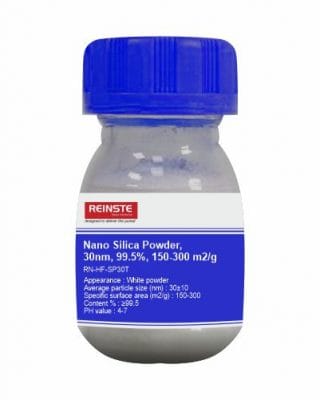
Nano Silica Powder, 30nm, 99.5%, 150-300 m2/g
View Product →
Liquid Phase Silica Nanopowder for Composites Materials
View Product →
Nano Silica Particles Used In Epoxy Resin, Superhydrophobic Coating
View Product →
Nano Silica Powder for Plastic Reinforing Filler
View Product →Ready to Innovate with Nano Silica?
Connect with our experts to explore how high purity nano silica can elevate your aerospace projects. Discover tailored solutions and advanced materials to meet your specific research and industrial needs.
Get in Touch Today