
Unlocking India's Potential: A Deep Dive into the Nano Silica Market, Applications, and Future Trends
Explore the transformative impact of nano silica across various Indian industries, from advanced materials to sustainable solutions, and understand its burgeoning market landscape.
Explore Nano Silica ProductsIntroduction to Nano Silica in the Indian Context
Nano silica, an exceptional nanomaterial comprising silicon dioxide (SiO2) nanoparticles, is rapidly gaining prominence across various industrial and research sectors worldwide. Its unique properties, such as an exceptionally high surface area-to-volume ratio, tunable pore size, and remarkable mechanical strength, make it an indispensable component in advanced material science. In India, a nation witnessing accelerated growth in its manufacturing and R&D capabilities, nano silica is at the forefront of innovation, driving advancements in fields ranging from construction and electronics to healthcare and environmental sustainability. For Indian researchers, engineers, and industry professionals, a comprehensive understanding of the nano silica market dynamics, its diverse applications, and the evolving competitive landscape is not merely beneficial but essential. This knowledge is crucial for fostering indigenous innovation, developing cutting-edge products, and securing a competitive edge in both domestic and global markets. This detailed blog post aims to provide an in-depth exploration of nano silica, offering insights specifically tailored to the Indian context, highlighting its profound benefits, key industrial applications, emerging market trends, and future growth opportunities. We will delve into how this tiny particle is poised to make a monumental impact on India's journey towards technological self-reliance and sustainable development.
Key Benefits of Nano Silica for Researchers and Industries
-
Enhanced Material Properties for Next-Gen Solutions
Nano silica acts as a superior reinforcing agent, significantly improving the mechanical strength, hardness, durability, and thermal stability of a wide array of materials. When incorporated into polymers, ceramics, and metals, it facilitates the development of lighter, stronger, and more resilient composites. In the construction sector, its addition to concrete and cement dramatically boosts compressive strength, reduces permeability, and enhances resistance to chemical attack, leading to more sustainable and long-lasting infrastructure. This is particularly relevant for India's ambitious infrastructure projects.
-
Revolutionary Catalysis and Adsorption Efficiencies
With its exceptionally high surface area and controllable pore structure, nano silica serves as an outstanding support material for catalysts. This enhances the efficiency of chemical reactions, reduces energy consumption, and enables more selective processes, which are critical for the chemical and petrochemical industries. Furthermore, its excellent adsorption capabilities make it highly effective in environmental remediation, particularly for the removal of heavy metals, dyes, and organic pollutants from wastewater and air, addressing pressing environmental challenges in India.
-
Pioneering Drug Delivery and Biomedical Innovations
The biocompatibility and surface modifiability of nano silica particles make them ideal candidates for advanced biomedical applications. Researchers are actively exploring their use in targeted drug delivery systems, where they can encapsulate therapeutic agents and release them precisely at disease sites, minimizing side effects. They also show promise in biosensors for early disease detection, as scaffolds for tissue engineering, and in dental materials, offering new frontiers in healthcare solutions for India's vast population.
-
Superior Coatings and Surface Engineering
Nano silica imparts remarkable properties to coatings, including enhanced scratch resistance, improved UV stability, and superior anti-corrosion performance. Hydrophobic nano silica can create self-cleaning and water-repellent surfaces, while its inclusion in paints can extend their lifespan and reduce maintenance costs. These advancements are crucial for protecting assets in diverse Indian climatic conditions, from industrial machinery to architectural facades.
-
Driving Sustainable and Eco-Friendly Solutions
Nano silica plays a pivotal role in developing environmentally conscious technologies. In agriculture, it can be utilized in controlled-release fertilizers and pesticides, optimizing nutrient delivery, reducing chemical runoff, and improving crop yields, which is vital for India's agrarian economy. In energy applications, it enhances the insulating properties of materials, contributing to energy efficiency in buildings and industrial processes. Its potential for waste valorization, such as extracting silica from rice husk ash, further underscores its role in promoting circular economy principles.
-
Fostering Cost-Effective Innovation and Competitiveness
For Indian industries, the strategic adoption of nano silica can lead to significant process optimizations and the creation of superior, value-added products. By improving material performance and extending product lifespans, nano silica contributes to overall cost reduction and enhanced competitiveness in both domestic and international markets. This aligns perfectly with India's drive for economic growth and technological leadership.
Diverse Industrial Applications of Nano Silica in India
Construction & Infrastructure
Improving the strength, durability, and workability of concrete, enabling greener building materials.
Paints & Coatings
Enhancing scratch resistance, UV stability, and anti-corrosion properties for longer-lasting finishes.
Rubber & Plastics
Acting as a reinforcing filler to boost mechanical strength, wear resistance, and tear strength.
Electronics & Semiconductors
Used in chemical mechanical planarization (CMP) slurries, dielectric layers, and encapsulants.
Healthcare & Pharmaceuticals
For drug delivery systems, biosensors, and medical implants due to its biocompatibility.
Textiles
Providing flame retardancy, water repellency, and anti-microbial properties to fabrics.
Agriculture
In controlled-release fertilizers and pesticides, improving efficiency and reducing environmental impact.
Environmental Remediation
As an adsorbent for heavy metals and organic pollutants in water treatment.
Emerging Opportunities and Trends in India's Nano Silica Landscape
The nano silica market in India is experiencing an unprecedented surge, characterized by robust growth and dynamic innovation. This expansion is primarily propelled by escalating demand from crucial sectors such as construction, automotive, electronics, and agriculture. India's rapid urbanization and ambitious infrastructure development projects, including smart cities and high-speed rail networks, are creating a massive appetite for advanced construction materials, where nano silica plays a vital role in enhancing concrete strength and durability. Simultaneously, the burgeoning automotive industry, with its focus on lightweighting and fuel efficiency, is driving the adoption of nano silica as a reinforcing filler in tires and polymer composites.
The landscape of nano silica suppliers and nano silica manufacturers in India is rapidly evolving, with both established players and new entrants expanding their production capacities. A significant trend among these entities is the increasing emphasis on sustainable and cost-effective synthesis methods. This includes leveraging abundant agricultural waste products, such as rice husk ash, as a raw material for nano silica production, thereby promoting circular economy principles and reducing environmental impact. The Indian government's proactive "Make in India" initiative, coupled with substantial investments in indigenous research and development, is further accelerating this expansion, positioning India as a prominent global hub for nano-material innovation.
India's burgeoning R&D ecosystem, supported by world-class scientific institutions and a vast pool of skilled engineers and researchers, is a critical enabler for advancements in nano silica technology. This intellectual capital is driving the development of highly specialized nano silica powder variants tailored for specific industrial needs. For instance, there is a growing demand for surface-modified nano silica, including hydrophobic types for water-repellent coatings and hydrophilic variants designed for optimal dispersibility in aqueous systems. These specialized materials are finding applications in high-performance paints, advanced textiles, and sophisticated electronic components.
A thorough nano silica competitive landscape analysis is becoming increasingly vital for businesses aiming to enter or expand within this vibrant market. Understanding the strengths of local manufacturers, the influx of international players, and the evolving technological advancements is crucial for strategic positioning. The diverse and ever-expanding spectrum of nano silica applications, ranging from enhancing the performance of rubber and plastics to improving drug delivery systems and environmental remediation techniques, ensures a promising and multifaceted future for this versatile material in India. The continuous discovery of new nano silica uses across different sectors underscores the material's immense potential to contribute significantly to India's technological progress and sustainable development goals.
Frequently Asked Questions about Nano Silica
Nano silica, or silicon dioxide (SiO2) nanoparticles, are ultra-fine particles of silica with dimensions typically ranging from 1 to 100 nanometers. They possess unique physical and chemical properties due to their high surface area-to-volume ratio.
In India, nano silica is widely used in construction (high-performance concrete), paints and coatings (durability, scratch resistance), rubber and plastics (reinforcement), electronics, textiles, and increasingly in healthcare and environmental applications.
Common production methods include the sol-gel process, chemical vapor deposition (CVD), precipitation, and fumed silica processes. Research in India is also exploring sustainable methods using agricultural waste.
Benefits include enhanced mechanical strength, improved hardness, increased durability, better thermal stability, UV resistance, anti-corrosion properties, and improved rheological behavior in various composite materials.
India has a growing number of nano silica suppliers and nano silica manufacturers. It's advisable to look for suppliers with certified products, good technical support, and a track record of quality. Online platforms and industry directories can be good starting points.
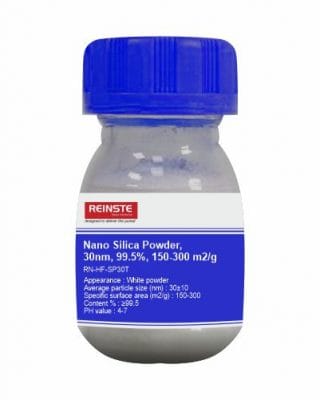


Ready to Innovate with Nano Silica?
Explore Reinste's comprehensive range of high-quality nano silica products and solutions tailored for your research and industrial needs.
Discover Our Products